
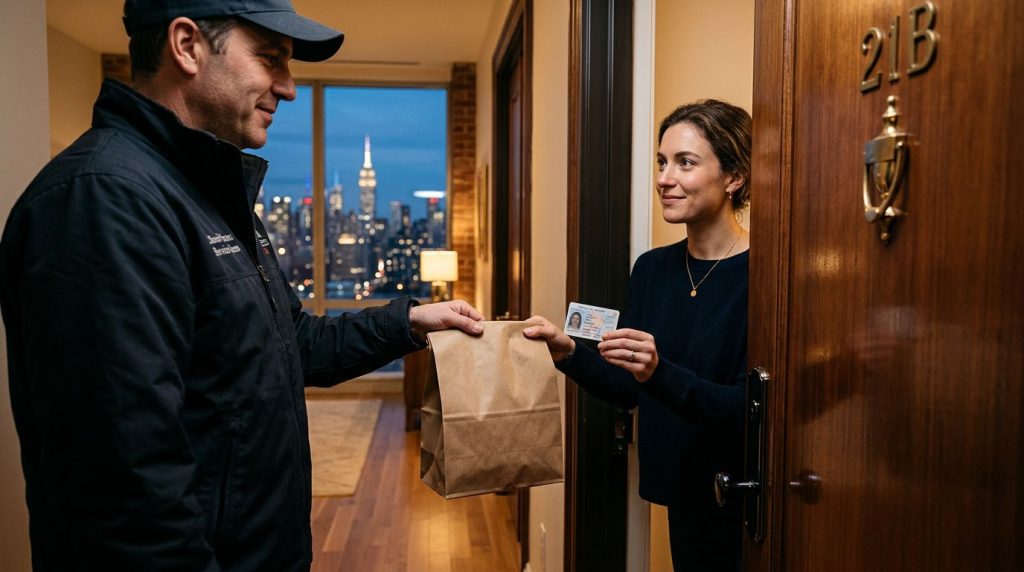
A legal cannabis order can reach your door in New York City, but it does not work exactly like standard food delivery. Because weed delivery NYC services must follow strict state regulations, the rules are tighter, the identity verification process is essential, and service coverage can vary significantly from one licensed retailer to the next.
As of June 2026, cannabis delivery in NYC is available across all five boroughs, providing residents with easy access to regulated recreational marijuana. Still, that does not mean every licensed shop delivers to every specific address. Once you understand how the system works, the borough-by-borough differences are much easier to navigate.
Key Takeaways
- Licensed Coverage Varies: While cannabis delivery is legal across all five NYC boroughs, each retailer sets its own specific service area, operating hours, and delivery windows.
- ID Verification is Mandatory: By law, legal delivery requires an in-person ID check at the time of handoff; orders cannot be left unattended or handed to minors.
- Retailer vs. Regulatory Rules: While the state mandates age and possession limits, individual retailers determine their own policies regarding minimum order amounts, fees, and delivery logistics.
- Prioritize Licensed Operators: Always verify that a delivery service is a licensed retailer by checking their official business information and professional online storefront, avoiding any services that operate through informal channels.
What “delivery-only” means in New York City
A delivery-only licensed dispensary is still a retail business. The difference is that you do not visit a walk-in sales floor. You order weed online, and a licensed operator brings it to a valid address within its approved service area.
That matters because “delivery-only” should not mean informal, unverified, or off-the-books. In New York, legal adult-use delivery has to come through the licensed market. Products move through the regulated supply chain, and the retailer has to follow state rules on packaging, recordkeeping, age checks, and transport.
If you are searching for weed delivery nyc, this is the first point to keep in mind: citywide legality and citywide coverage are not the same thing. Delivery is legal for adults 21 and older, but each licensed business sets its own zone, schedule, and operating range.
The state’s adult-use cannabis delivery FAQ lays out the basics in plain language, including age limits and possession limits. For you, the practical takeaway is simple. Start with the license status, then check whether your address falls inside that retailer’s service map.
Across the five boroughs, the rules are citywide, but delivery coverage is set by the licensed business.
Some operators are built around delivery from the start. Others are dispensaries with a storefront that also send orders out. From the customer’s side, the experience can look similar. Behind the scenes, however, staffing, routing, and hours can differ a lot.
How a legal order moves from menu to your address
Most licensed orders follow the same basic path, even when the storefront, neighborhood, or borough changes.
- You enter a delivery address and confirm that you are 21 or older.
- You browse the live menu for a licensed retailer that covers your area, exploring premium cannabis products such as cannabis flower, THC edibles delivery, vape delivery nyc, and pre-roll delivery nyc.
- You choose a delivery window and complete checkout using your preferred secure payment options.
- You receive updates and live tracking information, and the order is handed to an adult after a successful check of your valid government-issued ID.
That sounds simple, but a few details shape the experience. First, menus can be live and local. A retailer may list products for one borough or route that are not available on another shift. Next, same-day delivery windows can change during the day. Rain, traffic, bridge crossings, and building access all affect timing.
You also need to separate legal rules from store policies. New York law allows adults 21 and older to possess up to three ounces of cannabis flower and up to 24 grams of concentrated cannabis for personal use. NYC’s cannabis guidance for adults 21+ is a useful reference on those baseline rules. A store, however, may still set its own minimum order, fee structure, and cut-off times.
Payment is another area where stores differ. Some licensed retailers accept more options than others. Some confirm orders quickly, while others wait until a driver is assigned. That does not always mean something is wrong. It often reflects how that retailer batches deliveries.
If you are comparing listings in a directory, look beyond the menu. Check hours, service area, estimated window, and whether recent customer reviews mention accurate timing. Those details tell you more than a product thumbnail ever will.
Why the five boroughs don’t all feel the same
New York City looks compact on a map, but deliveries do not move through the city evenly. Density helps in some places and slows things down in others.
In Manhattan, a short driving distance can still mean a long handoff. Neighborhoods like Chelsea present unique logistical challenges, as door staff, elevator rules, and building access can add time to your drop-off. In Brooklyn, coverage often depends on how far the route stretches from the retailer base. Queens is larger and more spread out, though areas like Long Island City often serve as a hub for better local availability. The Bronx can have strong local coverage from nearby operators, but cross-borough routing still depends on staffing and traffic. Staten Island may have fewer participating stores on a given day, so your delivery window can be narrower than in the urban core.
This quick comparison shows what stays consistent and what can change.
| Citywide basics | Store-by-store differences |
|---|---|
| Age 21+ | Delivery zone |
| Licensed retailer | Hours and cut-off times |
| ID at handoff | Minimum order |
| Possession limits still apply | Free delivery and same-day availability |
The pattern is clear. The law gives you the broad framework, while the retailer controls the day-to-day experience.
That is why legal cannabis delivery across the five boroughs can feel uneven even when it is widely available. A shop may advertise NYC delivery and still exclude one part of Queens, rush Manhattan orders at lunchtime, or limit Staten Island to certain days. None of that is unusual. It reflects how the licensed business manages drivers, distance, and demand.
What happens when your order arrives
The final handoff is where legal delivery becomes most visible. The driver does not drop a package and disappear. A licensed order usually ends with a direct exchange, an age check, and a completed delivery record.
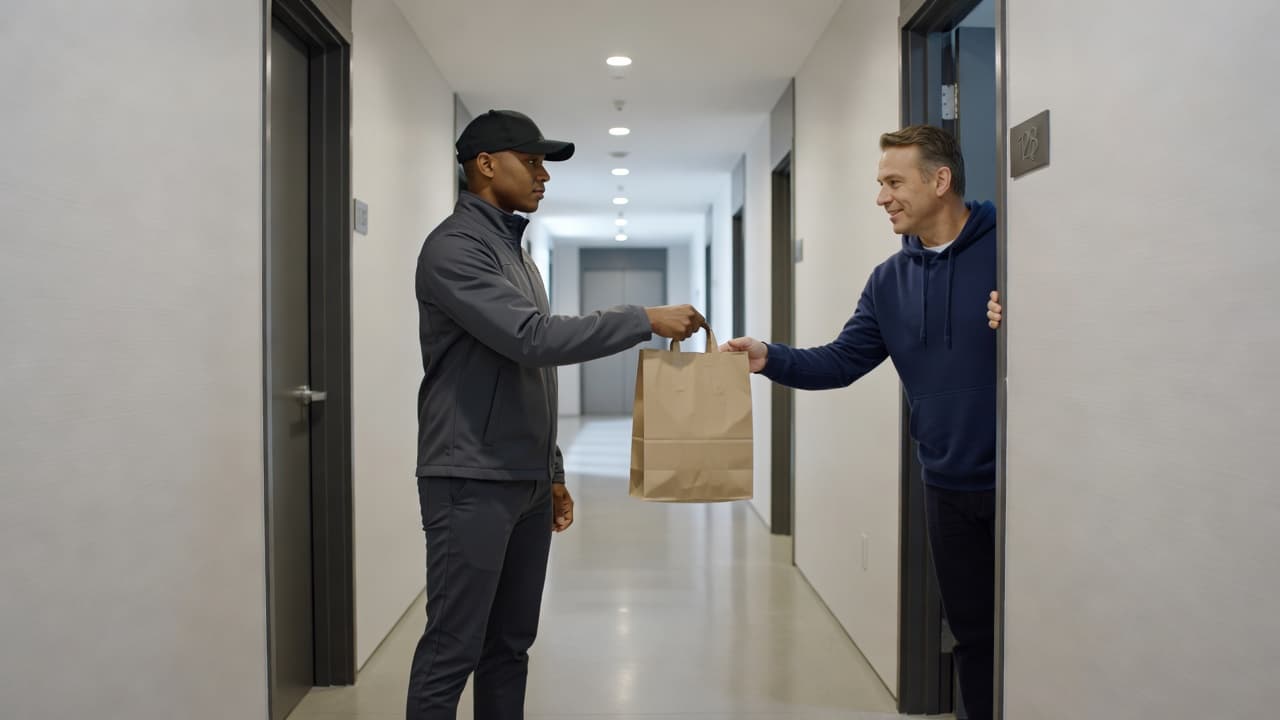
If you live in an apartment building, access often matters as much as timing. Some buildings require lobby pickup, while others allow the driver upstairs. In either case, you should expect to be present and ready with valid identification. Legal cannabis delivery is for adults, so the order cannot be handed to a minor or left sitting outside a door.
Many customers assume the hard part is finding a menu. In practice, the delivery service handoff can be the point where delays show up. A dead intercom, missing apartment number, or building doorman policy can stretch a short route into a longer one.
A few habits make the process smoother. Keep your phone nearby during the delivery window. Double-check your address details before checkout. If your building has special access rules, add them if the recreational dispensary allows notes. Those small details help the driver complete the order without extra calls or canceled attempts.
You should also look for normal retail signals when the order arrives. Packaging should be sealed and handled like a regulated product order, not passed over loosely or without verification. If a delivery service avoids ID checks or tries to hand off the order in a way that feels informal, that should raise concern.
How to tell if a cannabis delivery service is licensed
The fastest way to ensure a safe and secure purchase is to choose legal marijuana delivery NYC services. You should treat these transactions the same way you would any other regulated purchase by looking for a professional business identity, transparent delivery terms, and clearly displayed license information.
A licensed dispensary usually makes essential details easy to find on their website. You should see the business name, service area, operating hours, age restriction, and contact information clearly listed. Product menus should look like professional retail storefronts, rather than anonymous message boards or suspicious direct-message offers. While customer reviews are helpful, only rely on them after you have confirmed that the business is legitimate.
Red flags are often obvious once you know what to watch for. Be cautious if a delivery service promises to reach every corner of the city without limits, refuses to name the specific retailer, ignores age verification rules, or pushes you away from a standard ordering flow into private messaging apps. Legal delivery in New York is strictly regulated, and it should always feel like a standard retail experience.
This is where a reliable directory becomes useful. When you compare listings in one place, you can verify which businesses are licensed, which boroughs they cover, and whether customers report consistent delivery windows and professional handoffs. While that will not make every transaction identical, it will ensure your search is firmly grounded in the legal market.
Frequently Asked Questions
Is cannabis delivery available in all five boroughs of NYC?
Yes, legal cannabis delivery is available throughout all five boroughs. However, coverage is not universal for every shop, as individual licensed retailers determine their specific delivery zones, schedules, and service capabilities.
What do I need to have ready when my delivery arrives?
You must be present at the delivery location with a valid, government-issued photo ID that proves you are at least 21 years old. The delivery driver is legally required to verify this information before the order can be completed and handed over.
Can I have my order left at my door or with a doorman?
No, legal cannabis delivery in New York requires a direct handoff to an adult after a successful age verification check. You should ensure you are available during your delivery window to accept the order in person.
How can I verify if a delivery service is legitimate?
Look for clear, professional branding, transparent business contact information, and verified license details directly on the retailer’s website. Avoid services that push you toward private messaging apps or that fail to provide clear information about their licensed storefront.
Conclusion
Legal delivery now reaches all five boroughs, but the experience still depends on the licensed retailer behind the order. Coverage maps, delivery windows, and building access rules can all change what your order feels like on the ground.
If you keep your focus on license status, service area, and the handoff process, the system becomes easy to navigate. Once you understand these core elements, recreational marijuana transitions from an uncertain process into a reliable, regulated retail experience. This is how cannabis delivery NYC has evolved into a convenient service that operates within local limits.


