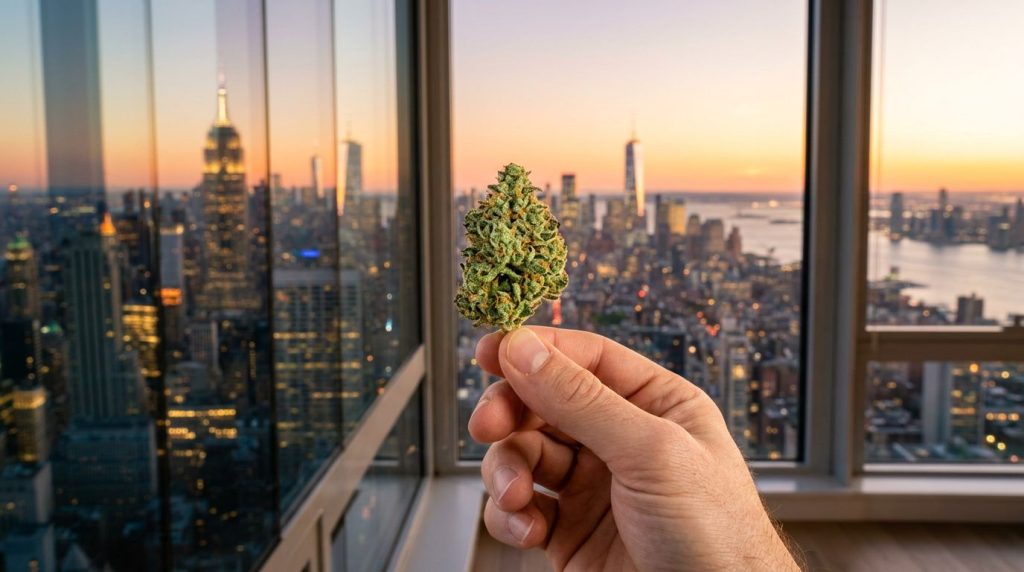
The term Cannabis sativa looks simple on a cannabis menu, but it can mislead you if you treat it like a promise. If you have ever assumed that one label would tell you exactly how a product will feel, you are in familiar territory. Many NYC shoppers are looking for specific outcomes that go beyond just the label, but understanding Cannabis sativa is the first step toward finding the right product.
In New York’s legal market, the term often works as a shortcut. Your experience can still shift based on cannabinoids, terpenes, product format, dose, and your own tolerance. Once you know how the label is used, you can read menus with more confidence and less guesswork.
Key Takeaways
- Labels are for guidance, not guarantees: While the term ‘sativa’ helps organize menus and narrow initial searches, it is a broad market category that does not accurately predict specific physiological effects or moods.
- Chemistry over classification: A product’s true impact is driven by its unique combination of cannabinoids, terpenes, and your own personal tolerance, rather than its botanical classification.
- Format changes the experience: Inhaled flower, vapes, and edibles interact with your body differently, meaning the same ‘sativa’ label will produce a different journey depending on whether you are smoking or consuming an edible.
- Look for concrete data: To make informed decisions, look past the branding and focus on lab results, specific terpene profiles, batch dates, and recent shopper feedback to gauge product quality and consistency.
What Sativa Originally Meant
At its root, the term sativa described a specific type of cannabis plant. In historical botanical terms, Cannabis sativa was often contrasted with Cannabis indica, which originated in different climates and environments. These early landrace strains were categorized by their physical characteristics, with sativa plants typically appearing taller with narrower leaves, while indica plants remained shorter and stouter. Sativa plants also generally required a longer flowering period compared to their counterparts.
That plant-based meaning still exists, but it does not tell the whole story in today’s market. Modern cannabis has been crossbred for decades to achieve specific traits. As a result, many products sold today carry complex, mixed genetics, even when a menu places them in a sativa category.

When you see sativa on packaging, you are usually seeing a market label rather than a strict botanical verdict. That label may reflect lineage, brand positioning, or consumer expectation. While it serves as a helpful starting point, it is no longer a reliable predictor of the chemical profile.
This is why two products marked sativa may affect you differently. One may smell bright and citrusy, while another feels earthy and sharp. Beyond the plant structure, the experience is driven by the specific levels of THC and other cannabinoids present in the flower. Even if two products share similar breeding lines, their unique concentrations of cannabinoids and terpenes can result in a completely different experience.
A broader public explanation of that old shorthand appears in a plain-language overview. The key point is simple: the term remains popular because it is easy for shoppers to recognize, not because it predicts every outcome with total precision.
If you shop in NYC, that distinction matters. Licensed dispensary menus rely on these quick category labels to help customers navigate the shelf. Still, the more useful question is not just “Is it sativa?” It is “What else can I learn about the chemical profile and lineage of this product?”
Why the Label Only Tells Part of the Story
A sativa label can suggest a general style, but it rarely tells you exactly how your body will respond. While the terms Cannabis sativa and Cannabis indica were once used to denote specific physical growth patterns, they are poor predictors of the actual user experience. Today, the effects you feel are shaped by a complex interplay of primary cannabinoids like THC and CBD, alongside a wide range of minor compounds.
Terpenes are frequently overlooked during the shopping process, yet this terpene profile is arguably more important than the category name. Specific terpenes, such as the citrus-forward limonene, the earthy myrcene, or the pine-scented pinene, work in tandem with cannabinoids to produce the entourage effect. This phenomenon suggests that the combination of these compounds creates a unique experience that is far more nuanced than a simple sativa classification.
Dose and delivery method also change the picture significantly. A low-dose gummy sold under a sativa line may feel manageable for one person and too strong for another. Furthermore, a pre-roll may feel short-lived compared with an edible, even when both are marketed with similar language. Your personal tolerance, recent meals, and environmental setting all play a role in how these products manifest.
“Sativa” is a starting point, not a full forecast.
This quick table shows where the label helps, and where it stops.
| Product clue | What it may tell you | What it can’t promise |
|---|---|---|
| Sativa label | A broad category or expected style | The same effect for every person |
| THC percentage | A rough potency marker | Whether the experience will feel clear or heavy |
| Terpene profile | Aroma and character clues | An exact mood or outcome |
| Product format | Onset and duration tendencies | A matching experience across formats |
| Strain name | A familiar reference point | Consistent results from every batch |
The takeaway is not that the label is useless. It is that you should treat it like a map with missing streets. It points you in a direction, but you still need to investigate the cannabinoids and terpene content before you make a decision.
That view shows up in another consumer summary as well. Public guides keep circling back to the same truth because it holds up in real shopping: category names are broad, but detailed product information is where the real clues live.
How Sativa Appears on Legal Cannabis Menus
When you browse licensed cannabis menus in NYC for recreational purposes, you will usually see sativa used as a primary shelf category. Flower, pre-rolls, vapes, and even edibles often carry this label. Because digital platforms prioritize ease of use, Cannabis sativa products are often filtered first on these menus to help shoppers narrow their search quickly.
That convenience comes with trade-offs. A dispensary menu may group products under sativa based on breeder information, brand naming, a specific terpene profile, or staff interpretation. One business may apply the label narrowly, while another may use it more loosely across several product types.
New York’s legal market adds structure through strict packaging and testing rules. Licensed products typically include comprehensive data on cannabinoids, batch details, and compliance labeling. Those objective facts matter more than the marketing tone around a product name. If you want reliable information, read the lab panel first and the branding second.
You may also notice that menu language shifts from one brand to another. Some products lean on classic strain names, while others use flavor-forward descriptions such as citrus, tropical, or herbal. A few brands avoid the old categories entirely and focus more on chemistry, because many shoppers now know that sativa and indica are broad consumer terms.
For you, the practical move is simple. Use the category to narrow the field, then slow down before you decide. Read the product description, compare potency, and look for a specific terpene profile when that information is available. If a menu page gives you only a product name and a category, you do not yet have enough context to know what to expect.
This matters even more in a busy city market. In NYC, menus move fast, brands rotate in and out, and batches can change frequently. A familiar sativa name from one month may not match the next batch in terms of aroma, texture, or strength.
How to Judge a Product Beyond the Name
If you want a better read on a sativa product, start with the information that stays closest to the product itself. Labels, lab summaries, and recent shopper feedback will usually tell you more than the category tag.
A few checkpoints help you sort through menus without overthinking it:
- Look at the cannabinoid panel first. A high-THC flower and a product with a different mix of cannabinoids may sit in the same category, but they can feel quite different. These variations are especially important when considering the potential therapeutic effects or medical cannabis goals you might have.
- Check for details regarding the terpene profile if the brand or menu provides them. Citrus, pine, or herbal notes associated with specific terpenes can give you a more useful clue about potential energizing effects than the word sativa by itself.
- Pay attention to product format. Inhaled products and edibles can create very different timing and duration.
- Read recent reviews with care. Freshness, flavor, harshness, and consistency often show up there before they appear anywhere else.
- Compare batches when that information is visible. Cannabis is an agricultural product, so one run may differ from the next.
You should also read product names with some skepticism. Strain names can be familiar, but they are not a universal standard. Two brands may sell products under the same name and deliver different chemistry. That does not mean either one is wrong. It means the name alone is not enough.
Aroma can help when shopping in a setting where that information is available through product notes or staff guidance. Fruity or bright notes often shape expectations around a sativa product, but smell still does not equal outcome. Use it as one clue among several.
If you are comparing options in a licensed dispensary, ask focused questions. You do not need a long conversation. Ask about the product terpene profile, batch date, potency range, and whether shoppers tend to describe it as clear, buzzy, heavy, or balanced. Those answers are usually more useful than asking for the strongest sativa.
The stronger habit is to treat cannabis shopping like reading a nutrition label, not picking a soda flavor. Branding draws your eye, but the data tells you what is in front of you.
What Changes Across Flower, Vapes, and Edibles
The term Cannabis sativa travels across various product formats, but the format itself changes the experience significantly. This is a primary reason shoppers often feel confused. They purchase two different products under the same sativa label, then wonder why the actual effects do not align.
Flower and pre-rolls are often the closest to the classic category language. You may see familiar strain names, distinct aroma notes, and visible differences in bud structure. The effects also tend to appear faster because inhalation allows the psychoactive compounds to enter the system with a quicker onset than most edible products.
Vape products compress the experience into oil form. This can make them easier to compare by potency, but the specific oil blend truly matters. Some cartridges preserve more natural terpenes than others, providing a richer experience. A sativa vape with a bright terpene profile may feel quite distinct from a vape that relies mainly on a high THC percentage and broad flavor naming.
Edibles are where the old categories often get stretched the furthest. A gummy labeled sativa may be built around flavor, brand marketing, added botanical terpenes, or a specific cannabinoid ratio. Yet, the longer onset and duration of edibles change the experience by default. If you assume the label will override the format, you are likely to misread the product.
That does not make one format better than another. It simply means your expectations should shift with the form. If you want faster feedback, inhaled products often provide it. If you choose edibles, patience matters more because the journey of these psychoactive compounds can take longer to manifest and stay in your system for a longer duration.
For legal-market shoppers in NYC, this is where careful reading pays off. The same category word can sit on a jar of flower, a disposable vape, and a tin of gummies, but those are not interchangeable products. The label may be shared, yet the experience path is not.
Why Reviews and Batch Details Matter
Category labels are broad, but shopper reviews provide concrete information. That makes them essential tools when you are comparing legal products from licensed businesses. A strong review often tells you what the menu page does not, helping you determine if a product truly aligns with the traditional profile of Cannabis sativa or if it leans toward a different experience.
Look for comments on freshness, aroma, grind quality, draw resistance, smoothness, and consistency. These details say more about day to day quality than old category debates. Many products sold today are actually hybrid strains, meaning they offer a blend of genetic traits rather than a pure experience. If several reviewers note that a flower feels clear and functional, that feedback often serves you better than a bare sativa tag.
Batch details matter for the same reason. Cannabis is not a factory perfect item. Harvest timing, curing, storage, and packaging can all change what reaches you. A product that earned praise in one batch may feel average in the next if the flower is older or stored poorly.
That is why recent reviews are worth more than old praise. A six month old comment may describe a different batch, or even a different formulation. In a market with regular menu turnover, newer feedback usually carries more weight.
You should still read reviews with balance. One shopper’s favorite may be too strong or too mild for your personal preferences. Still, patterns matter. When many people point to the same strengths or the same flaws, the signal gets clearer.
For directory users in New York City, this is one of the most practical habits you can build. Use the sativa label to narrow your initial options. Then, use fresh reviews and specific batch information to decide which product deserves your attention.
Common Myths That Confuse Shoppers
One of the biggest myths is that the Cannabis sativa label always guarantees energizing effects. Many shoppers learn that shorthand early and treat it like a golden rule for daytime use. In practice, the result can vary significantly. While some people associate the label with a cerebral high, others may experience effects that lean toward a body high, proving that the name does not guarantee a specific mood or energy level.
Another common myth is that all products in this category are exclusively high in THC. Potency levels vary widely, and high THC concentrations are not exclusive to the sativa designation. Many shoppers are also surprised to find that a balanced product can still sit comfortably within this category, regardless of its specific cannabinoid profile.
People often assume that strain names are fixed across the entire market. They are not. The same name can appear across different brands with distinct growing methods, terpene expressions, and cannabinoid levels. Because most modern genetics are technically hybrid strains, chasing a specific name without reading the rest of the label often leads to an experience that does not match your expectations.
A final misconception is that the category is entirely outdated and should be ignored. That goes too far in the other direction. The label still holds value because it helps organize legal menus and provides a rough frame of reference for shoppers. The problem starts when you treat the term as a precise predictor rather than a general starting point.
The most effective approach is a measured one. Sativa can help you sort products quickly, but it should never be your only filter. Once you look past the label to examine chemistry, product format, user reviews, and specific batch details, the category becomes a much more useful tool for finding the right experience.
Frequently Asked Questions
Is sativa always more energizing than indica?
Not necessarily. While many people associate sativa with a ‘buzzy’ or cerebral feeling, the actual effects are dictated by the specific cannabinoid and terpene profile of the product rather than the category name. Because modern strains are often hybridized, individual reactions can vary significantly.
Why does the same strain name feel different from different brands?
Strain names are not standardized across the industry. Different cultivators may use the same name for plants with entirely different genetics, growing conditions, and terpene expressions, leading to inconsistent experiences from one brand to another.
Should I avoid the sativa label when shopping?
No, you do not need to avoid the label entirely. It remains a useful tool for narrowing down a vast menu, but it should be treated as a starting point for your investigation rather than a final indicator of quality or effect.
How can I tell what a product will actually feel like?
Instead of relying solely on the category label, check the product’s lab panel for cannabinoid and terpene data. Reading recent customer reviews regarding flavor, consistency, and effects can also provide a more realistic expectation of what that specific batch will offer.
Final Thoughts on Sativa
If the word sativa has ever felt clear and vague at the same time, your instinct was right. While the label is a helpful way to sort a menu, it cannot replace the nuanced details that shape your real-world experience.
When you shop for legal cannabis in NYC, try to read past the headline. Focus on the product format, cannabinoid profile, and specific terpene notes, as these elements are the true drivers of your experience. By examining batch details and recent reviews, you can make informed decisions that go beyond basic branding. Remember that Cannabis sativa serves as a useful clue for your search, but it is not a guarantee of how a product will affect you. Treat the label as a starting point, and let the chemistry guide your next purchase.