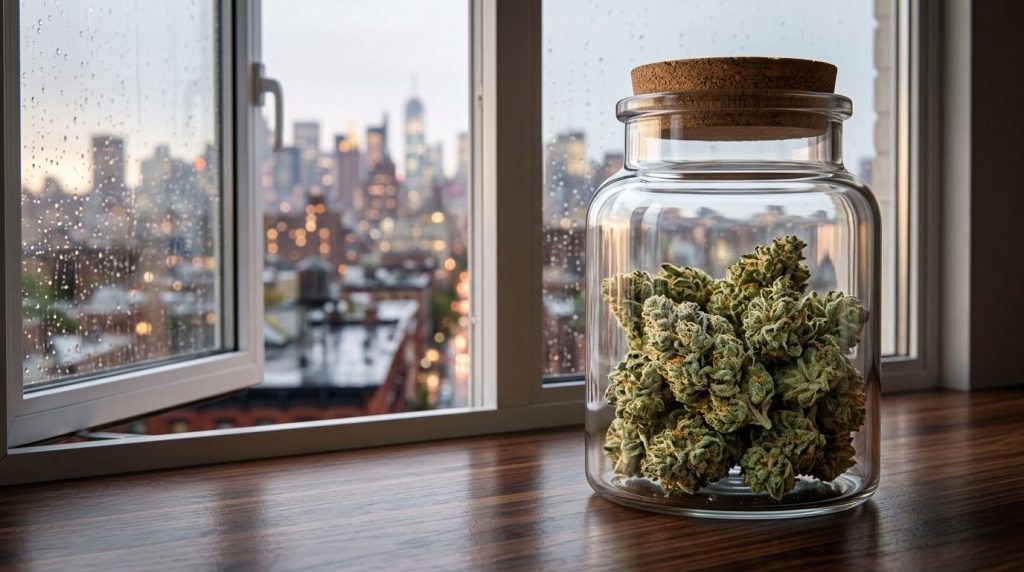
A hot subway ride can change cannabis faster than most people expect. In the city, the unique New York climate and frequent weather swings can affect how flower smells, feels, and burns long after it leaves a licensed dispensary.
When you bring cannabis home, quality depends on more than the strain name or package date. Managing cannabis humidity New York style means understanding that your storage bag, your apartment, and the season outside all play a role in keeping your product fresh.
Key Takeaways
- Moisture Balance is Critical: Cannabis quality depends on maintaining a stable relative humidity, typically between 55% and 62%, to protect delicate terpenes and prevent degradation.
- NYC Climate Challenges: New York’s seasonal extremes, from humid summer air to dry winter radiator heat, subject cannabis to constant environmental stress that can quickly alter its texture and potency.
- Storage Matters: Proper storage in airtight glass jars kept in dark, temperature-stable locations is essential for preventing spoilage and maintaining the integrity of the flower.
- Avoid Environmental Fluctuations: Transporting cannabis through varied climates—such as hot subway commutes or cold outdoor walks—can cause moisture loss or buildup that degrades the product before it is even opened.
Why New York’s climate puts cannabis under pressure
Cannabis quality is strictly tied to moisture balance. If the flower gets too damp, it can feel heavy, burn unevenly, and lose clarity in its aroma. Conversely, if it gets too dry, it can turn brittle, harsh, and flat. Maintaining the ideal relative humidity is essential for preserving the integrity of the terpene profile and the potency of your product.
New York makes that balance hard to hold. Summer air often feels thick, especially in the city, leading to fluctuating humidity levels that challenge even the best storage solutions. Winter brings the opposite problem, because indoor heating systems can dry out a room rapidly. Spring and fall add constant shifts between cool nights, warm afternoons, rain, and dry spells. Those changes may seem mild, yet cannabis reacts to them more than many people realize.
That matters because flower is not static after curing. It is a biological material that constantly exchanges moisture with the air around it based on the Vapor Pressure Deficit. A sealed package slows that process, but it does not stop every change once heat and humidity build up. If you carry cannabis around Manhattan for a few hours in July or leave it near a radiator in Brooklyn in January, the lack of air circulation in your bag or pocket limits the stability of the environment. Consequently, the product can quickly move away from the peak condition it had at packaging.
Quality also starts much earlier than the retail shelf. High humidity during cannabis cultivation can significantly affect plant development and resin production. Controlled-environment research on elevated relative humidity and cannabinoid loss points to the same basic issue you see at home: too much moisture can reduce overall quality.
In other words, cannabis humidity in New York is not an abstract concern. It shows up in your backpack, on your windowsill, and inside apartments where temperature and moisture levels change quickly.
How humidity changes flower, aroma, and shelf life
Excess humidity usually causes the most obvious problems first. Buds may feel soft, dense, or slightly wet on the outside, and they can grind into clumps instead of a loose, even texture. The aroma often turns dull, grassy, or musty, because moisture can mute the terpene profiles that give flower its character.
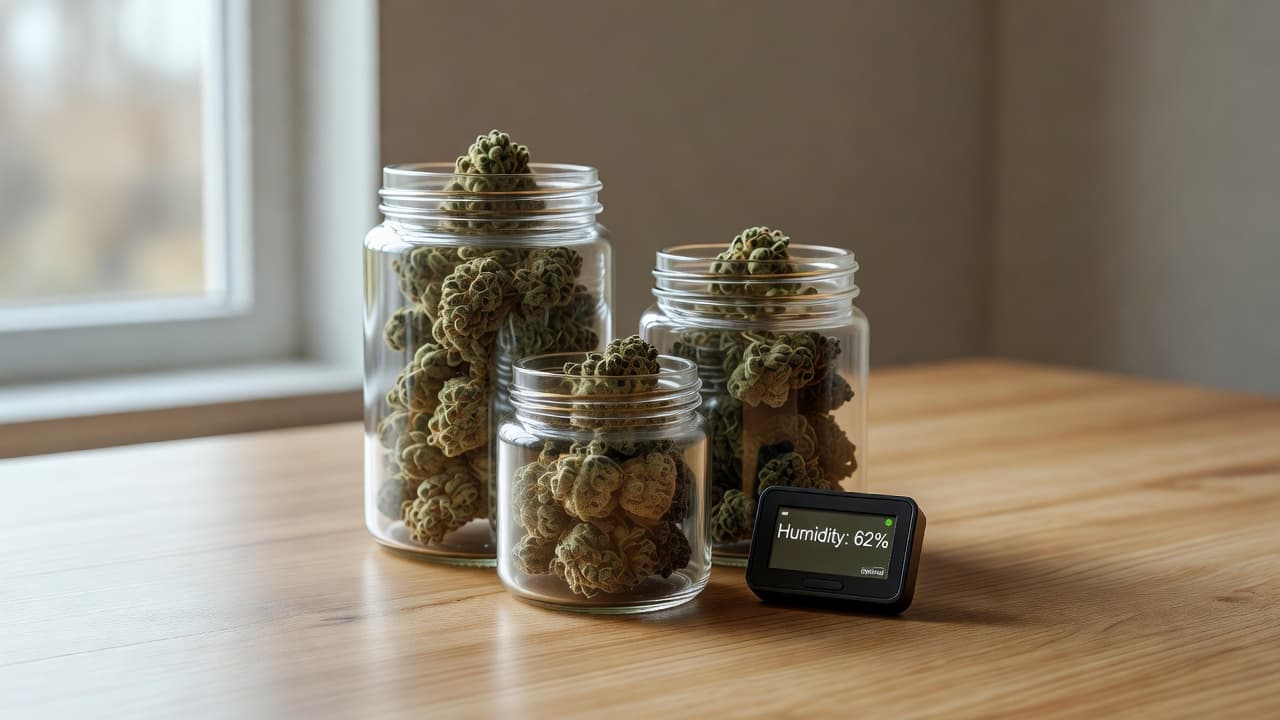
Too much moisture also shortens shelf life. When flower stays damp for too long, the risk of spoilage from mold and mildew rises significantly. If you notice fuzzy growth, unusual webbing, signs of bud rot, powdery mildew, or a sour odor, the product is no longer in acceptable condition. At that point, storage is no longer the issue, as the flower has already crossed into damage.
Dry air causes a different set of problems. Buds become crisp and fragile, causing the delicate trichomes to break off more easily during handling. Aroma fades because terpenes are volatile and escape faster when heat and dry air work together. Potency does not always drop at the same pace as the smell, but the overall experience often feels weaker and rougher.
Quality loss usually appears in small signs first: less aroma, uneven grinding, harsher smoke, and a texture that feels off.
For cured flower, many consumers and storage specialists look for a moderate humidity range, often around 55 to 62 percent relative humidity. That range helps preserve the ideal moisture content without pushing levels too high. Because the professional stages of harvesting and curing are designed to lock in specific qualities, maintaining a stable environment is vital. A practical overview of uncontrolled humidity in cannabis production supports the same principle on the growing side. Stability matters because once moisture drifts too far, quality tends to follow.
This is why a jar can look fine at first glance and still disappoint. By the time cannabis smells weak or burns poorly, changing weather and humidity may have been working on it for days.
What each New York season does to legal cannabis
Seasonal changes shape cannabis quality in different ways. If you live in New York City, those effects often show up during your normal routines rather than through unusual mistakes. Unlike a professional indoor grow setup, which uses precise climate systems to lock in quality, or outdoor cultivation environments that allow plants to adapt naturally, your home storage depends entirely on proactive humidity control.
The pattern is easier to see side by side:
| Season | Common condition | What it can do to flower | Humidity control impact |
|---|---|---|---|
| Summer | Warm, humid air | Reintroduces moisture and speeds terpene loss in heat | Requires airtight seals to prevent excess dampness |
| Winter | Dry indoor heat | Pulls moisture out of the flower | Needs hydration packs to prevent brittleness |
| Spring | Rain and quick swings | Creates short humidity spikes | Frequent monitoring prevents texture shifts |
| Fall | Cool nights, heated interiors | Repeated shifts between dry and damp air | Essential for maintaining consistent aroma |
Summer is usually the hardest on cannabis humidity in New York. Walking home in August with flower in a bag, then stopping for errands, can expose it to heat and damp air longer than you think. Even a sealed container warms up. Once it does, aroma compounds become more fragile.
Winter is quieter, but it is not kinder. Radiators, space heaters, and dry indoor air can strip moisture from flower within days. You may open a jar that looked fine at purchase, only to find a dry snap instead of a soft break. Without proper humidity control, the buds burn faster and taste flatter.
Spring and fall create smaller but repeated swings. A cold container brought into a warm apartment can collect light condensation. One change may not ruin anything, but repeated changes slowly wear down consistency, especially if you open the jar often.
This matters in NYC because city life adds transit time. You may walk several blocks, ride the train, or bring cannabis through shifts in outdoor air, station heat, and apartment heat before you ever open it. Ordinary movement is enough to degrade your stash when environmental conditions are extreme.
Better storage habits for New York apartments
You cannot control the weather, but you can limit how much access it has to your cannabis. In most apartments, the goal is simple: keep conditions steady.
Start with location. A dark closet or drawer usually works better than a kitchen shelf, bathroom cabinet, or sunny window. Kitchens heat up. Bathrooms hold steam. Window ledges and air conditioners create constant change. Even a small studio can have sharp microclimates, so ensure there is adequate air circulation in your storage area to prevent the air from becoming stagnant.
Container choice matters too. Short-term retail packaging is often designed for compliance and transport. It is not always the best option for long-term freshness after repeated opening. If the container is not airtight, flower will track the room around it. To preserve quality, transfer your cannabis into glass jars, which are the industry standard for maintaining a consistent environment. Always keep the lid tightly sealed and avoid opening it more than needed.
A few habits make a clear difference:
- Keep flower away from direct light, heat vents, and bathroom moisture.
- If your apartment struggles with excessive dampness during the summer months, using dehumidifiers in your living space can help protect your stash from mold.
- Avoid leaving cannabis in a car, backpack, or coat pocket for hours.
- Skip improvised rehydration tricks like fruit peels or bread, because they add uneven moisture.
- If you use a small hygrometer or humidity pack, treat it as support, not a fix for already damaged flower.
It also helps to pay attention before storage begins. Check that the package is sealed, dated, and free of obvious moisture issues when you receive it from a licensed retailer. If flower seems unusually damp or unusually dry right away, keep the packaging and follow the retailer’s posted process for product concerns.
The best storage setup is rarely fancy. In New York apartments, consistency beats complexity. A stable, dark, airtight space protects quality better than most quick fixes.
Frequently Asked Questions
Why does my cannabis smell less potent after a few weeks in my apartment?
When cannabis is exposed to fluctuating temperatures and humidity levels, the volatile terpenes responsible for aroma begin to evaporate or degrade. In New York apartments, the constant battle between dry radiator heat and seasonal humidity shifts can quickly strip the flower of its complex scent profile.
Can I use a piece of bread or fruit peel to rehydrate my dry flower?
It is highly recommended that you avoid these improvised methods, as they introduce uneven moisture and significantly increase the risk of mold growth. Instead, use specialized, food-safe humidity control packs designed to maintain a consistent environment within your storage container.
What are the signs that my cannabis has been damaged by humidity?
Signs of excessive moisture include a damp or musty odor, clumping when ground, or the appearance of white, fuzzy growth on the buds. Conversely, if the flower is overly dry, it will feel brittle, break apart too easily, and produce a harsh, thin smoke that lacks flavor.
Is it okay to leave my cannabis in the retail packaging long-term?
Retail packaging is primarily designed for transport and compliance, often failing to provide an airtight seal after the initial opening. Transferring your flower into a clean, glass jar with a tight-fitting lid is the best way to ensure long-term freshness and protection from the surrounding climate.
Final thoughts
Weather continues to affect your product long after you leave the dispensary. In New York, humid summers and dry, radiator-heated winters can alter your flower faster than many expect. Managing cannabis humidity in New York is essential to protecting the delicate terpenes and cannabinoids that were carefully preserved during the professional harvesting and curing process.
If you want your cannabis to stay as close to its intended quality as possible, monitor for shifts in smell, texture, and burn. Above all, keep your storage environment consistent. Maintaining stable humidity levels remains the most important factor in ensuring your flower retains its potency and flavor for the long haul.