
In the growing New York cannabis industry, where shoppers seek recreational dispensaries and adult-use dispensaries, a weak dispensary listing makes you work too hard. A strong one helps you decide, fast, whether a licensed New York store feels credible and current.
That matters in NYC, where hours shift, menus change, and a polished storefront can still come with thin information. If the basics are hidden, you start with doubt. If they are answered clearly, you arrive with context.
Key Takeaways
- A strong New York dispensary listing prioritizes quick access to basics like full address, current hours, contact info, payment methods, and services to build instant trust and reduce doubt.
- Useful photos show the real storefront exterior and interior, while menus provide clear categories, product details, potency, prices, and freshness notes without hype or false promises.
- Honest, recent reviews with specific patterns about waits, staff, and operations align with store facts, creating a lived-in feel that confirms the listing’s reliability.
- Freshness and factual tone throughout—hours, menus, photos, reviews—respect shopper time in NYC’s fast-changing cannabis scene, separating strong profiles from weak ones.
A strong listing answers the basics in seconds
When you open a store profile, the first test is simple: can you confirm the store is real, licensed, open, and easy to find among New York’s dispensary locations? You shouldn’t need to bounce between pages to get that answer.
The best store profiles put the store name, full address, borough, current hours, phone number, and contact options near the top. They also include practical details that shape a visit, such as payment methods, accessibility notes, and whether licensed facilities offer walk-ins, pickup, weed delivery, online ordering, or other services as permitted by state cannabis law.
Freshness matters just as much as completeness. A profile with last month’s hours, a dead phone number, or an old menu can do more harm than a short profile. When you compare NYC store profiles, the strongest pages feel maintained, not abandoned.
Short store notes help too. You don’t need hype. You need clear facts, like whether the entrance is easy to spot, whether the shop sits on a busy block, and whether showing a valid photo ID is required at the door. In a city where time and convenience shape nearly every errand, those details matter.
A good store profile also separates fact from sales language. If a store is licensed, say so clearly. If the hours changed for a holiday, update them. If the menu turns over quickly, note that. In New York cannabis, plain, current information builds more trust than polished copy ever will.
A strong store profile doesn’t try to impress you first. It helps you verify first.
This quick comparison shows the gap:
| What you notice | Weak listing | Strong listing |
|---|---|---|
| Hours | Missing or stale | Current and easy to scan |
| Location | Partial address | Full address with borough context |
| Menu | Broad categories only | Current product details or recent updates |
| Store info | Sparse | Contact, access, payment, and service notes |
The pattern is simple. A strong store profile respects your time because it answers the trip questions first.
Photos and menu details should reduce guesswork
Store photos should show the real space
Photos do more than fill empty space on a page. They prove the store exists, show its condition, and help you picture the visit before you leave home.
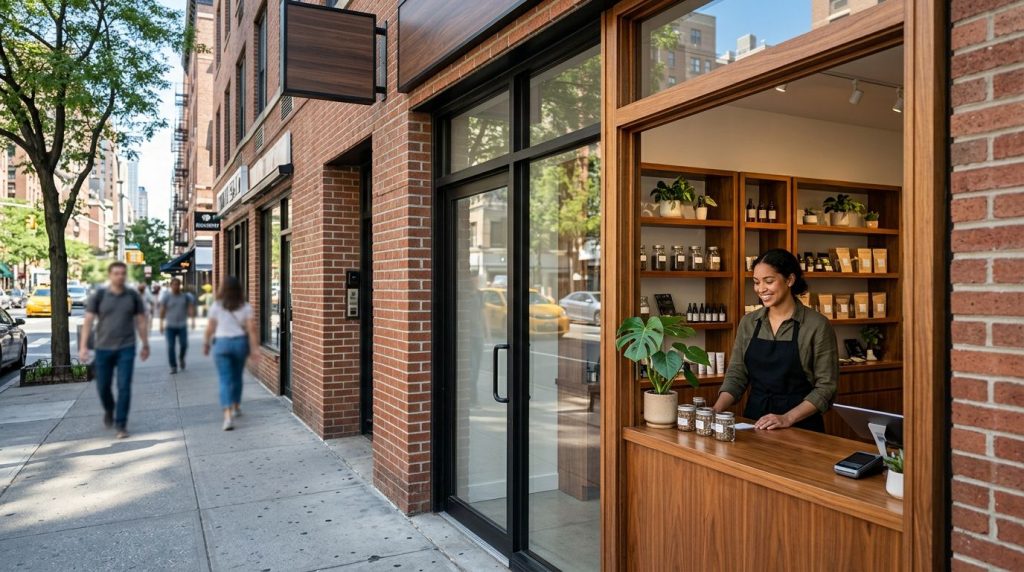
The most useful images start with the outside. You should be able to recognize the entrance of dispensary storefronts from the sidewalk, spot the facade, and understand the block context. Interior shots matter too, because they show whether the space feels bright, organized, crowded, or hard to browse.
Wide shots work better than moody close-ups alone. If a page shows only dramatic product images and never shows the actual retail space, it leaves a gap. You can’t tell whether the store looks clean, whether the displays are easy to read, or whether the shop matches the tone of the page.
Photo order matters as well. A clean exterior shot, followed by an interior wide shot and a few product display images, creates a simple visual path. You stop guessing what the visit might feel like.
Dispensary menus should answer real shopping questions
A dispensary menu has the same job. It should lower uncertainty, not create more of it. You don’t need every item in stock to trust a page, but you do need enough detail to understand the store’s selection.

Clear categories help first. After that, details matter more. Product type, brand, size, weight, potency range, and price, when shown, give you something concrete to compare. For example, a 1g pre-roll tells you far more than “premium pre-roll.”
Current availability is another trust signal. If stock moves fast, the page should say when the menu was last refreshed. Few things weaken a page faster than cannabis products that appear available online but vanish once you arrive.
The tone matters too. In a regulated market for recreational cannabis, menu text should stay factual. That means no inflated promises, no health claims, and no language that turns basic store information into hype. High-quality pages emphasize safety standards, such as the use of child-resistant packaging, clear product labeling, and rigorous product testing; these factors prove seed-to-sale transparency. If the menu tells you what the marijuana product is, how it’s packaged, and whether it’s in stock, it has done its job.
Frequently Asked Questions
What are the essential basics every strong dispensary listing must include?
A strong listing puts store name, full address with borough, current hours, phone, payment methods, and services like walk-ins or delivery right at the top. These details confirm the store is licensed, open, and easy to reach without page-hopping. Fresh updates prevent outdated info that erodes trust faster than sparse facts.
Why do photos matter more than product close-ups in a listing?
Photos should show the actual exterior and interior to help you recognize the entrance, assess the space’s organization, and picture the visit. Wide shots of the storefront and shop interior reduce guesswork better than moody product images alone. Proper photo order—exterior first, then interior—guides you visually without gaps.
How can you tell if a dispensary menu is reliable?
Look for clear categories, specifics like product type, brand, weight, potency, and price, plus last-updated notes for fast-moving stock. Factual language emphasizes safety like testing and packaging, avoiding hype or health claims. This concrete info lets you compare options and arrive prepared, not disappointed.
What makes reviews add real value to a dispensary profile?
Recent, detailed feedback with patterns on waits, staff, entrance issues, or menu strength feels authentic over vague praise. Moderation filters spam but keeps honest rough edges, and reviews should match store facts like payment options. Together, they paint a current operational picture beyond stars alone.
How do recreational dispensaries differ from medical ones in listings?
Recreational spots serve the general public with valid ID, focusing on walk-ins, deals, and bud-tender expertise for adult-use cannabis. Medical marijuana requires a card and may have separate access; strong listings note this distinction. Always check maps, legal limits, and services permitted by New York state law.
Reviews keep a dispensary listing honest
Dispensary reviews are where a listing stops feeling staged and starts feeling lived-in. A star rating helps, but it doesn’t tell the full story. You want recency, detail, and a spread of comments that sound like real visits.
Patterns matter more than one glowing post. If several people mention long waits, friendly staff, a confusing entrance, or a strong menu, you can start to trust that pattern from a verified dispensary. On the other hand, a burst of vague praise with no specifics can feel thin.
Recent feedback carries more weight than old enthusiasm. A store may have opened strong and changed later. That’s why a strong listing gives you a steady stream of current impressions, not just a snapshot from opening month.

Moderation matters too. Public feedback should filter out spam, abuse, and obvious fabrication, but it shouldn’t scrub away every rough edge. Honest reviews often include small annoyances, useful context, and details that polished marketing copy would never include. That standard fits TheBestHead’s mission as an independent listing and review platform.
Reviews also need to line up with the rest of the page. If visitors keep mentioning cash-only checkout, but the store information says cards are accepted, trust starts to slip. The best listings treat reviews and store facts as parts of the same record.
When all of that lines up, you don’t only see a store. You see a current picture of how that store operates.
Note that these retail entries often focus on recreational spots for the general public, setting them apart from medical marijuana dispensaries. While many shops welcome everyone, patients seeking medical marijuana might need a medical marijuana card. A good listing might highlight weed deals or the expertise of a bud-tender. Always check the interactive map for the best routes, and remember to stay within the legal limit, as any licensed source would require.
The best listing feels simple because the hard work happened before you arrived. Clear store information, honest photos, current menu detail, and grounded reviews remove doubt early.
That matters even more in New York, where convenience and trust often decide where you go. If a retail entry helps you verify the store, picture the visit, and understand the menu without guesswork, it’s strong. If it leaves you filling in blanks, it still needs work.


