If you only judge a dispensary by its storefront photo, you miss half the picture. In New York City, the block around the store can shape your visit just as much as the store itself.
That matters even more now. As of March 2026, NYC has more than 130 licensed dispensaries. As more people seek a licensed cannabis shop or a recreational cannabis dispensary, the legal New York City cannabis market continues to expand, and new listings appear regularly. When you compare nyc dispensary listings, you need more than an address, a logo, and a few interior shots. You need context that helps you decide whether the location fits your route, schedule, and comfort level.
Why the block belongs in the listing
A good listing for a licensed dispensary should describe the block around the shop, not just the shop itself. In NYC, one avenue can feel busy and easy, while the next block feels awkward or hard to reach. That difference affects how useful a listing really is, especially for users looking for recreational marijuana or searching for weed near me.
The strongest listings help you read the neighborhood at a glance. They tell you whether the store sits in an office-heavy corridor, a residential strip, a nightlife zone, or a mixed-use area. They also hint at what the walk feels like, whether sidewalks stay active, and how easy the entrance is to find.
This quick comparison shows why those details matter:
| Listing detail | Why it matters |
|---|---|
| Subway and bus access | You can judge how simple the trip will be before you leave |
| Cross streets or landmarks | You can place the store on a real block, not just a pin |
| Building and entrance notes | You can tell if there’s a stair-only entry, buzzer, or street-level door |
| Online ordering and pickup | Lets you confirm if you can order online for in-store pickup |
| Nearby land use | You get a sense of pace, foot traffic, and surrounding activity |
That last point has more weight now. In March 2026, lawmakers moved to limit new New York City cannabis dispensaries within 500 feet of youth-focused sites, while protecting existing licensed businesses. So, the land use around a shop is no longer background noise. It’s part of the location story.
A thin listing leaves you to guess. A useful one reduces guesswork. If you’re reading a directory, you should be able to picture the trip before you go.
Transit, foot traffic, and the neighborhood clock
In NYC, distance on a map doesn’t always match the real experience on foot. Ten minutes can feel easy in one area and irritating in another. That’s why transit notes and street rhythm belong in the listing.
A solid listing should tell you more than “near the train.” It should give enough detail for you to judge timing. Is the nearest station one block away or four? Is the block simple to reach from a main avenue, or tucked behind a quieter stretch with less activity at night? Those details change how the visit feels.
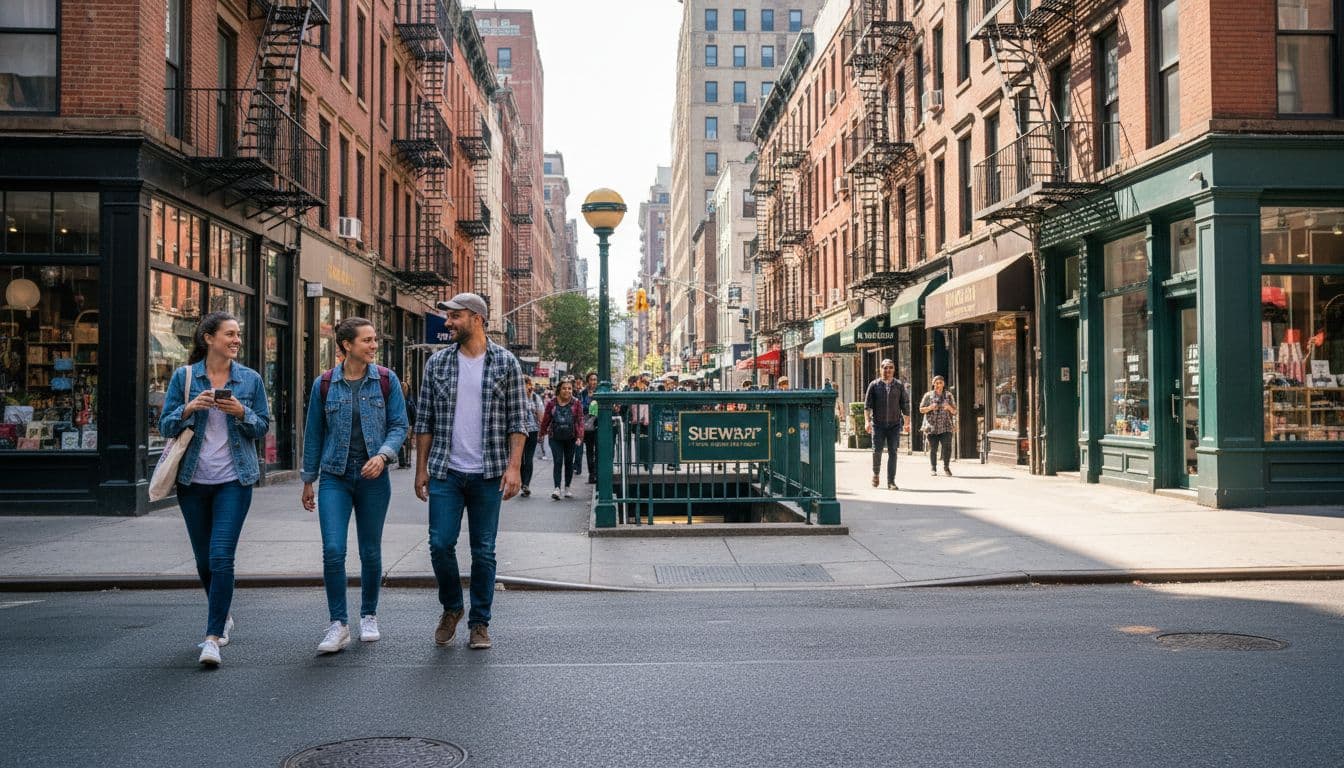
Timing matters, too. Midtown Manhattan can surge during lunch and after work. A residential block in Queens may feel steady in the afternoon but much quieter later on. The Flatiron District can empty out after office hours, while nightlife corridors grow louder as the evening starts. When listings mention store hours without local context, they leave out a big part of the decision.
In NYC, a short walk can feel very different at 2 p.m. than it does at 9 p.m.
You should also look for clues about the sidewalk itself. Are there nearby delis, coffee shops, and other open storefronts? Is the entrance on a wide avenue or a side street? Does the listing mention accessibility, elevators, or a second-floor location? Those facts help you judge comfort, not just legality.
In other words, the best listing acts like a street-level preview. It tells you how the area moves during the hours you might actually visit and specifies if cannabis products like cannabis flower, marijuana edibles, or THC vaporizers are available to help you judge if a visit is worth the trip during specific hours.
How to spot NYC dispensary listings that respect your time
The most useful nyc dispensary listings share clear, practical facts. First, they make the licensed status easy to understand, confirming it’s a licensed cannabis shop or licensed recreational shop. You shouldn’t have to hunt for the business name, location details, or basic operating hours. Listings should note requirements like government-issued ID and highlight professional budtenders. Modern payment options like Dutchie Pay add real convenience. If a listing feels vague about identity, that’s a bad sign.
Next, look for real neighborhood signals. A wide exterior photo helps more than a tight crop of the door. Cross streets matter. Entrance notes matter. Accessibility notes matter. Even simple facts, such as “street-level entrance” or “near a major subway stop,” can save you from a frustrating trip. Good listings also preview top-quality cannabis like pre-rolls, tinctures, topicals, cannabis concentrates, and CBD oils.
Good listings also avoid hype. If every sentence sounds polished but none of it helps you picture the block, the page isn’t doing its job. In a city this dense, practical detail beats marketing language every time.
Context becomes even more useful when you’re comparing areas, especially licensed dispensaries with cannabis products available for order online or in-store pickup. For example, the pace of a shop near nightlife can differ from one in a quieter mixed-use district. If you want a side-by-side look at how place affects the experience, see this comparison of Williamsburg, Astoria, and Downtown Brooklyn. If you’re newer to legal retail, this first-time NYC dispensary guide gives helpful background before you start comparing listings.
You don’t need a listing to tell you everything. Still, it should answer the basics with confidence. When it does, you can tell the difference between a store that simply exists on a map and one that makes sense for your real day.
Read beyond the photo
In NYC, a marijuana dispensary never stands alone. The street, the transit options, the building, and the daily rhythm all shape what the listing should tell you. If you read beyond the storefront, you make better use of directories and spend less time guessing. The best listing gives you context, helping your search for the right marijuana dispensary or dispensary near me zero in on local New York favorites while clarifying if the store offers cannabis delivery services to complement their physical location. In this city, context is what turns a pin on a map into useful information.