

Hundreds of New York City dispensaries now trade on the city’s streets, and that changes more than one retail category. When you look at New York City dispensaries as part of the city’s wider retail mix, you see real estate, compliance, staffing, merchandising, and neighborhood foot traffic working together.
As of May 2026, the city has more than 300 licensed cannabis dispensaries, part of a statewide total above 640. That scale means New York City cannabis retail is no longer a novelty. It’s now part of how people move through shopping streets, compare storefronts, and judge local business districts. The key is knowing where dispensaries resemble other retailers, and where the rules set them apart.
Key Takeaways
- New York City dispensaries, numbering over 300 as of May 2026, now integrate seamlessly into the retail mix like mainstream specialty shops with polished storefronts, category displays, and competition for foot traffic.
- Strict regulations under New York Cannabis Law, including age checks, compliance protocols, and community board notifications, set licensed dispensaries apart from other retailers while building market trust over illegal operations.
- Dispensaries boost neighborhood economies by filling vacancies, drawing locals and tourists, and enhancing mixed commercial blocks alongside cafes, boutiques, and food shops.
- Modern operations mirror urban shopping habits with mobile searches, live menus, pre-orders, and organized product displays for cannabis flower, edibles, vapes, and more.
Dispensaries now operate like mainstream specialty retail
If you walk busy blocks in Manhattan, where a Manhattan weed store stands alongside others, Brooklyn, or Queens, licensed shops no longer look temporary. Many use glass fronts, polished interiors, trained floor staff, and category-based displays. The format feels familiar because dispensaries compete for the same walk-in attention as beauty stores, wine merchants, and other specialty shops. A Times Square dispensary, for instance, draws crowds right alongside them.
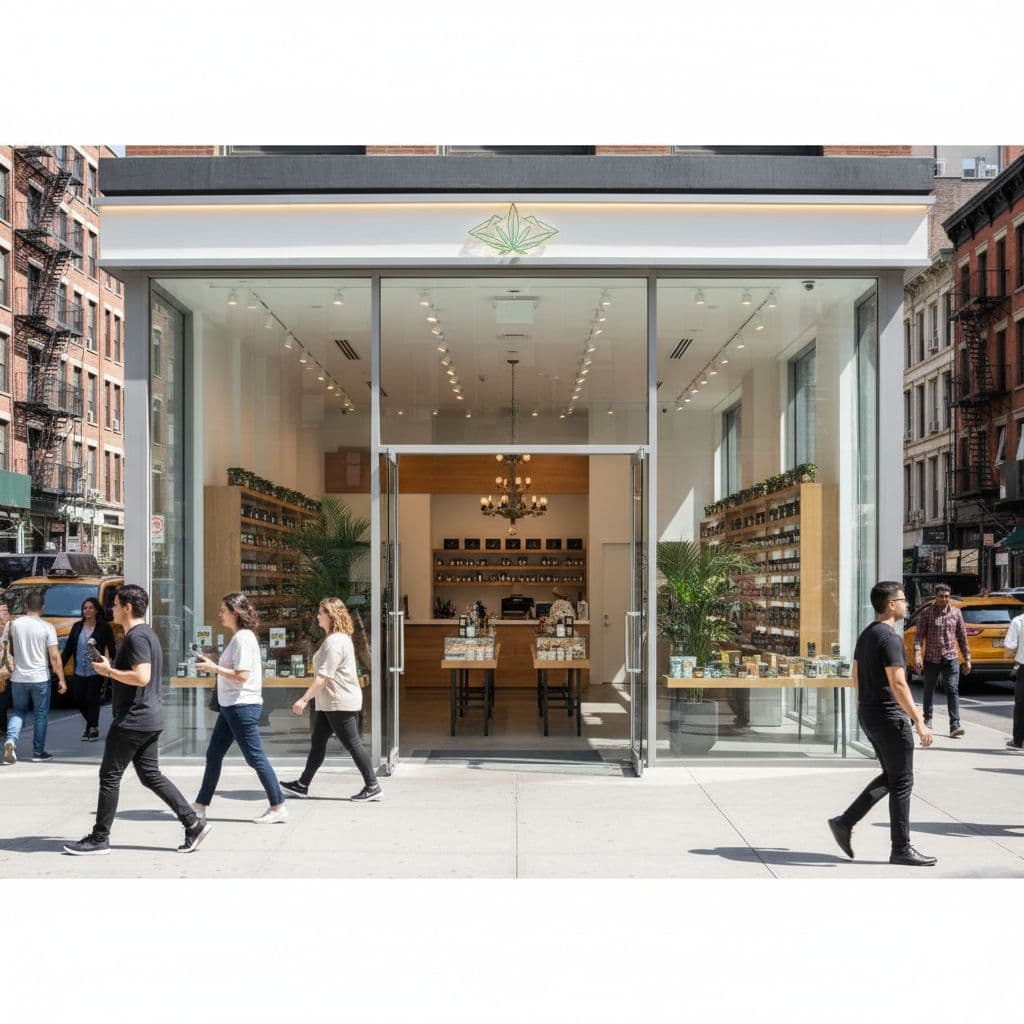
The retail logic is standard. Stores need visibility, clean signage, good lighting, and enough room for check-in, browsing, and checkout. They also need a location that fits subway access, neighborhood spending, and local rules. That places cannabis retail inside the same commercial equation that shapes other street-level tenants.
A licensed dispensary is now part of the same street retail contest as cafes, boutiques, and specialty food shops.
You can also see how the category has adopted normal urban shopping habits. Local shoppers often search “weed store near me” on mobile to find nearby storefronts. Many stores post live menus, organize products by format like cannabis accessories, and offer pre-orders for faster pickup. Those habits mirror what you already expect from modern retail. You compare categories, reviews, price ranges, and convenience before you visit.
That matters for the city itself. In some corridors, dispensaries can fill ground-floor vacancies that might otherwise sit dark. On stronger blocks, they add another reason for people to stop, browse, and spend time in the area. They don’t replace the rest of retail, but they do join it in a visible, permanent way.
Regulation sets cannabis stores apart from other shops
Even with that familiar storefront model, cannabis retail doesn’t fit neatly beside every other category. A licensed dispensary works under tighter rules on age checks, product handling, packaging, and who can be served. Under the Marijuana Regulation and Taxation Act, particularly New York Cannabis Law Section 85, adult-use cannabis stores cannot sell to anyone under 21 or to a visibly intoxicated person. While these stores serve the general public, they operate differently than businesses requiring a medical marijuana license.
Store openings also carry a layer of public process that most boutique retailers never face. New York’s adult-use retail license overview, overseen by the Office of Cannabis Management, requires notice to the municipality, or in New York City, the local community board, before the final application is filed. That ties dispensaries to neighborhood review in a direct way.
Those rules shape the customer experience. You often enter through an ID checkpoint, not straight onto the sales floor. Security planning, storage controls, and inventory tracking are part of daily operations. From the sidewalk, a dispensary may look like a premium specialty shop. Inside, it runs with a level of control that many other retailers do not need.
This is also why New York State licensed operators matter to the broader market. For years, illegal shops blurred the category and weakened trust. City and state enforcement changed that over time. As a result, landlords, nearby businesses, and customers can judge licensed stores by clearer standards. That gives cannabis retail a firmer place in New York City’s commercial system.
What dispensaries add to the city’s retail economy
Because adult-use cannabis is legal for people 21 and older, dispensaries draw both local shoppers and visitors. Tourists do not need New York residency to buy legal cannabis products from a licensed cannabis dispensary, so the category taps into the same visitor economy that supports hotels, restaurants, and entertainment districts. Weed delivery services extend that reach for locals, and in a city built on movement, that matters.
At the same time, dispensaries bring a specific kind of retail labor. Cannabis experts need product knowledge, but they also need to handle compliance, ID checks, and customer questions without drifting into medical or legal advice. That makes the role closer to regulated specialty retail than to a casual counter job.
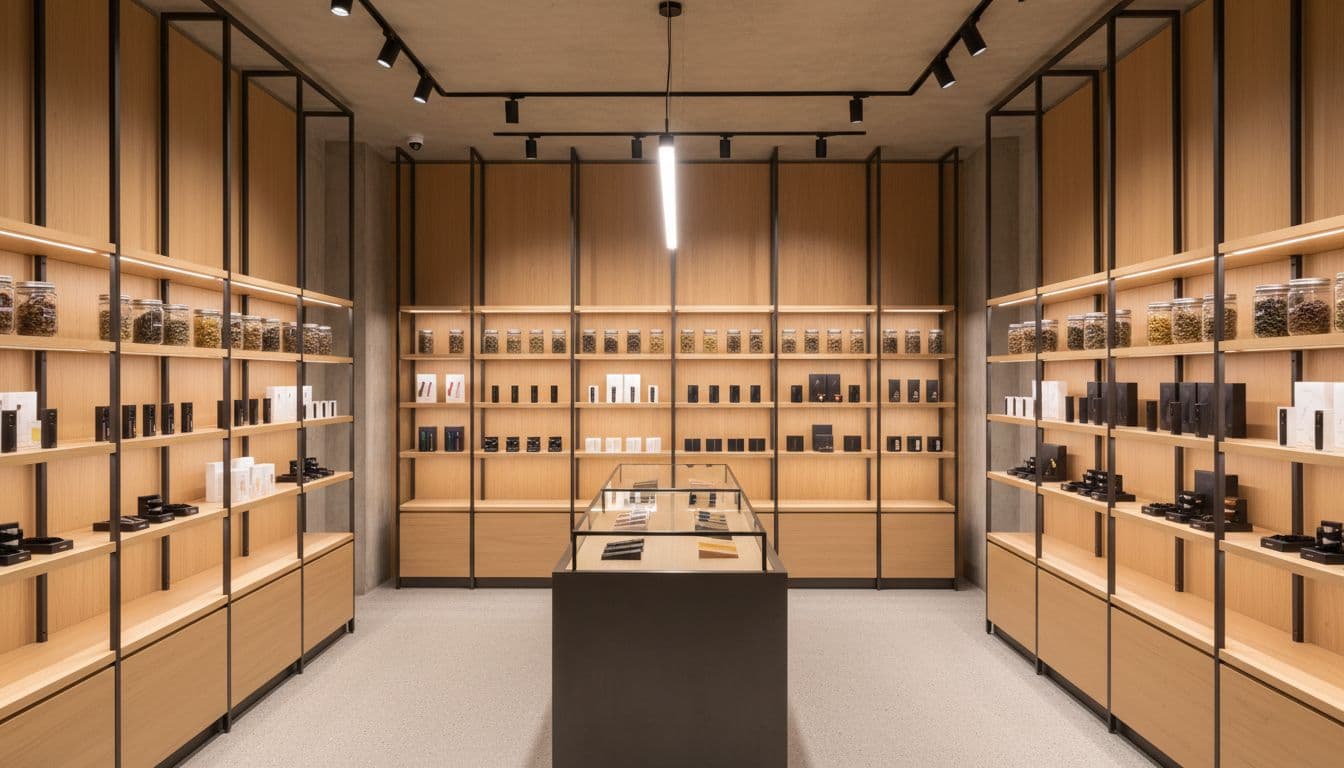
The in-store presentation matters here too. Strong shops feel calm, organized, and easy to read, showcasing a premium cannabis selection. Categories such as cannabis flower, pre-rolls, cannabis edibles like THC-infused gummies, THC vapes and vape cartridges, concentrates including live resin, and topicals are often arranged by marijuana strains such as indica and sativa or hybrid strains with the same discipline you would expect in cosmetics or wine retail. Cannabis flower and pre-rolls stand out when stores do that well, letting you compare formats without the confusion that once pushed some shoppers toward informal sellers.
You should also view dispensaries as one piece of a mixed commercial block, not as a category that overrides the rest. A healthy corridor still depends on variety. Cannabis shops sit beside food, pharmacy, apparel, and service businesses, and they compete for the same limited attention. That is the clearest sign that New York City dispensaries now belong to mainstream retail, even though their rules remain tighter than most.
Frequently Asked Questions
How many licensed dispensaries operate in New York City?
As of May 2026, New York City has more than 300 licensed cannabis dispensaries, contributing to a statewide total above 640. This scale positions them as a permanent part of the city’s retail landscape, competing on busy streets in Manhattan, Brooklyn, and Queens.
Do NYC dispensaries resemble other retail stores?
Yes, licensed dispensaries feature glass fronts, polished interiors, trained staff, and category-based displays similar to beauty stores or wine merchants. They vie for walk-in attention with standard elements like visibility, lighting, and subway-accessible locations, filling vacancies and adding to foot traffic.
What regulations distinguish cannabis dispensaries?
Dispensaries must enforce strict age verification for those 21+, avoid sales to intoxicated individuals, and follow inventory tracking per New York Cannabis Law Section 85. Openings require community board notice, and operations include ID checkpoints and security, overseen by the Office of Cannabis Management.
Can tourists purchase from NYC dispensaries?
Tourists do not need New York residency to buy from licensed dispensaries, tapping into the visitor economy like hotels and restaurants. Weed delivery services further extend access for locals in this movement-driven city.
How do dispensaries fit into neighborhood retail?
They join mixed commercial blocks as licensed specialty stores, complementing food, pharmacy, and apparel businesses without overriding variety. Strong presentation of products like flower, pre-rolls, edibles, and vapes enhances calm browsing, much like cosmetics or wine retail.
The bigger takeaway
When you view dispensaries through a retail lens, the picture gets clearer. Consumers now seek the best dispensary in New York City based on familiar factors like rent, foot traffic, store design, labor, and strict state rules that ensure legal cannabis products.
They are licensed specialty stores shaped by these dynamics.
What looked new a few years ago now reads like familiar city commerce. In New York City cannabis, dispensaries are part of the retail mix, not outside it. Their place is real, but it’s defined as much by compliance at the licensed dispensary in NYC as by customer demand.


