
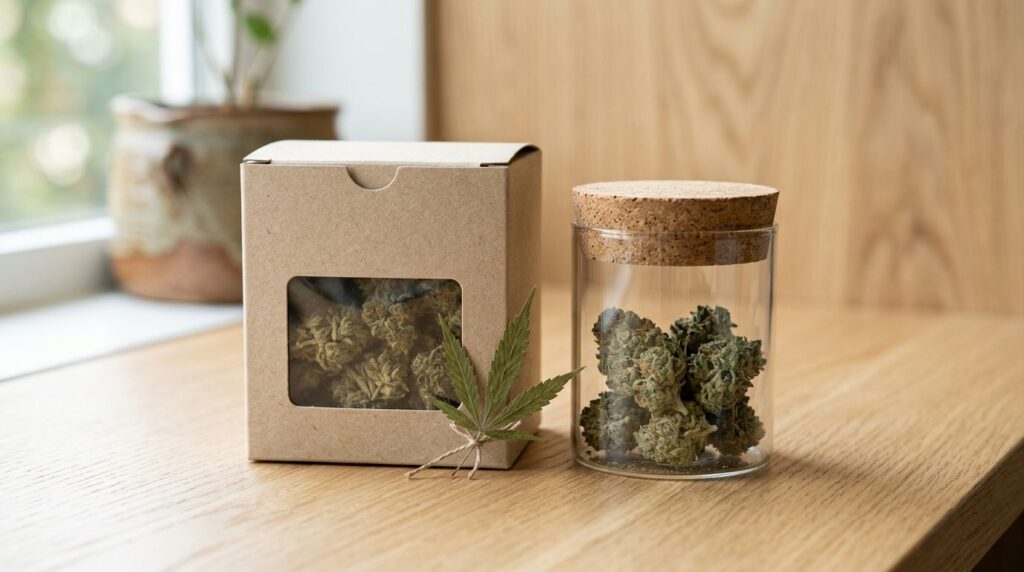
Packaging is where legal cannabis often creates its biggest environmental footprint. If you pay attention to licensed products in New York City, you can already see that the industry is pivoting toward sustainable cannabis packaging.
Brands now face a harder standard. You expect packaging that protects the product, meets state rules, and uses less material. That pressure is driving the next wave of eco-friendly cannabis packaging.
Key Takeaways
- Efficiency Over Aesthetics: Modern sustainable design focuses on reducing total material use, such as eliminating empty space and unnecessary layers, rather than simply choosing “earthy” materials.
- Regulatory Compliance is Mandatory: Any eco-friendly solution must continue to meet strict legal requirements for child-resistance, tamper-evident seals, and mandatory product labeling.
- The Rise of Mono-Materials: Brands are increasingly moving toward single-material packaging—such as all-paper or all-plastic designs—to simplify the recycling process and reduce consumer confusion.
- Digital Integration: Smart packaging, specifically the use of QR codes, helps brands maintain regulatory transparency while minimizing the need for excessive paper inserts and physical labeling clutter.
- Circular Models: Refillable containers and right-sized packaging are becoming preferred strategies to minimize environmental impact while maintaining product freshness and security.
Why cannabis packaging is changing so fast
Cannabis packaging has always faced a complex set of requirements. It must block light, control odor, preserve product freshness, resist tampering, and ensure child-resistant packaging. In licensed markets, it must also carry extensive product information. For years, these demands led to the industry standard of thick plastic jars, redundant boxes, and bulky closures.
Now, the market is demanding less waste without sacrificing those essential safeguards. This evolution toward sustainable cannabis packaging is not merely cosmetic. It fundamentally changes how brands select materials, size their containers, and consider the total lifecycle of the package after the product is consumed.
You can see this pressure clearly in dense urban areas. Trash and recycling are not abstract issues when you live in a small apartment or share a building waste chute. Bulky designs have a significant environmental impact, and consumers are increasingly aware of the high carbon footprint associated with excessive materials. Oversized jars and unnecessary layers of plastic now stand out as a negative, making packaging waste a core part of the customer experience rather than a side issue.
At the same time, innovations in green packaging cannot ignore regulatory compliance. Licensed operators must prioritize safety, which means that any new solution must remain secure and clearly labeled. While older formats like traditional mylar bags or standard smell proof bags have long served the industry, brands are now tasked with improving these formats to be more eco-conscious without compromising their functional integrity. A flimsy paper carton might look responsible, but it fails if it crushes easily or allows for odor leaks, making it a poor choice for high-quality cannabis flower packaging.
In licensed cannabis, the greener package still has to be secure, child-resistant, and clearly labeled.
That is why the best new designs focus on reduction rather than just appearance. Brands are cutting empty space, removing needless layers, and replacing mixed materials with simpler, mono-material formats. In 2026, the real trend is about efficiency. The goal is not to make packaging look earthy, but to ensure it fulfills its protective role while leaving less waste in your hands.
The shift toward lower-impact materials
Materials sit at the center of this change as the industry prioritizes sustainable cannabis packaging. Single-use petroleum plastic is still common, but it no longer looks like the default future. You are seeing a transition toward post-consumer recycled content, ocean-bound plastic, glass jars with renewable bamboo lids, and various earth-friendly alternatives.
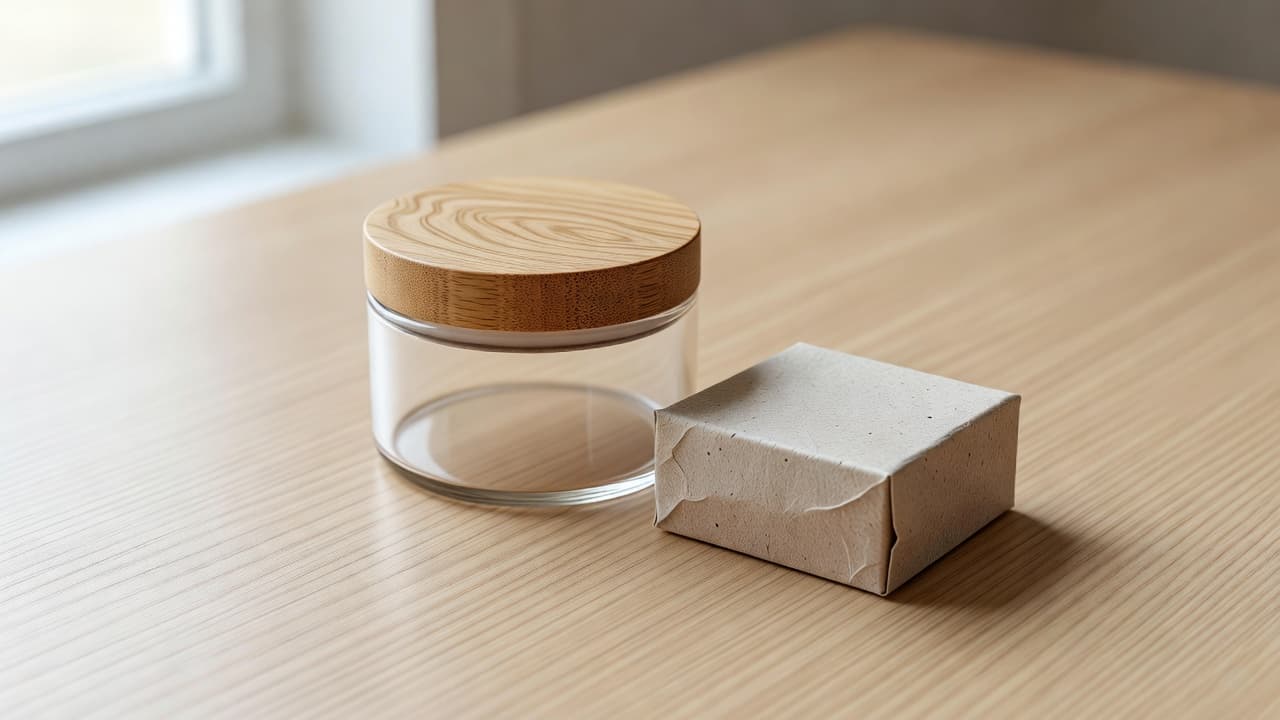
Some materials sound greener than they perform, so the details matter. Compostable packaging is less useful if your local waste stream will not accept it. A paper box looks simple, but it becomes harder to recycle if it is laminated with mixed coatings. That is why many brands now prefer packages made from one main material. They are easier to sort and easier for you to understand.
This quick comparison shows where many formats are headed:
| Material | Why brands use it | Main limit |
|---|---|---|
| Recycled paperboard | Light, familiar, widely recyclable | Needs inserts or liners for odor and moisture control |
| Glass jars | Reusable feel, strong product protection | Heavier to ship and easier to break |
| Hemp-based plastics | Lower fossil-fuel use, durable | End-of-life options vary by local system |
You can also spot a move toward molded fiber, rice husk blends, and other low-waste components. If you want a closer look at how those materials appear in real packaging, these compostable material examples show the direction clearly. Smaller formats matter too. For pre-roll tubes, brands are testing recyclable and compostable packaging options that utilize biodegradable packaging instead of heavy plastic shells.
The strongest material trend is not one miracle substitute. It is better matching. Brands are choosing materials based on the product, the waste stream, and the amount of protection required. That approach creates packaging you can sort with more confidence, and it avoids green claims that fall apart on inspection.
Refillable formats and smaller packs are gaining ground
Refillable models have moved from niche concepts to a central pillar of the circular economy. You can see why this shift is gaining momentum; a durable outer container used multiple times cuts waste far more effectively than producing a new rigid vessel for every purchase. Metal tins, sturdy canisters, and hard cases now feature prominently in design concepts and limited product launches.

However, refill systems in the cannabis industry present unique challenges. Because cannabis flower packaging must maintain strict compliance, brands are required to provide child-resistant packaging even within refillable frameworks. These systems must ensure secure closures and product freshness while adhering to labeling regulations. This complexity makes cannabis different from commodities like coffee or hand soap, as developers cannot assume that every low-waste model carries over cleanly without significant engineering.
Because of these regulatory hurdles, many brands are opting for immediate material reduction. Rather than relying on traditional bulky glass jars, companies are pivoting toward lightweight mylar bags that drastically reduce the carbon footprint of shipping. This approach extends to smaller items, where right-sized pre-roll tubes help minimize excess air and materials. By choosing more efficient pre-roll tubes, brands save space on retail shelves and during transit.
Another strong shift involves the move toward single-material systems. Using materials like ocean-bound plastic or fully compostable biodegradable packaging allows for easier disposal and recycling. Mixed materials may feel premium, but they often end up in landfills because consumers struggle to separate the components. A package constructed from a single material family is inherently more sustainable.
The best waste reduction often starts before recycling. It starts with using less material.
For consumers, this change is highly practical. Smaller, optimized packs create less household clutter and feel less excessive. For brands, downsizing reduces freight weight and warehouse storage requirements. Right-sized packaging has become one of the most realistic paths forward because it improves cost, waste management, and overall usability at the same time.
Smart packaging has to work with compliance
Sustainable packaging is not only about materials. It is also about information. Cannabis labels carry a lot of required detail, yet packages rarely have much room. That is why QR codes and other smart packaging features are showing up more often in 2026.

When you scan a code, you may find lab results, batch data, product details, or disposal guidance without adding another printed insert. This approach reduces paper waste while increasing transparency. By integrating these digital tools into your custom branding, you can keep physical labels legible instead of cramming every detail into tiny print.
However, smart features do not replace the basics. Strict regulatory compliance remains the priority for any product. Child-resistant packaging is still a fundamental requirement, just as tamper-evident features are essential for consumer safety. Furthermore, effective storage remains critical. Whether you are packaging delicate concentrate containers or high-volume thc edible packaging, the design must prioritize moisture control, light protection, and terpene preservation. A package that scans well but fails to keep the product fresh is not progress.
This is where the best designs stand out. They treat sustainability as a holistic system rather than a finish. The label, closure, container, and digital layer all work together. A smaller paperboard box might carry the legal essentials, while a scannable code handles deeper product information. A refillable tin might reduce waste, while an inner sealed pouch ensures the product remains potent.
For licensed businesses in New York and other regulated markets, that balance is the real test. You cannot separate environmental goals from the legal landscape. The brands that get it right will not always use the most novel material. They will use the package that creates less waste, remains easy for adults to use, and still meets the rigorous standards that govern legal cannabis products.
Frequently Asked Questions
Can eco-friendly packaging still keep cannabis fresh?
Yes, modern sustainable packaging is engineered to maintain potency and freshness as effectively as traditional materials. Brands are increasingly using advanced, high-barrier mono-materials that protect against moisture, light, and odor without relying on bulky, non-recyclable multi-layered plastics.
Why are refillable systems difficult to implement in cannabis?
Refillable systems must still comply with rigorous state-mandated child-resistant and tamper-evident regulations. Engineering a durable, reusable container that maintains its safety certifications and sealing integrity over many cycles is more complex than producing a single-use package.
What makes a package “non-recyclable” even if it looks green?
Many packages that appear sustainable are actually difficult to recycle because they combine different types of materials, such as a paper box lined with a plastic film or a metal tin with a bonded plastic coating. When components cannot be easily separated, they are often diverted to landfills rather than being processed by municipal recycling streams.
How does smart packaging help with sustainability?
Smart packaging, particularly QR codes, allows brands to offload extensive legal disclosures, lab results, and educational information to a digital platform. This significantly reduces the amount of paper inserts and physical packaging space required to meet compliance standards.
Conclusion
The strongest packaging trend in cannabis is simple: less waste, fewer parts, and better material choices. In 2026, the best designs do not just chase a green aesthetic. They reduce excess while keeping products protected and compliant.
If you are comparing licensed cannabis brands, pay attention to the entire package, not just the product inside. Today, eco-friendly cannabis packaging is a hallmark of quality, and the brands that treat it seriously are much easier to identify. By opting for sustainable cannabis packaging, companies are actively reducing their environmental footprint. These mindful design choices not only improve consumer trust but also play a critical role in shrinking the overall carbon footprint of the cannabis industry.


