

When you check out at a licensed recreational dispensary in New York City, your cashier might mention the store’s points system. These rewards can offer real value, but only if you understand how a dispensary loyalty program NYC actually functions.
Because the cannabis industry here is strictly regulated, rewards programs at recreational dispensaries NYC are shaped by state rules rather than just store policy. Consequently, the incentives you see may look more restrained than loyalty offers in other retail sectors. The following sections will help you evaluate these programs clearly so you know exactly what to expect before you count on your rewards.
Key Takeaways
- Regulatory Compliance: NYC dispensary loyalty programs are shaped by strict state regulations rather than standard retail practices, which accounts for their restrained marketing and specific redemption structures.
- Point Dynamics: Most programs utilize a point-based system tied to pre-tax spending, where points are earned upon purchase and redeemed for future discounts rather than free products.
- Fine Print Matters: Shoppers should prioritize checking point expiration dates, redemption minimums, and potential product exclusions to ensure their accumulated value does not go to waste.
- Value Over Hype: The most effective rewards programs are those that offer accessible, early-tier discounts rather than just high-ceiling milestones, providing consistent value that is easy to redeem without friction.
Why rewards programs in NYC look different
Cannabis rewards programs in New York operate within a strict retail framework. This matters because licensed dispensaries cannot market their products the same way a clothing chain or coffee app might. Because the state closely monitors how stores communicate regarding pricing, giveaways, and promotions, the average cannabis rewards program must be carefully structured to remain compliant.
For a while, these stringent rules made many operators cautious. Some stores held back on points or avoided clear discount language altogether. More recent state action gave licensed shops more room to run loyalty initiatives, which is why you now see a wider variety of discounts and deals across the city. This shift was covered in reporting on New York’s updated discount and loyalty rules.
Even so, the terminology remains important. A store may talk about membership benefits, exclusive rewards, or a rewards balance instead of using aggressive retail phrases. This is not wordplay for its own sake; it reflects a market where regulatory compliance impacts daily operations.
You can also expect licensed operators to be careful about how a reward is applied. In many cases, the program lowers the amount you pay on a later order rather than handing out cannabis as a gift. New York’s compliance reminders show how closely the state treats promotional activity.
In NYC, a rewards program can reduce what you pay later, but it should not function like a promise of free cannabis.
That legal backdrop explains why the dispensary loyalty programs NYC shoppers use often feel simple. They tend to focus on points, stored account credit, or limited pricing for members. You are less likely to see flashy spin the wheel promotions or broad public ads that scream about massive sales.
As a shopper, this is useful context. If a program sounds restrained, it may be because the store is staying safely within the rules, not because the offer is weak.
How points usually work at a licensed dispensary
Most loyalty programs follow a familiar pattern. You sign up once, the store tracks your purchases, and you earn points based on what you spend on cannabis products. Later, you redeem points for a price reduction on a future order.
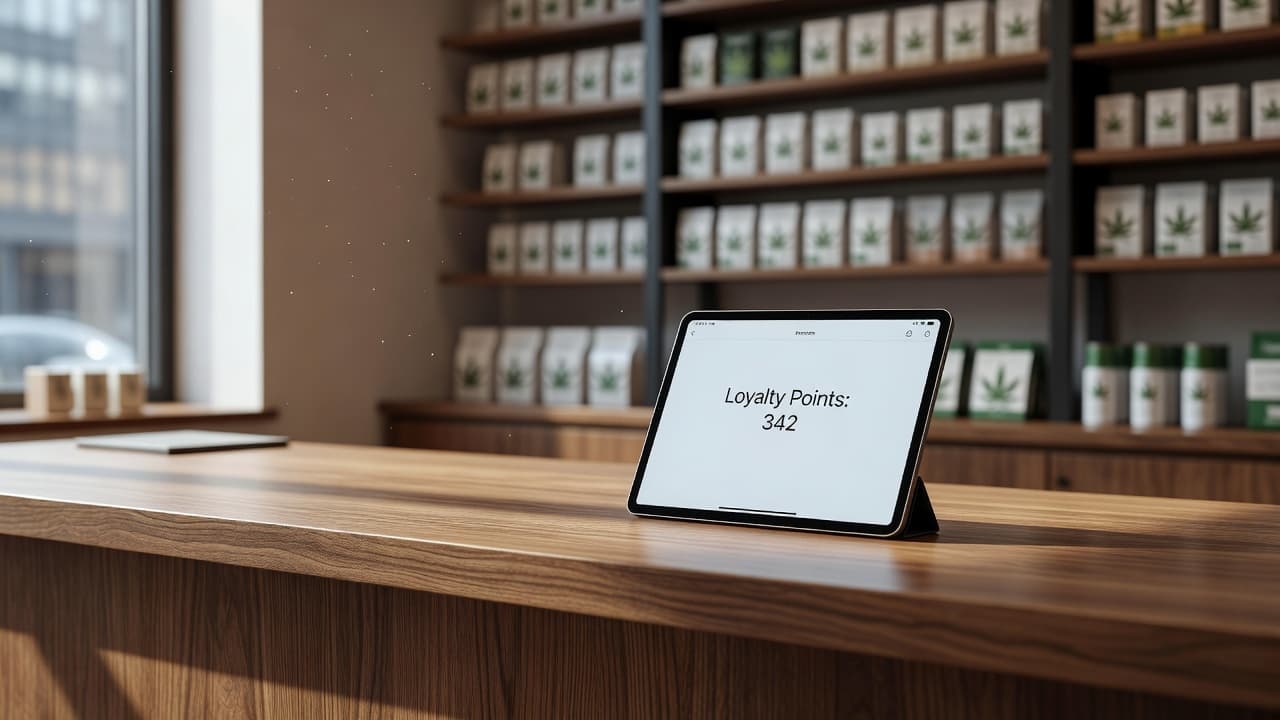
Enrollment is usually straightforward. In most cases, you must be 21 or older, show a valid government-issued ID, and create an account with an email address or phone number. Some shops let you enroll online before you visit, while others sign you up at the register.
After that, the important metric is often the points per dollar spent on your pre-tax subtotal. Many NYC programs calculate your rewards based on the subtotal before taxes, not the final amount you pay at the register. If you spend $100 before tax, a common structure is 100 points earned. The exact rate varies by dispensary, so you should not assume every dollar always equals one point.
Redemption also tends to follow tiered programs. Common examples in the NYC market include 100 points for about $5 off, 500 points for around $30 off, and 1,000 points for roughly $50 off. Those figures are not universal. One store may set a lower entry point, while another may make you save longer for a larger credit.
This quick table shows the terms you will usually see:
| Program detail | What it usually means |
|---|---|
| Sign-up | You create an account and verify age and ID |
| Earning rate | Points are often tied to pre-tax spending |
| Redemption | Points convert to a dollar-off credit at set tiers |
| Expiration | Unused points may expire after about 12 months |
| Limits | Some items or promotions may not qualify |
The pattern is simple, but the fine print changes the real value.
Some stores also add a first-visit bonus, a birthday perk, a referral program for bringing in friends, or occasional member-only offers. In NYC, those extras are often framed carefully and may come with limits. You might need a minimum purchase, or you may have to redeem within a set period. At some shops, points cannot be combined with another special price, such as discounts on pre-rolls and edibles.
If you order online for pickup, the process usually stays the same. Your points may appear in your account after the transaction closes during online checkout, rather than when you first place the order. That timing matters if you expected to use freshly earned points on the same day.
What to check before you count on your rewards
A points balance can look better on screen than it does at checkout. For frequent cannabis purchasers, reading the fine print is essential, as you should treat these terms with the same care you would use for a transit pass or airline credit.
Start with the points expiration policy. Many programs wipe unused points after a period of inactivity or after a fixed number of months, often clearing them out entirely after 12 months. If you shop only a few times a year, a large balance can fade before you use it. That is one of the most common letdowns.
Next, look at redemption limits. Some stores require a minimum number of points before any savings kick in. Others cap how much you can apply in one order. A program may sound generous, yet still slow you down if the first useful tier is far away.
Product exclusions matter too. Accessories, gear, or newly released cannabis products may qualify differently than your standard flower, vapes, or edibles. In some systems, member pricing and point redemption do not stack. In others, sale-priced items do not earn points at all.
You should also confirm whether the program works across multiple locations. A dispensary group may operate several licensed stores, but points are not always shared between them. For example, if you split your visits between a location in Midtown Manhattan and a NoMad dispensary, that detail can affect how quickly you build value.
The best rewards program is not always the one with the biggest headline number. It is the one you can use without friction.
Privacy is another practical issue. Joining usually means sharing contact details. That is normal for account-based rewards, but you should still know what the store collects and how it contacts you. Some people want text alerts, while others prefer email only.
Finally, stick with licensed operators. In the cannabis industry, legal compliance is part of the value of the program itself. A rewards account only offers genuine peace of mind when the store is authorized to run a fully compliant retail business.
How to compare NYC dispensary rewards programs with a clear eye
If you are comparing local stores, focus on usable value rather than marketing language. Two programs can sound similar while working very differently in practice. Remember that for these retail loyalty programs, a medical card not required, so you can start to accumulate points as a recreational customer just as easily.
First, check the earn rate. A one-point-per-dollar model is easy to understand, but it only helps if the redemption tiers are reasonable. A slower earn rate may still be better if the store lets you redeem sooner or use your points with more flexibility.
Then look at the floor, not only the ceiling. Big milestone rewards can be nice, yet most shoppers feel the benefit at the first or second tier. If a program gives you a modest savings after one or two visits, it may be more useful than a flashy system that takes months to matter. Always keep an eye out for how these programs lead to exclusive deals, as consistent loyalty to one shop often unlocks better long-term value.
The timing of rewards also counts. Some accounts update right away, while others post points later. If you like to plan your next visit around what you have earned, delayed posting can make the program feel less transparent.
Customer experience matters as much as the math. A clean account dashboard, knowledgeable budtenders who can explain the rules, and a clear checkout process all make a difference. When terms are vague, small surprises regarding your discounts and deals pile up fast.
You should also pay attention to how the store frames the offer. Clear wording usually signals a well-run system. If the details are hard to find, or if the answer regarding discounts and deals changes depending on who you ask, treat your reward balance with caution.
For many adults 21+ in the city, the most useful comparison is simple: how much can you save, how soon can you save it, and how easy is it to use that value at a licensed dispensary. That is the standard that cuts through the hype.
Frequently Asked Questions
Do I need a medical card to join a dispensary loyalty program in NYC?
No, you do not need a medical card to participate in most recreational dispensary loyalty programs. These programs are designed for adults 21 and over who purchase through licensed retail channels, and they function similarly to retail rewards programs in other industries.
Why do some dispensary rewards programs seem more restrictive than others?
Licensed dispensaries in New York must operate within a tightly regulated framework that dictates how they can communicate promotions and discounts. Stores that appear more cautious are generally prioritizing regulatory compliance to ensure they remain within the legal boundaries set by state officials.
Can I use my loyalty points for any item in the store?
Not necessarily. Many dispensaries apply exclusions to their loyalty programs, meaning certain items like accessories, gear, or newly released products may be ineligible for discounts. It is always best to check the store’s specific terms to see if your points can be applied to your intended purchase.
Do my loyalty points expire if I don’t visit the store often?
Yes, many dispensary loyalty programs include an expiration policy for unused points, often clearing them out after 12 months of inactivity. You should check the fine print of your specific account to see if there is a set timeframe for when your points will be removed from your balance.
Conclusion
Navigating a dispensary loyalty program NYC works best when you understand that these systems operate under stricter state regulations than those in other industries. Once you recognize these constraints, the structure of your favorite cannabis rewards program becomes much easier to navigate.
If you remember one thing, remember this: read the fine print regarding your points. A high-quality program should be transparent about how you earn, when you can redeem, and which cannabis products are eligible for discounts. Keep in mind that some services, such as cannabis delivery NYC, may have different rules regarding point redemption than in-store visits. When these details are easy to find, you can compare licensed dispensaries with confidence and maximize the value of your shopping experience.


