
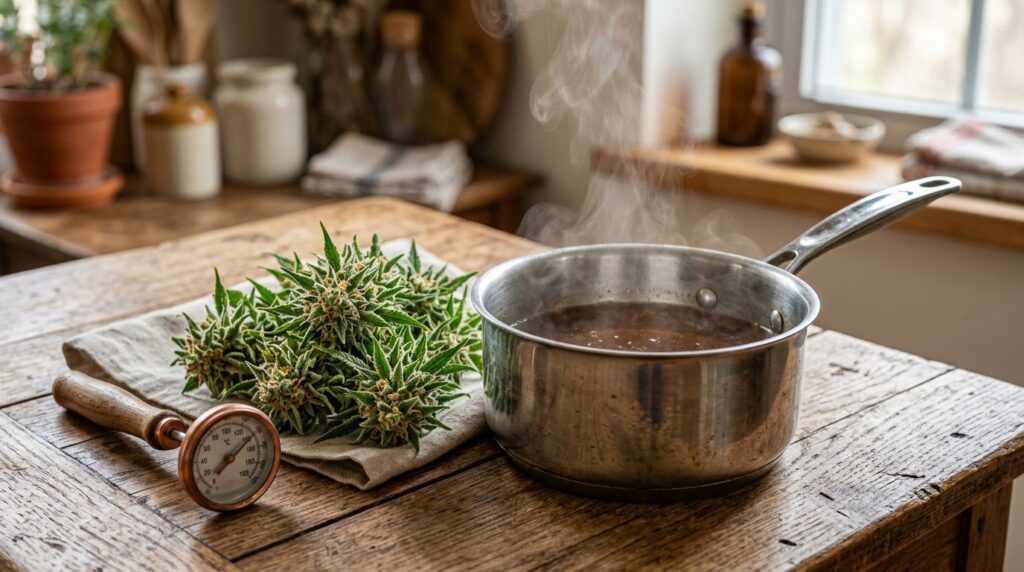
The same cannabis flower can produce a very different experience depending on one factor, heat. If you have ever wondered why raw cannabis does not behave like a smoked pre-roll or an infused gummy, the answer usually comes back to cannabis decarboxylation.
That term sounds technical, but the idea is simple. Raw plant material contains cannabinoids in one form, and heat changes them into another. Because raw cannabis does not provide the same psychoactive effects as cannabis flower that has been heated, understanding this shift makes product labels, effects, and consumption formats much easier to navigate when you are choosing your next product.
Key Takeaways
- Heat Drives Activation: Cannabis decarboxylation is the chemical process where heat converts acidic, non-intoxicating compounds like THCA and CBDA into their active, bioavailable forms like THC and CBD.
- Product Form Dictates Timing: While smoked or vaped flower relies on the user to provide heat at the moment of consumption, edibles and infused products are typically decarboxylated during production to ensure they are ready to consume immediately.
- Labels Matter: Discrepancies between THCA and THC numbers on a label reveal how much active material is present before versus after heating, which helps you understand the true potency of your product.
- Balance Is Essential: While heat is necessary for activation, excessive temperature can degrade delicate terpenes and cannabinoids, meaning precise control is vital for maintaining product quality.
What cannabis decarboxylation actually means
Cannabis plants naturally produce most cannabinoids in their acidic forms. This means that raw flower contains compounds such as THCA and CBDA, rather than high concentrations of the psychoactive or therapeutic compounds typically associated with the plant.
When you apply heat, these acidic cannabinoids lose a specific carboxyl group and release carbon dioxide in a process known as decarboxylation. Through this reaction, THCA and CBDA undergo a chemical transformation into their neutral forms. Once this transition is complete, the resulting activated cannabinoids, such as THC and CBD, are far more bioavailable for the human body to process.
You do not need a professional lab to trigger this change. A lighter initiates the process quickly, a vaporizer manages it through controlled heat, and baking or infusion methods achieve it more gradually. Even long-term storage can trigger a minor degree of change, although heat remains the primary driver.
A published study on acidic cannabinoids describes this conversion in clear chemical terms. If you prefer a simpler industry-facing explanation, this technical overview of cannabinoid activation outlines why producers pay close attention to the decarboxylation step during manufacturing.
What matters most to you is the practical result. Raw flower and heated flower may come from the same plant, yet the cannabinoid profile you consume can be quite different depending on how much THCA or CBDA has been converted.
Heat changes the form of the cannabinoids, and that change often shapes the experience more than people expect.
This is why cannabis decarboxylation sits at the center of product form. Flower, vapes, tinctures, and edibles may share a strain name or terpene profile, but heat dictates which activated cannabinoids actually reach your system.
Why raw cannabis feels different from heated cannabis
Raw cannabis works differently because THCA is not the same compound as THC. The same logic applies to CBDA and CBD. That sounds obvious on paper, but it is easy to miss when all four names appear on menus or labels.
If you consumed raw cannabis flower straight from the jar, you would not be experiencing it in the same state as smoked or baked products. Without sufficient heat, THCA remains in its acid form, which is non-intoxicating. As a result, you should not expect the same psychoactive effects that people usually associate with traditional THC products.
The same principle applies to CBD items. A raw plant may hold more CBDA than CBD. Once heat enters the process, that chemical balance shifts significantly.
This quick comparison helps frame the difference:
| Product form | Main cannabinoids before use | When heat changes them | What that means for you |
|---|---|---|---|
| Raw flower or fresh plant material | Mostly THCA and CBDA | Little to none at use | Different impact than heated cannabis, often lacking psychoactive compounds |
| Smoked or vaped flower | THCA and CBDA at first | During inhalation | Rapid conversion and a more familiar inhaled effect |
| Edibles and infused oils | Often already activated | Before you consume them | Cannabinoids are ready, but onset is slower because digestion takes time |
The table also shows why product form matters as much as label numbers. Two items can come from the same cultivar and still act differently because one relies on heat at the moment of use, while the other was activated earlier in production.
That difference is easy to miss on a busy dispensary menu. You may see similar THC-related numbers and assume the experience will match. In practice, raw material, inhaled flower, and infused products follow different paths because decarboxylation happens at different stages.
Where heat shows up in flower, vapes, and edibles
Heat enters cannabis in more than one way, and each route changes timing. With flower, the main conversion often happens when you light it or vaporize it. With edibles, the conversion usually happens before the product reaches the shelf.
That is why a gummy does not need a flame to contain active THC. The cannabis or extract used in the recipe has usually already gone through a heating step. If you want to decarboxylate weed at home for your own infusions, you can spread ground flower on a baking sheet lined with parchment paper. Maintaining an oven temperature around 240°F is key, as excessive heat can degrade the profile and damage delicate terpenes. By contrast, a jar of flower in a licensed dispensary is not pre-smoked. Much of its cannabinoid content may still be in acidic form until you use it.
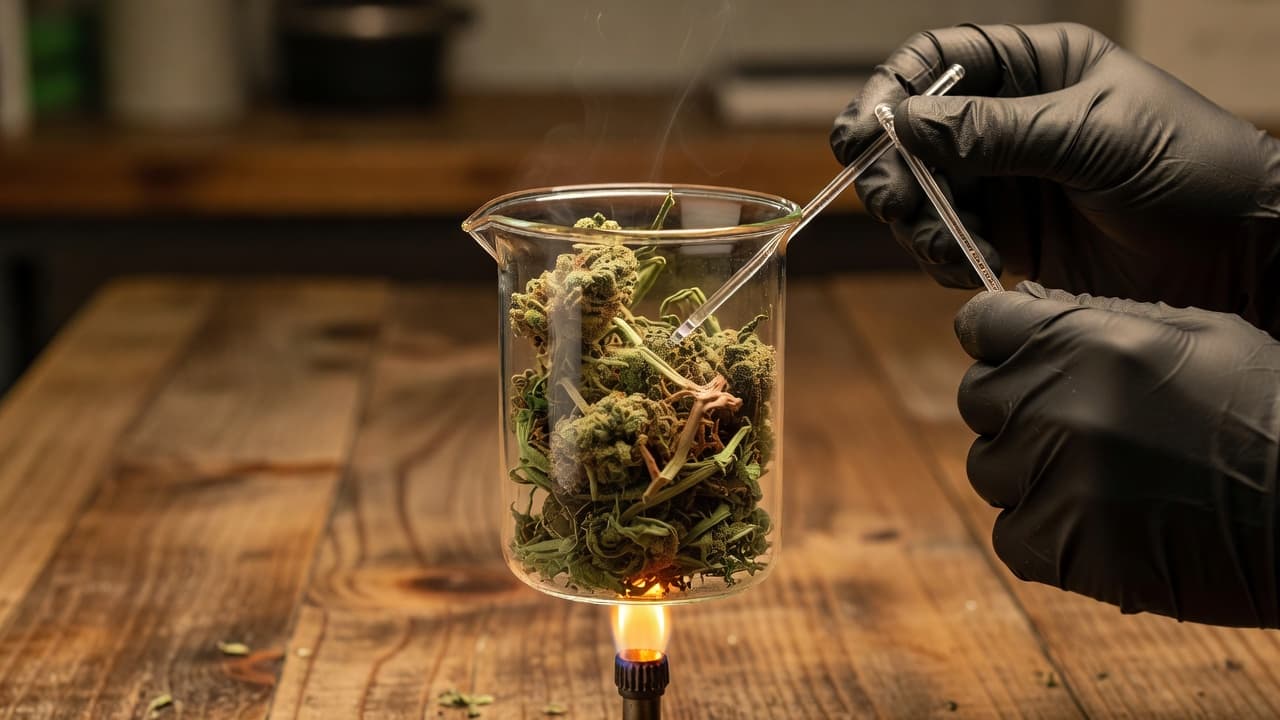
Vape products fall somewhere in the middle, because the device supplies the heat during use. Depending on the extract and formulation, the oil may contain cannabinoids that are already activated, or it may rely on the device’s heat for some of that change. The label and product type tell you more than the format name alone.
In licensed New York products, this matters because you are often comparing categories side by side. A Brooklyn dispensary menu might place flower, carts, soft chews, and tinctures on the same page. They all come from cannabis, but they do not all deliver cannabinoids in the same form or at the same speed.
Heat also affects more than cannabinoids. It can change aroma compounds and reduce some delicate terpenes if temperatures run too high. That is one reason careful processing matters. More heat is not always better. Enough heat activates cannabinoids; too much can dull parts of the profile.
How to read labels with decarboxylation in mind
Once you understand the science of decarboxylation, labels stop looking like a collection of random figures. Terms like THCA, THC, CBD, and total THC provide a clear story regarding potency calculation and the eventual bioavailability of the cannabinoids you consume.
For flower, THCA levels matter significantly because they indicate the product’s potential once you apply heat. A jar might list high THCA and lower THC, but you can still expect substantial potency after smoking or vaping, as the combustion or vaporization process converts that acidic content. Remember, you must still properly decarboxylate weed when preparing your own flower for homemade infusions.
For edibles, tinctures, and many infused products, the numbers often reflect cannabinoids that are already activated. In those cases, the THC listed is closer to what you are consuming directly, even though the onset feels slower because digestion takes longer than inhalation.
If you are browsing options in Manhattan, Queens, or anywhere else in the city, this knowledge helps you compare products more accurately. A flower listing with strong THCA is not the same as an edible with a similar THC number. The route of administration and the timing of heat change the final outcome.
You should also watch for labels that separate acidic and active forms. That breakdown provides more context than a single headline number. When a product does not present those details clearly, the category becomes your best clue. Raw flower usually depends on heat at the time of use, whereas infused products are typically ready to consume immediately.
Common myths about raw cannabis and decarboxylation
A few myths keep coming up, and they can lead to bad assumptions when you compare legal products or try to make homemade edibles yourself.
- Raw flower is not interchangeable with an edible, even if the numbers look close.
- More heat does not always improve the product. Excessive heat can degrade cannabinoids and mute the delicate terpenes that define the plant’s profile.
- Cannabis on a shelf is not automatically fully activated. Flower often still needs heat at the time of use.
- THCA and THC should not be treated as identical label terms.
Another common mistake is treating strain names as the main guide. Strain identity matters for aroma, but product form matters first. A raw flower product, a vape cartridge, and a batch of cannabutter made from the same source material can behave quite differently because the cannabinoids reach you in different states.
If you are looking to decarboxylate weed at home, precision is key. Many users rely on a decarb temperature chart to ensure they hit the perfect balance of activation without destroying the plant material. If you want to avoid the lingering smell associated with traditional baking, using a sous vide setup is an excellent alternative. Once you have finished your process, always store your activated material in an airtight container to maintain potency.
Storage also plays a role in how your homemade edibles turn out. Over time, cannabinoids can change, especially with exposure to light, air, and warmth. This does not mean old flower automatically becomes a potent edible. It simply means the chemistry is always shifting.
If you keep one idea in mind, keep this one: when heat enters the process, the cannabinoid profile changes significantly. That is the core reason raw cannabis works differently than a finished cannabutter infusion.
Frequently Asked Questions
Do I need to decarboxylate flower before smoking it?
No, you do not need to perform an extra step for flower you plan to smoke or vaporize. The heat from your lighter or heating element automatically triggers the decarboxylation process the moment you inhale.
Can I eat raw cannabis flower and get the same effects as an edible?
No, consuming raw flower will not produce the same psychoactive effects as a prepared edible. Because raw flower primarily contains THCA rather than active THC, the cannabinoids remain in their non-intoxicating acidic form when eaten without prior heating.
How do I know if a product is already decarboxylated?
Generally, any cannabis product that is intended for immediate consumption without needing to be burned—such as gummies, chocolates, or tinctures—has already been decarboxylated during the manufacturing process. If you are ever unsure, check the label to see if the primary cannabinoid listed is the active form (THC or CBD) rather than the acidic form (THCA or CBDA).
What is the best temperature to decarboxylate weed at home?
For homemade infusions, aiming for an oven temperature of approximately 240°F is recommended to trigger activation without damaging the plant’s profile. Heating at higher temperatures for too long can destroy terpenes and degrade the cannabinoids you are trying to activate.
Final thoughts
Raw cannabis and heated cannabis offer distinct experiences, even when they originate from the same plant. The transition from acidic forms to activated cannabinoids is the key process that explains this difference. By mastering the science of cannabis decarboxylation, you can better appreciate how heat alters the profile of your flower.
Understanding this transformation allows you to look past the surface level of labels and consider how heat interacts with terpenes to define the final effect. In a licensed NYC market filled with flower, vapes, and infused products, this clarity helps you make informed decisions, ensuring you know exactly what you are consuming every time.


