
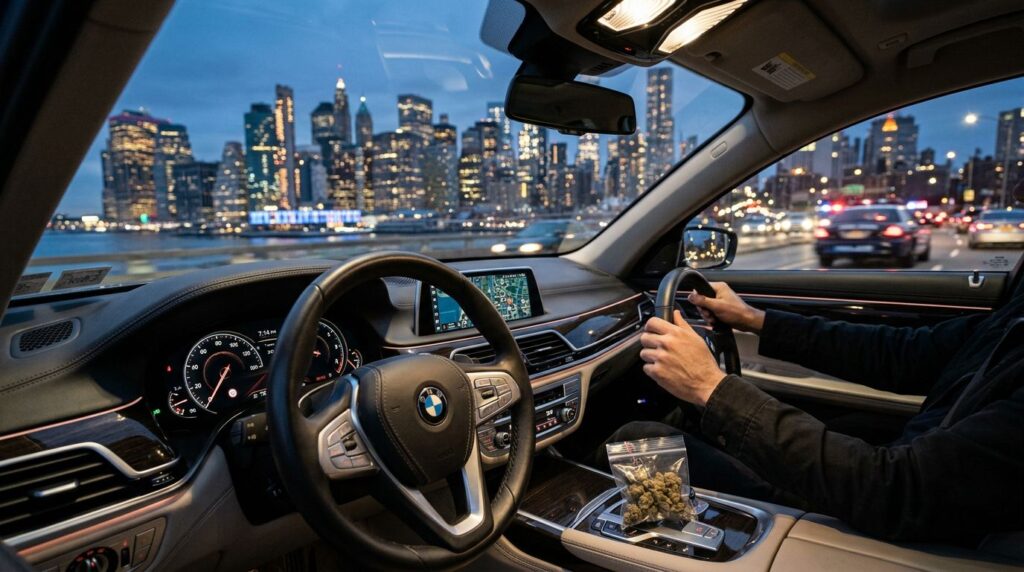
A legal adult-use cannabis purchase does not give you permission to drive after using it. In New York, the question is not how much cannabis you consumed or whether you bought it from a licensed dispensary. The question is whether cannabis impaired your ability to operate a vehicle.
Knowing the current New York cannabis DUI laws can feel less predictable than alcohol laws because the state has no per se THC limit for drivers. Still, an arrest can lead to a license revocation, criminal penalties, court costs, and long-term consequences. Understanding these New York cannabis DUI laws helps you make safer decisions before you get behind the wheel.
Key Takeaways
- New York can charge you with Driving While Ability Impaired by drugs if cannabis affects your ability to operate a vehicle safely.
- There is no legal THC blood level that automatically proves or clears cannabis impairment in New York.
- A cannabis-related DWAI-Drugs charge can be a misdemeanor, even on a first offense.
- Officers may rely on driving behavior, physical observations, statements, field tests, and blood evidence.
- The safest choice after consuming cannabis is to avoid driving and arrange another way home.
New York Treats Cannabis-Impaired Driving as DWAI-Drugs
Many people use the term cannabis DUI, but New York law classifies this offense as Driving While Ability Impaired by Drugs, commonly referred to as DWAI-Drugs. This specific charge is outlined in New York Vehicle and Traffic Law Section 1192(4-a).
Under this statute, you may face a charge if you operate a motor vehicle while your ability is impaired by a drug, including cannabis. Even though the MRTA legalized recreational cannabis for adults in the state, those legal protections do not apply to operating a vehicle. Whether you consumed recreational cannabis or used medical marijuana, the state maintains a strict policy against driving under the influence of any substance that compromises your safety.
New York also has a separate offense for driving while ability impaired by a combination of drugs and alcohol. Even a small amount of alcohol can create added legal risk if an officer believes the combined effects impacted your coordination.
The legal standard for these cases differs significantly from alcohol related incidents. While alcohol cases often rely on per se laws that establish a specific blood alcohol concentration threshold, cannabis cases operate differently. New York has no statutory limit for THC levels in your system. A blood test might detect the presence of THC, but it does not, by itself, establish impairment at the time you were driving. THC metabolites can remain detectable in your body long after the psychoactive effects have worn off.
Instead, prosecutors must demonstrate that cannabis affected your driving ability by looking at the full set of facts surrounding the stop. This may include your lane positioning, your behavior during the interaction, your appearance, your performance on field sobriety tests, and any statements you made to the police.
Cannabis can be legal for adults 21 and older, while driving impaired by cannabis remains illegal at any age.
A DWAI-Drugs charge is not a minor traffic ticket you should treat casually. It is a criminal offense. A conviction can negatively impact your driver license, insurance costs, employment opportunities, and professional credentials. If you are facing a Driving While Ability Impaired charge, it is essential to understand how the evidence is being used against you.
What Police Look for During a Cannabis Traffic Stop
A traffic stop can begin for many reasons. An officer may claim that you crossed a lane line, followed another vehicle too closely, failed to signal, drove unusually slowly, or committed another traffic violation. Police may also stop you at a DWI checkpoint.
Once an officer approaches, they may look for signs that they associate with cannabis use. Those observations can include the odor of cannabis, red or watery eyes, slowed speech, difficulty focusing, unusual behavior, or cannabis items visible inside the vehicle.
However, none of those facts automatically proves impairment. Red eyes can come from allergies, fatigue, or contact lenses. The odor of cannabis may suggest recent use or simply indicate that cannabis was present in the car. Lawful possession does not equal unlawful driving.
Still, the officer may use those observations to ask more questions. You may hear questions such as:
- Have you used cannabis today?
- When did you last smoke or consume an edible?
- Do you have cannabis in the vehicle?
- Are you taking any prescription medication?
- Would you perform a roadside sobriety test?
Your answers can become part of the evidence in a later case. Casual comments can carry weight. Saying, “I only took one hit,” or “I had an edible earlier,” may lead an officer to investigate further, even if you believe you feel normal.
Police commonly use standardized field sobriety tests, including the walk-and-turn and one-leg stand. These tests were developed mainly for alcohol investigations. They can still appear in cannabis cases, although many physical conditions, footwear choices, weather conditions, injuries, and nervousness can affect performance.
An officer may also request a drug recognition evaluation. A Drug Recognition Expert, or DRE, receives training to look for patterns associated with different drug categories. By documenting these physiological indicators, police seek signs of observable impairment to justify an arrest. The evaluation may involve checking your pulse, pupil size, muscle tone, balance, and other observations.
The DRE process can become important evidence, but it is not a medical diagnosis. It is an investigative tool used by law enforcement. A court evaluates it alongside all other evidence.

Why a Positive THC Test Does Not Settle the Case
Unlike alcohol, cannabis does not have a roadside breath test that can measure impairment in a simple, widely accepted way. Officers cannot give you a THC breathalyzer result that works like a blood alcohol concentration reading.
Police may seek a chemical test, often involving a blood test, after an arrest. While this can identify the presence of THC concentration, the result does not reveal a precise level of marijuana impairment at the time of the stop.
That gap matters because cannabis affects people differently. Your tolerance, method of consumption, dose, body chemistry, food intake, sleep, medications, and the time since use can all affect your experience. Edibles create another timing issue because effects can take longer to appear and may last longer than inhaled cannabis effects.
A person who consumed cannabis the previous night may still test positive the next day. On the other hand, a person who recently used cannabis may have signs of impairment even if a later test does not neatly explain every observation. Because individual THC levels vary so drastically based on tolerance, a single number does not equate to a standardized measurement of your ability to drive.
For that reason, prosecutors often build cannabis-impaired driving cases from several pieces of evidence, including the results of field sobriety tests:
| Evidence Type | What It May Be Used to Show |
|---|---|
| Driving pattern | Whether you operated the vehicle unsafely |
| Officer observations | Your speech, coordination, attention, or behavior |
| Statements | Whether you admitted recent cannabis use |
| Field sobriety tests | Claimed physical or mental impairment |
| DRE evaluation | Observations consistent with drug impairment |
| Blood test | The presence of THC or related compounds |
| Video footage | The traffic stop, roadside tests, and arrest |
The strongest cases typically contain more than a test result. A blood test may support the state’s argument, but prosecutors still need to connect cannabis use to impaired driving.
Body camera footage, patrol-car video, dispatch records, and witness accounts may also matter. If a video contradicts an officer’s written report, that difference can become important during a defense review.
You should also understand that a lawful cannabis product can still become part of the evidence. A sealed package from a licensed dispensary does not prove impairment, but officers may document its presence if they believe it relates to their investigation.
Chemical Tests, Refusals, and New York’s Implied Consent Rules
When you drive in New York, you are subject to the state’s implied consent law. In practical terms, this means police may request chemical testing after a lawful arrest for an alcohol or drug-related driving offense.
For suspected cannabis impairment, police may seek a blood test because a standard breath test does not measure THC. While New York has legalized adult-use cannabis, the state maintains a strict zero-tolerance policy regarding impaired operation on public roads. The circumstances of the arrest, the test request, and any refusal can affect the trajectory of your case.
Refusing a properly requested chemical test can bring serious consequences separate from the criminal charge. The Department of Motor Vehicles may hold a hearing on the refusal. If the refusal is sustained, you can face a license revocation and significant civil penalties.
A refusal does not guarantee that the underlying criminal case disappears. Prosecutors may still rely on officer observations, videos, witness testimony, field tests, and other evidence. In some situations, police may seek a court order to obtain a blood sample.
The decision whether to take or refuse a test can have legal consequences either way. You should not assume that refusing a test is a simple way to avoid evidence. The practical results can be severe, especially if you depend on your license for work or family responsibilities.
New York’s DMV can also impose administrative consequences after a cannabis-related driving offense. A conviction may trigger a Driver Responsibility Assessment, which is separate from court-ordered fines and costs. License restoration can involve additional fees, waiting periods, and specific DMV requirements.
If you are stopped, stay calm and avoid escalating the encounter. Provide the documents the officer lawfully requests. Do not make sudden movements, argue roadside legal issues, or attempt to conceal cannabis or other items.
You do not need to volunteer a detailed account of your cannabis use. If an officer asks questions that could lead to self-incrimination, you can state that you want to speak with an attorney. That is different from refusing lawful directions.
Penalties for Cannabis-Impaired Driving in New York
A first DWAI-Drugs conviction is generally treated as a misdemeanor under state law. If convicted, the court can impose a fine of $500 to $1,000, up to one year in jail, or both. Furthermore, the DMV can mandate the revocation of your driving privileges for at least six months.
These penalties can escalate significantly if you have prior alcohol or drug-related driving convictions. A second offense within 10 years can be charged as a Class E felony, while a third qualifying offense within that same timeframe may become a Class D felony.
The legal consequences often extend far beyond the initial sentence. You may face court surcharges, attorney fees, towing and impound costs, increased insurance premiums, lost wages, and significant transportation challenges during any period of license suspension.
The following overview highlights why a cannabis driving charge can have lasting effects:
| Situation | Potential New York Consequences |
|---|---|
| First DWAI-Drugs conviction | Misdemeanor, fines, possible jail, driver’s license revocation |
| Repeat drug-impaired driving offense | Felony exposure, higher fines, longer revocation |
| Chemical test refusal | DMV hearing, license suspension, civil penalty |
| Child under 16 in the vehicle | Possible felony charge under Leandra’s Law |
| Commercial driver | Separate CDL and employment consequences |
Leandra’s Law can make the situation much more severe. If you drive while impaired with a child age 15 or younger in the vehicle, New York may charge you with aggravated DWI under the child passenger provision. Additionally, if you are found to be impaired by a combination of substances, you may face charges related to DWI-Combination. A first offense involving these factors can be elevated to a felony.
Commercial drivers face additional risks. Even if you were operating a personal vehicle, a drug-related driving conviction may jeopardize your commercial driving privileges and future job prospects. It is important to remember that federal rules continue to restrict cannabis use for safety-sensitive workers, regardless of the state’s adult-use cannabis law.
While alcohol-related DWI convictions often require the installation of ignition interlock devices, cannabis cases do not always follow the same path. However, courts and the DMV may still impose specific conditions that restrict your driving privileges depending on the nature of the charge, your personal record, and the ultimate outcome of your case.
Cannabis in the Car: Legal Possession Is Not a Free Pass
New York adults age 21 and older may legally possess limited amounts of cannabis under state law. However, having legal possession of the product does not grant you the right to use it inside a moving vehicle.
You cannot smoke or vape cannabis in a car, even if you are a passenger. A vehicle is not a private living room once it is on a public road. Smoking or vaping can distract the driver, affect others in the vehicle, and give police a reason to investigate. To stay compliant, it is helpful to follow the specific transport and storage guidelines provided by the Office of Cannabis Management.
Edibles and other non-smoked products raise a different concern. Because they may look ordinary, you may underestimate their effect or take more before the first dose fully takes hold. Driving after consuming an edible can be especially risky when you are unsure how long the impairment will last.
If you are transporting legally purchased cannabis, keep it secure and avoid using it in the vehicle. Do not leave products where children can access them. You should also avoid opening packages, passing products around, or consuming cannabis while parked on a public street.
In New York City, this issue can arise in ordinary situations. You may leave a licensed dispensary in Manhattan, Brooklyn, Queens, the Bronx, or Staten Island and feel capable of driving home. That confidence is not a reliable legal defense if cannabis affects your reaction time, attention, judgment, or coordination.
Public transit, a taxi, a rideshare, a sober friend, or a planned overnight stay can remove that risk. If you drove to a social event, decide how you will get home before consuming cannabis. Waiting in your parked vehicle is also a poor substitute for a transportation plan if you are in the driver’s seat with the keys accessible.
How Long Should You Wait Before Driving?
New York law does not give you a universal number of hours to wait after using cannabis. That is because no single waiting period fits every person or product.
The effects of inhaled cannabis can begin within minutes, while edible effects may take much longer to peak. Product potency, dose, tolerance, and personal factors also change how long you may feel impaired.
You should not rely on feeling “mostly fine.” Cannabis can affect reaction time and divided attention even when you feel calm, alert, or experienced. Driving in dense NYC traffic requires frequent decisions, sudden braking, awareness of cyclists, pedestrians, delivery vehicles, and changing signals.
The safest rule is straightforward: do not drive if you have used cannabis and may still be affected. Plan transportation before you consume, particularly if you are trying a new product, a higher-dose edible, or a product with effects you do not know well.
Avoid mixing cannabis with alcohol, sedating prescription medications, or other substances before driving. Even patients using medical marijuana are subject to the same impairment standards as recreational users to ensure roadway safety. Combined effects can impair you more than either substance alone, and they can create more serious legal consequences.
If you are with friends, do not let assumptions decide who drives. A driver who had “less than everyone else” may still be impaired. Choose someone who has not consumed alcohol, cannabis, or another impairing substance.
What to Do If You Are Charged With DWAI-Drugs
A cannabis-impaired driving charge deserves prompt attention. The paperwork may include a court date, a notice about your driving privileges, and instructions related to a DMV hearing. Missing a deadline can create separate problems.
Save all documents connected to the stop, including tickets, appearance notices, property receipts, tow paperwork, and any license suspension paperwork. Write down what you remember while details remain fresh, such as the time, location, traffic conditions, officer statements, and whether cameras were present.
Do not post about the stop, your cannabis use, or the case on social media. Posts, messages, photos, and videos can become evidence or create avoidable complications.
You should speak with a qualified New York criminal defense attorney about your individual situation. A defense attorney can review the charging documents, test procedures, body camera footage, roadside testing, and DMV deadlines. This article provides general information and does not replace legal advice about your case.
A charge is not a conviction. Still, the early steps matter because license issues and evidence preservation can move quickly after an arrest.
Frequently Asked Questions
Is it legal to have cannabis in my car in New York?
You can transport legal cannabis in your vehicle, but it should remain in a secure, unopened package. It is illegal to smoke or vape cannabis inside a vehicle, even as a passenger, and doing so can provide police with grounds for a stop and further investigation.
Can I be charged with a DUI if I am a medical marijuana patient?
Yes, New York’s DWAI-Drugs laws apply to all drivers regardless of whether they have a medical marijuana certification. The state requires that you refrain from operating a vehicle if any substance, including prescription medical cannabis, impairs your physical or mental ability to drive safely.
How does New York prove cannabis impairment without a breathalyzer?
Because there is no universal THC breath test, prosecutors build cases using a combination of evidence. This typically includes the officer’s report of your driving patterns, your physical appearance, performance on standardized field sobriety tests, statements you made during the stop, and, if applicable, the findings from a Drug Recognition Expert (DRE).
Will a positive blood test for THC automatically lead to a conviction?
No, a positive blood test does not automatically prove you were impaired at the exact time of the traffic stop. Because THC metabolites can remain in your system long after the psychoactive effects have subsided, the test serves as one piece of evidence rather than a definitive measurement of current impairment.
Conclusion
While New York cannabis DUI laws allow for adult use, they strictly prohibit impaired driving. Because the state does not utilize a fixed THC limit, prosecution often centers on evidence of observable impairment rather than simply the presence of THC in your system. Consequently, a cannabis DUI case often turns on the full picture of your driving behavior, physical observations, statements, and test results.
The clearest way to protect yourself and everyone sharing the road is to separate cannabis use from driving. Legal cannabis and safe driving require different choices.


