
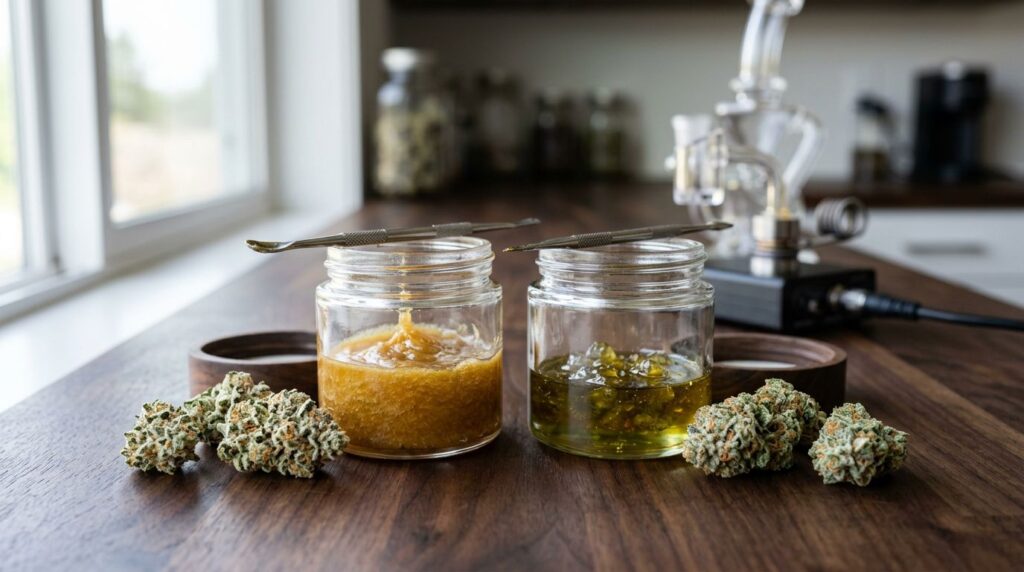
Two concentrates can look nearly identical in a jar, yet their production methods and character can be very different. Rosin and live resin both appeal to adults who care about cannabis aroma and flavor, but one relies on pressure and heat while the other uses a solvent-based extraction process.
If you are comparing menus at a licensed New York dispensary, the name alone does not tell the full story. Freshness, starting material, terpene profile, consistency, and price all shape the experience.
Understanding the distinction helps you read product descriptions with more confidence.
Key Takeaways
- Rosin is a solventless concentrate made with heat and pressure, often from hash or flower.
- Live resin is usually extracted from cannabis frozen shortly after harvest, using regulated hydrocarbon extraction equipment.
- Both products can preserve prominent aromas, but their flavor depends on the cultivar, harvest quality, and handling.
- Rosin often costs more because solventless production can require substantial plant material and careful processing.
- When comparing products, check the licensed dispensary’s package details, including ingredients, cannabinoid content, and storage guidance.
How Rosin and Live Resin Are Made
The production method is the central difference in a rosin versus live resin comparison.
Rosin begins with cannabis material placed under controlled heat and pressure. The process separates a sticky resinous oil from the plant material without using chemical solvents. Producers can press cured flower, sifted hash, or ice-water hash. High-end “hash rosin” usually starts with ice-water hash, then receives a careful press.
Because rosin does not use butane, propane, or ethanol during extraction, it is commonly described as solventless. That term refers to the extraction method, not necessarily to the entire production environment. Licensed processors still use specialized equipment, quality controls, and testing procedures.
Live resin takes a different route. Producers freeze freshly harvested cannabis rather than drying and curing it first. The frozen material then goes through a closed-loop extraction process, commonly using hydrocarbons such as butane or propane. A licensed processor purges the finished extract to remove residual solvents and submits products for required testing before they reach regulated retail shelves.
The word “live” refers to that fresh-frozen starting material. It does not mean the concentrate is raw, unprocessed, or more potent by definition.
Rosin describes how the extract is made. Live resin describes the fresh-frozen material and solvent-based extraction approach behind it.
You may also see live rosin on a legal dispensary menu. That product combines both ideas. It starts with fresh-frozen cannabis, which becomes ice-water hash before being pressed into rosin. Live rosin is solventless, while live resin generally is not.
Rosin vs. Live Resin at a Glance
A side-by-side comparison can make menu terms easier to sort out.
| Feature | Rosin | Live Resin |
|---|---|---|
| Primary extraction method | Heat and pressure | Hydrocarbon extraction in regulated equipment |
| Solvents used during extraction | No | Usually butane, propane, or a blend |
| Starting material | Flower, dry sift, or hash | Fresh-frozen cannabis |
| Common textures | Badder, jam, cold cure, full melt | Sauce, sugar, badder, diamonds, vape oil |
| Typical price position | Often premium | Often mid-to-premium |
| Flavor focus | Depends on source material and cure | Often retains a bright fresh-plant aroma |
| Related category | Live rosin | Resin, cured resin, live resin |
Neither format automatically wins on quality. A poorly handled rosin can taste flat, while a well-made live resin can be expressive and clean. The reverse is also true. The grower’s harvest practices, the cultivar’s natural terpene profile, and the processor’s standards matter as much as the category name.
Price can create a quick first impression. Rosin often carries a higher shelf price because solventless extraction may yield less finished concentrate from the same amount of cannabis. Producing ice-water hash also takes time, controlled temperatures, clean water, and skilled handling.
Live resin can offer a broader range of formats and price points. Its extraction process can efficiently capture a large portion of the plant’s compounds, though a legal package should still identify the product type clearly.
Aroma, Flavor, and Texture Matter More Than Hype
Most people notice aroma before anything else. Fresh-frozen cannabis can preserve a profile that feels close to the scent of a living plant. For that reason, live resin may offer pronounced notes such as citrus peel, pine, fuel, tropical fruit, or herbal spice, depending on the cultivar.
Rosin can also carry vivid aromas, especially when it comes from well-washed hash. A cold-cure rosin may smell creamy or doughy at first, then release brighter notes as it warms slightly. Meanwhile, a rosin jam may show a glossy, wet texture with a stronger aromatic burst when opened.
Texture affects how you use the product and how it holds up over time. Live resin “sauce” is often loose and terpene-rich, while sugar has a grainier, more scoopable consistency. Diamonds are crystalline formations that commonly sit in a terpene-rich sauce. Rosin may be whipped into badder, cured into a stable cold cure, or presented as a softer fresh press.
A product’s appearance can be appealing, but color alone is not a reliable quality score. Pale gold, amber, and light tan extracts can all be legitimate. Color shifts with genetics, harvest timing, oxidation, processing temperature, and storage.
Instead of judging a jar by color, look for useful details:
- The cultivar or source genetics should be named clearly when available.
- The package should identify whether it is rosin, live rosin, live resin, or another extract type.
- A licensed New York product should include testing and compliance information on its label.
- The aroma should align with the product’s condition, without an unusually stale or harsh smell.
Terpene percentages can offer a clue, but they do not predict exactly how a product will smell or feel for you. The list of individual terpenes is usually more useful than a single total percentage.
Potency Is Not the Same as Product Quality
It is easy to assume that a higher THC number means a better concentrate. That shortcut misses much of what makes rosin or live resin appealing.
Concentrates can test at high cannabinoid levels, but the number varies by batch and format. A sauce-heavy live resin may have a different cannabinoid percentage than a dry, crystalline extract from the same cultivar. Rosin also varies widely depending on whether it came from flower, hash, or fresh-frozen hash.
Your response can differ based on dose, tolerance, the product’s cannabinoid mix, and your setting. Terpenes influence aroma and flavor, yet they do not let you predict a guaranteed outcome. Avoid treating cultivar names or terpene descriptions as medical guidance.
If you have limited experience with concentrates, recognize that they are often more concentrated than cannabis flower. New York’s adult-use market is for adults 21 and older, and responsible use includes reading the package and following the labeled serving information.
Choose a concentrate for its production method, flavor profile, and product transparency, not only for the largest THC number on the menu.
Choosing Between Rosin and Live Resin in NYC
Your preference usually comes down to what you value most.
You may lean toward rosin if the solventless process matters to you, or if you enjoy the distinct texture and flavor of hash-based extracts. Live rosin is often a strong fit when you want both fresh-frozen source material and solventless processing. Since prices can be higher, you may want to compare package size and product details instead of assuming every rosin jar offers the same experience.
Live resin may fit your style if you enjoy fresh, cultivar-forward aromas and want more choices in formats. You can find live resin in jars, cartridges, disposable vaporizers, and infused products, depending on what licensed New York retailers carry. The format should match your equipment and comfort level.
When browsing a licensed dispensary listing in Manhattan, Brooklyn, Queens, the Bronx, or Staten Island, focus on facts that help you compare like with like. Check the processor, the cultivar, the extraction label, net weight, and package date. A recent package date can matter for terpene-rich products, although proper cold storage also affects quality.
New York’s regulated market requires cannabis products to pass through licensed channels and testing requirements. Buy only from licensed retailers, and confirm that the packaging is sealed and compliant. Informal products may not provide reliable information about ingredients, potency, or contaminants.
Avoid choosing based solely on familiar strain names. The same name can produce different results across growers and batches. A reputable label gives you a better basis for comparison than a catchy product title.
Storage and Use Can Change the Experience
Concentrates are sensitive to heat, light, and air. Keep rosin and live resin sealed when you are not using them. A cool, dark place helps protect aroma and texture, while excessive warmth can make a product runny or speed up terpene loss.
Some rosin labels call for refrigeration. Follow the package directions, and let a cold jar come closer to room temperature before opening it. That practice can reduce moisture condensation inside the container.
Live resin also benefits from careful storage. Keep the lid secure, especially with sauce-like products that contain more liquid terpenes. Do not leave a jar in a hot car, near a sunny window, or in a pocket for extended periods.
Use only equipment designed for the concentrate format you purchased, and keep that equipment clean. If you choose a vaporizer or dab device, start conservatively and give yourself time before taking more. Strong flavors can encourage larger inhalations than you intended.
The Better Choice Is the One You Can Evaluate Clearly
Rosin and live resin both offer a more concentrated expression of cannabis than flower, yet they arrive there through different processes. Rosin emphasizes solventless heat-and-pressure extraction, while live resin centers on fresh-frozen cannabis and regulated solvent extraction.
Your best choice depends on your interest in solventless production, preferred texture, aroma preferences, and budget. A clearly labeled product from a licensed New York dispensary gives you the information needed to make that choice with confidence.


