
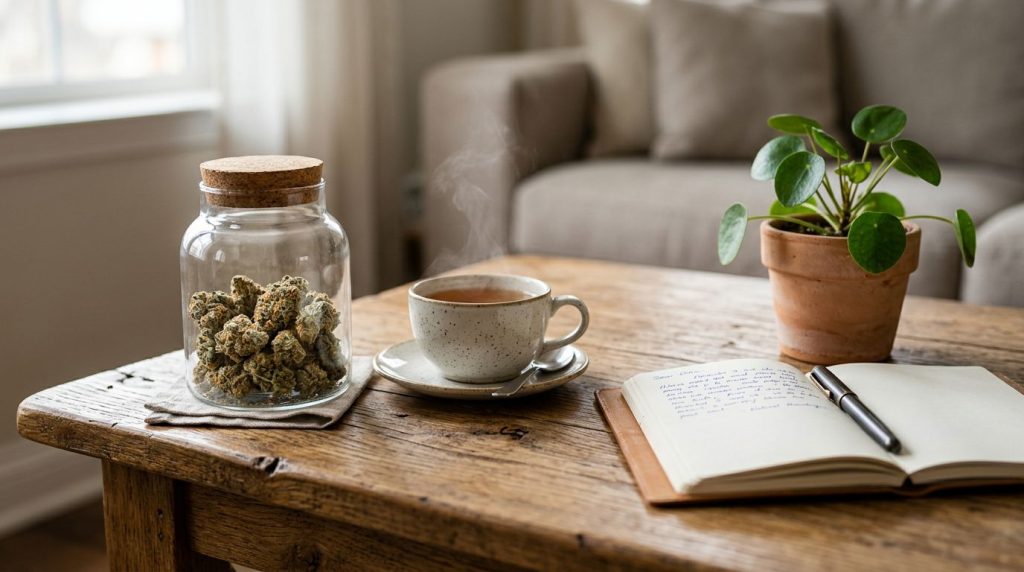
When your usual amount stops feeling usual, your routine is telling you something.
If you use cannabis often, tolerance can build so slowly that you notice it only when the effects feel muted, your spending climbs, or your sessions start to feel automatic. A cannabis tolerance break, often referred to as a t-break, gives you space to reset, pay attention, and come back with more control.
A good break is less about willpower than planning. Once you know what tolerance looks like and how your intake of THC can shift over time, the reset is easier to handle.
Key Takeaways
- Recognize the signs of tolerance: If your usual amount feels less effective, your spending is rising, or consumption has become an automatic habit rather than a choice, a tolerance break may be beneficial.
- Understand the reset: A t-break allows your body’s CB1 receptors to recover from constant THC exposure, which can help restore your baseline sensitivity and improve the clarity of your experience.
- Strategize for success: Proper preparation—such as picking specific dates, removing environmental triggers, and planning alternative activities for your usual session times—is more critical to success than willpower alone.
- Adjust your return: Avoid returning to your old habits immediately. Start with smaller doses and lower frequencies to maintain the benefits of your reset and prevent your tolerance from climbing back up too quickly.
What a tolerance break is really doing
Tolerance builds when repeated cannabis use makes the same amount feel less noticeable over time. You may still feel effects, but they often arrive with less clarity, less intensity, or less difference between products. As a result, you may use more often or use larger amounts to chase the experience you used to get with less.
A tolerance break interrupts that pattern. When you stop for a set period, you give your system time away from regular THC exposure. For many regular consumers, that pause can make later use feel more predictable again. It can also make your habits easier to see. You notice whether you miss the effect itself, the ritual, the routine, or the cue tied to a certain time of day.
That distinction matters. If your nightly session has become a built-in habit, a break shows you how much of your use is deliberate and how much is automatic. That does not make the habit good or bad on its own. It simply makes it visible.
Published research on cannabis use breaks has examined why people take planned pauses and how these breaks affect the endocannabinoid system. When you use cannabis regularly, your body often responds through a process called downregulation, where the number or sensitivity of CB1 receptors decreases in response to constant THC exposure. Taking a cannabis tolerance break gives these receptors time to reset, which may help lower that dulled response and restore your baseline sensitivity.
You do not need a dramatic reason to take a break. Some people want lower tolerance. Others want clearer mornings, a lighter budget, or a better sense of control. In each case, the goal is the same. You step out of the pattern long enough to decide whether it still fits your life.
Signs your current routine may need a reset
Tolerance rarely arrives all at once. More often, it sneaks in through small changes that feel normal until you step back.
You may first notice that your usual product feels flat. Then you start reaching for products with higher THC potency, larger servings, or more frequent sessions. Meanwhile, the overall experience often gets less satisfying, not more. That mismatch is one of the clearest signs that a break could help.
A reset may make sense if several of these sound familiar:
- You need more cannabis than before to get a similar effect.
- Your sessions feel routine, but not especially enjoyable.
- Daily use has become a default activity rather than a conscious choice.
- Different products start to feel too similar.
- Your spending rises faster than your satisfaction.
- You use at times that no longer feel intentional.
- You feel off when you skip a session, even when you wanted to skip it.
Another sign is a loss of contrast. If everything feels fine and almost nothing feels distinct, tolerance may be masking the differences you once noticed. That can happen with flower, vapes, concentrates, or edibles.
You may also see the change outside the session itself. For example, you might feel less present during the day, less interested in other ways to relax, or more tied to your routine than you want to be. A tolerance break will not fix every pattern by itself, but it can show you where the pattern starts.
The goal is not to judge your use, but to see it clearly. By identifying these patterns, you can better distinguish between a simple habit and signs of cannabis dependence or marijuana addiction. Once you can do that, you can decide whether you want a short pause, a longer reset, or a different schedule when you return.
How long should your break last?
There isn’t one perfect timeline for everyone. The right length depends on how often you use, what types of products you consume, and what you want to achieve from the break. If you use cannabis daily, especially with high-potency products, you may need more time to notice a real shift. If your usage is lighter, a shorter pause may still feel useful.
This quick comparison can help you set a realistic target for your journey.
| Break length | What it may help with | What it may not change much |
|---|---|---|
| 48 to 72 hours | Interrupting your routine, testing your habits, and saving money | A deeper reset for heavy daily users |
| 1 week | Gaining perspective, lowering automatic use, and noticing triggers | Strong tolerance built over months or years |
| 2 weeks | A clearer reset for many regular consumers | Long-standing habits if you return to the same consumption patterns |
| 21 days | A full cannabinoid receptor reset | Underlying reasons you use unless you address them |
| 3 to 4 weeks | The strongest, most effective reset for heavy, frequent use | Habits that remain unaddressed after the break |
A short break still has significant value. If your main problem is routine, even a few days can show you when and why you reach for cannabis. However, if you want a more noticeable drop in your sensitivity, a week often feels modest, while two weeks or more tends to feel more meaningful.
Try to match the length of the break to your specific goal. If you want to prove to yourself that you can take a pause, start with a week. If you want a significant tolerance reset, a longer duration is the most effective way to lower your tolerance substantially. If you are not sure, choose a timeframe that is long enough to feel real but short enough that you are confident you will stick with it.
The best break is the one you finish. A modest, planned pause helps more than an ambitious goal that you abandon after only two days.
Set yourself up before day one
Most attempts at a tolerance break fail before they even begin. The problem is usually poor preparation rather than a lack of willpower. Successfully navigating a t-break requires a strategy that goes beyond simple resolve.
Choose a start date that fits your week. If you already know you will be stressed, underslept, or surrounded by old triggers, pick another date. A period of abstinence is much easier to manage when your schedule has some natural structure. Work deadlines, packed weekends, and late-night social plans can add unnecessary friction to your goal.

Before you start, make four practical moves:
- Pick a clear end date or checkpoint. Open-ended breaks often turn into daily bargaining.
- Remove easy triggers. Put products away, avoid casual reach spots, and change your environment to break the habit loop.
- Plan a replacement for your usual session. Tea, a walk, a workout, a movie, or a shower can effectively fill the same time slot.
- Tell one person you trust. Accountability helps immensely when your motivation drops.
Also, decide what counts as success. For most people, success means taking the full break as planned. It does not mean feeling perfect, sleeping perfectly, or never thinking about cannabis. Those unrealistic standards backfire because they turn a simple pause into a difficult test of character.
If you live in New York City, planning matters even more because your routine is often tied to your physical environment. Your walk home, your neighborhood park, your usual evening setup, or your weekend schedule can all act as subconscious cues. Change the cue, and the break becomes significantly easier. Take a different route, meet a friend earlier, or block off the hour when you usually consume. By disrupting these patterns, you can effectively reset your tolerance and regain the desired effects you were originally looking for.
A tolerance break works best when you change the patterns surrounding your habits, not only the consumption itself.
What the first week can feel like
The early days can be uneven, but that does not mean your break is going badly. It often means your routine has changed and your body is adjusting to the absence of consistent THC levels.
During these initial days, you may experience common withdrawal symptoms as your system recalibrates. Many regular consumers notice shifts in sleep quality, irritability, boredom, or a shorter temper. You might also encounter vivid dreams, changes in appetite, or intense cravings at the exact times you usually consume. These patterns are common because your schedule has been paired with a familiar effect for so long. When you remove that effect, the time cue still triggers a mental or physical response.
A plain-language overview of common T-break symptoms lines up with what many frequent users describe during the first several days. The main point is simple: short-term discomfort is a normal reaction as your body reaches homeostasis, and it usually feels strongest early on.
You can make that first week easier with basic habits. Drink plenty of water and keep your meals regular, even if your appetite feels suppressed or inconsistent. Move your body every day, even if it is only a short walk. Consider cutting back on late caffeine if your sleep quality feels shaky. Most importantly, do not leave your usual session time empty. Empty time invites bargaining.
Mood can also play tricks on you. On day three or four, you may think the break is pointless because you do not feel dramatically different. Stay with it. Many people expect a clean, instant reset, but the process is usually quieter. You notice your routine more clearly first, and then the mental space that the routine used to occupy starts to open up.
If sleep, mood, or cravings feel hard to manage, talk with a healthcare professional. A tolerance break is a personal choice, but your support options do not have to be.
How to return without rebuilding tolerance right away
A break helps most when you avoid snapping back to your old pattern on day one. If you return with the same amount, same frequency, and same potency, your tolerance often climbs again faster than you expect.
Start lower than you used before the break. That applies whether you prefer flower, vapes, or edibles. You might consider microdosing as a strategy to maintain a lower threshold, allowing you to gauge your sensitivity without overdoing it. With inhaled products, smaller sessions usually tell you more than a heavy first session. With edibles, patience matters because delayed onset can lead to overdoing it if you stack servings too fast.
Spacing also matters. If you used to consume every day, consider returning on a less frequent schedule. Even a small change can stretch the benefit of the reset. For those who want to maximize the reset, following a sensitization protocol can be highly effective. This involves starting with minimal amounts and waiting to see how your body reacts before consuming anything further. Additionally, incorporating CBD into your new routine can help balance the effects of THC, providing a smoother experience that does not rely on high potency alone.
Pay attention to what you want from the session. If the answer is that you want to relax, keep the amount modest. If the answer is that you want to feel something strong because you missed it, that urge can pull you back into the same tolerance cycle that led you to the break in the first place.
A simple note on your phone can help. Track the product type, rough amount, time, and how the session felt. You do not need a complex log; you only need enough detail to spot patterns.
The biggest mistake is treating the end of the break like a reward for deprivation. That mindset pushes you toward excess. A better frame is this: you paused to regain control. The first sessions after your break are where that control becomes real.
Keep the reset useful in NYC’s legal cannabis market
A cannabis tolerance break is a valuable opportunity to recalibrate your relationship with consumption, whether you are a recreational user or someone who relies on medical cannabis for symptom management. If you previously purchased based only on habit, convenience, or the highest potency available, you may find yourself returning to the same loop that made your routine feel dull.
New York City’s legal market offers more structure than informal channels. Licensed dispensaries carry tested, labeled products, which makes comparing different options much easier. When you return after a break, pay close attention to the THC percentages on product labels. Using this information to choose smaller package sizes, lower-dose options, or specific formats can help you maintain a more intentional schedule. While this does not guarantee a perfect experience, it significantly reduces the guesswork involved in your next purchase.
This is also an ideal time to observe what actually works for your body. You might realize that you do not need the strongest option on the shelf; perhaps a smaller amount at the right time is more effective. Your break might have even revealed that the frequency of your use matters more than the overall potency of the product. These insights are useful because they turn your consumption into a conscious choice once again.
If you use directories, reviews, or product pages to research licensed options in NYC, read them with a narrow goal in mind. Look for details that support moderation and clarity rather than seeking maximum intensity. Package size, serving size, product type, and consumer feedback often provide more helpful information than a headline THC number.
Above all, keep your expectations realistic. A break will not make every future session perfect, but it can restore a sense of contrast. You will likely notice more, need less, and decide with a clearer head. This helps ensure your legal, informed choices remain manageable in a market that is often full of noise.
Frequently Asked Questions
How long should I take a tolerance break?
There is no one-size-fits-all timeline, but the duration should align with your goals. A few days can help interrupt a routine, while 21 to 30 days is generally considered the timeframe required for a more significant reset of your cannabinoid receptors.
Will I experience withdrawal symptoms?
It is common to feel some discomfort during the first few days, such as irritability, sleep disturbances, or intense cravings. These are normal reactions to your body adjusting to the absence of consistent THC and usually subside as you progress through the break.
Can I still use CBD during my break?
Many people choose to incorporate CBD during a break to help manage cravings or support sleep without relying on THC. However, it is important to ensure your chosen CBD products are low in THC so you do not accidentally interfere with your tolerance reset.
What is the best way to return to consumption after a break?
The most effective approach is to start with a significantly lower dose than what you were using previously. By beginning slowly and monitoring how your body reacts, you can find a lower threshold that still provides the desired effects without immediately rebuilding your tolerance.
Conclusion
When your usual amount starts feeling ordinary, a planned pause can help you see the pattern for what it is. The reset matters, but the real value comes from what you learn during the break.
If you prepare well, ride out the first week, and return with a smaller, more intentional routine, your t-break can do more than lower your use. It can give you back a sense of mental clarity about why, when, and how you consume.
Whether you decide to take a short break or commit to a full 21 days, the ultimate goal is to cultivate a more mindful relationship with the plant. That clarity is what keeps the reset from fading into just another habit.


