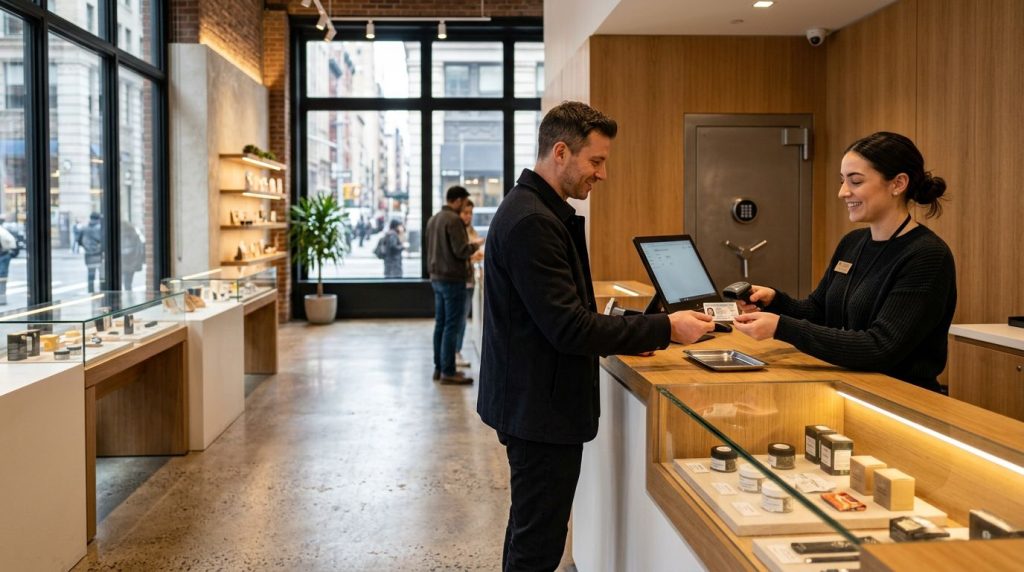
A professional security plan is easy to spot. It never slows down entry, crowds the counter, or makes a legal shop feel tense.
Effective dispensary security feels different. In a licensed store, it protects staff, cash, and product while keeping your visit calm and easy to follow.
That balance matters in the cannabis industry, especially in New York City, where licensed dispensaries face strict rules on access, surveillance, and storage. The best operators build regulatory compliance into the design of the space and the daily workflow, so security supports the customer experience instead of taking it over.
Key Takeaways
- Balanced Security Design: Effective dispensaries integrate regulatory requirements like CCTV, ID checks, and alarms into the shop’s architecture, creating an organized environment rather than an intimidating one.
- Invisible Back-End Control: High-value inventory and cash management are kept secure in vaults and restricted areas, ensuring protection is handled behind the scenes without disrupting the customer experience.
- The Human Element: Comprehensive staff training is vital for maintaining a welcoming atmosphere, as employees act as the bridge between strict safety protocols and professional, polite customer service.
- Operational Efficiency: Smart layout and secure workflow processes reduce crowding and wait times, allowing staff to retrieve products quickly while maintaining constant floor visibility.
Visible security should feel ordered, not harsh
The first layer of physical security starts before you reach the sales floor. You may see bright exterior lighting, CCTV cameras near the entrance, and a staff member checking that you are 21 or older before you go any further. In a well-designed store, those details read as organized rather than intimidating.
Across the country, dispensary security requirements usually begin with controlled entry, video surveillance, and alarm systems. Because of state regulations, New York shops follow these same basic patterns to ensure compliance. The difference is simply in how they present these features to you.
A smart layout keeps the process simple. The door area has room to pause, and the ID check is direct. Meanwhile, the waiting area does not block the register or crowd the product displays. If a store utilizes armed security guards, those individuals often stay near the entrance and remain professional, allowing the retail staff to lead the customer interaction.
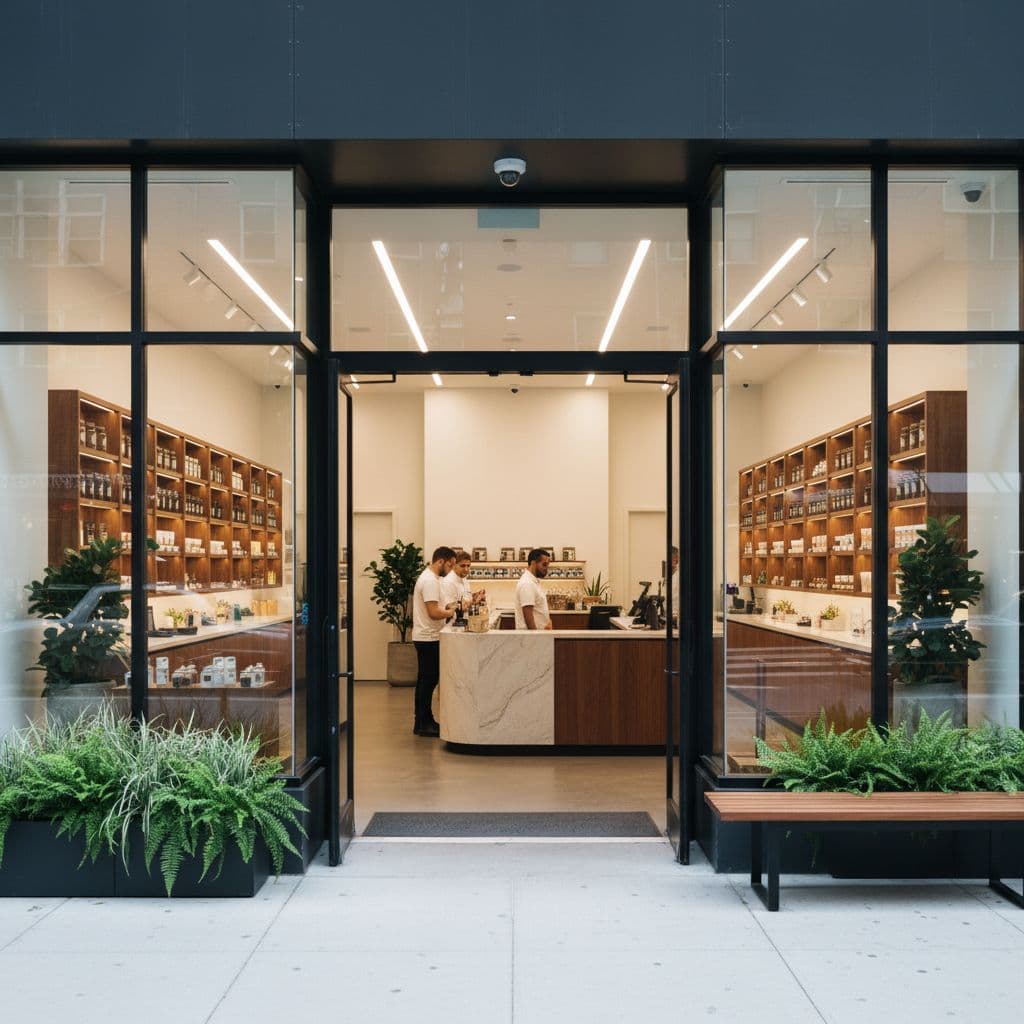
You also benefit from clear sight lines. Staff can monitor the floor, cameras can cover key points, and you can easily tell where to go next. This structure cuts down on awkward pauses, repeated questions, and crowding near the counter.
Strong entry design also aids in crime prevention and protects your privacy better than you might expect. Your ID check happens quickly, then the visit shifts back to normal retail behavior. While a reliable alarm system remains active in the background to secure the facility, you can browse, ask questions, and wait your turn without wandering into areas that hold inventory or cash. The rules are firm, yet the experience still feels relaxed.
Behind the counter, control gets much tighter
What you see on the floor is only part of the system. In many licensed dispensaries, display packaging and sellable high-value inventory are not handled the same way. You may look at products up front, while active stock stays in locked cabinets, secure vaults, or limited-access areas behind the counter.
That is where product security does most of its work. Staff access is limited by role, and stores use strict access control systems such as badges, keycards, or PINs to manage entry. Advanced digital systems now frequently utilize multi-factor authentication to bolster security, and robust cybersecurity protocols are essential for protecting the accuracy of digital inventory logs. Cameras cover storage and cash zones, and these systems often stay active during power outages because backup power keeps them running.
Many of the same layered controls appear in broader cannabis retail security guides, including restricted storage, long-term surveillance footage retention, and limited access to safes. You do not see most of that during a visit, and that is the point. Strong control stays in the background.
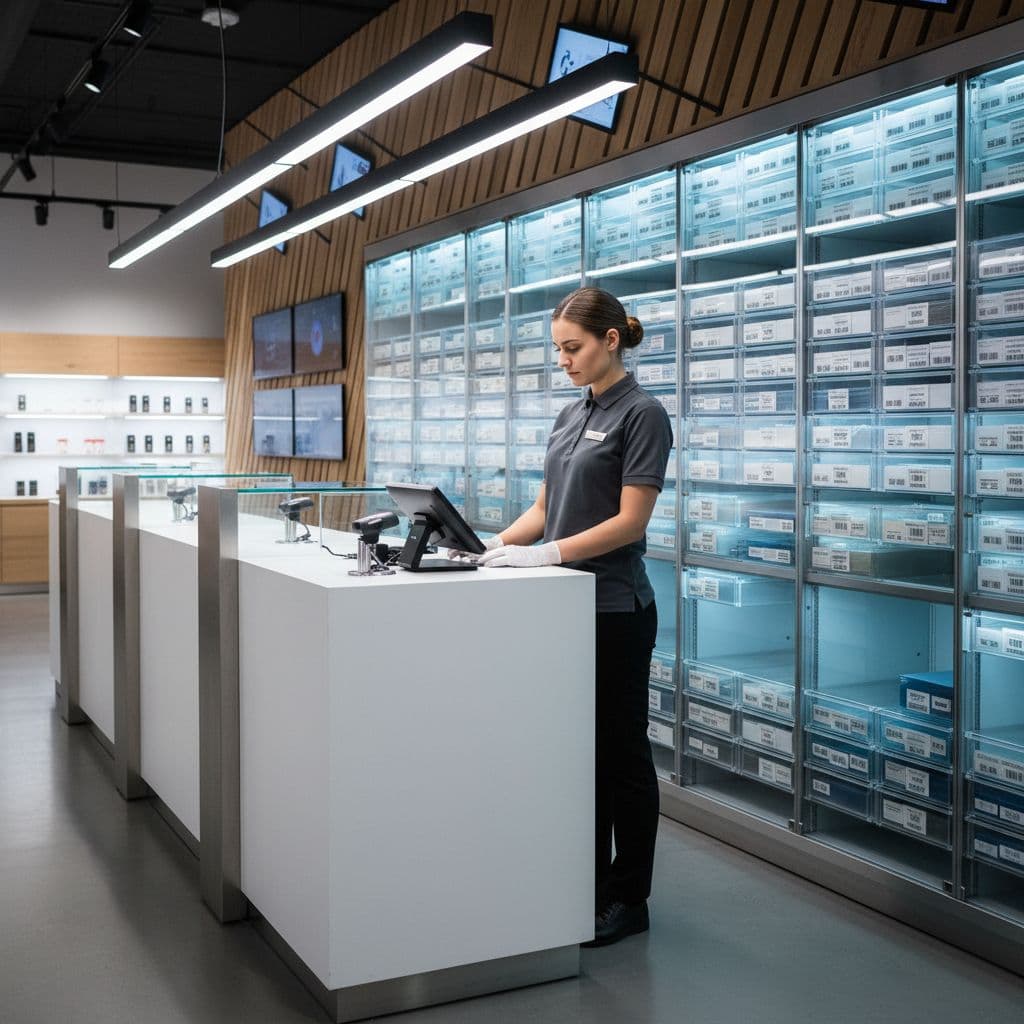
The best stores also organize inventory for speed. Products are logged carefully, grouped clearly, and retrieved through a set routine. Because the back room is mapped well and protected by intrusion detection systems and motion sensors, staff do not disappear for long stretches or return with the wrong item. That protects the product and saves you time.
Cash management works the same way. You may only notice a discreet register process, while the store uses drop safes, restricted drawers, and close count procedures out of sight to mitigate the risk of internal theft. When those controls are tight, the floor feels calmer.
Training keeps security from taking over the room
Technology helps, but people shape your visit. While a camera can record the floor, it cannot explain why you need to wait at the door, why certain areas are off limits, or why a product takes a minute to retrieve. Comprehensive employee training is the essential human element that bridges this gap. In a careful store, employees learn how to verify age, manage lines, communicate delays, and watch for problems without sounding cold. They also know what not to do. They do not bark orders across the room, and they ensure that safety protocols remain consistent even when the store gets busy.
When security works well, you notice the order more than the control.
This is where dispensary security becomes part customer service and part loss prevention. If someone gets impatient, staff can de-escalate situations without turning the moment into a spectacle. If a serious issue develops, tools like silent alerts stay out of sight and out of your way.
Because many shops cater to medical marijuana patients, staff must often follow strict protocols mandated by the Department of Cannabis Control. These professionals are trained to handle the complexities of patient care while maintaining the rigorous standards required for a successful business operation. This expertise allows them to coordinate effectively with mobile patrol units, which provide an external layer of support without interrupting the atmosphere inside the store.
A quick comparison makes that balance easier to see:
| Security measure | What you notice | How it should feel |
|---|---|---|
| ID check at entry | A short stop at the door | Quick, polite, and consistent |
| Cameras on the floor | Visible equipment overhead | Present, but not intrusive |
| Restricted back rooms | Staff-only doors or locked cabinets | Clear boundaries and fast retrieval |
| Panic button | Discreet button at the register | Linked to central station monitoring |
You can also spot weak training fast. Wait times get longer. Staff repeat the same instructions in different ways. Customers gather in the wrong place. The room feels tense, even if the actual hardware is solid. In other words, your experience depends less on how much security exists and more on how well people use it.
Frequently Asked Questions
Why do I have to show my ID before entering the sales floor?
Licensed dispensaries are required by law to verify the age of every customer before they reach the inventory. This initial check ensures compliance with state regulations and allows the rest of your visit to proceed like a standard retail experience.
Does visible security mean a dispensary is unsafe?
Not at all; in fact, visible security measures like cameras and organized entry points are signs of a well-run, legal operation. These features are designed to protect staff and products, and professional shops implement them in a way that feels structured rather than harsh.
Are my personal details kept secure during my visit?
Yes, dispensaries use strict access control systems and digital security protocols to protect sensitive data. While they must maintain records for compliance, the focus is on securing the facility and ensuring that customer data remains private and protected from unauthorized access.
Why is the inventory kept in locked areas?
Keeping inventory in secure vaults or locked cabinets is a standard security practice to prevent theft and ensure accurate inventory tracking. This setup allows staff to maintain a clean, open showroom for customers while keeping high-value items safe and organized behind the scenes.
Conclusion
When a licensed dispensary gets security right, you feel guided instead of watched. While dispensary security remains a top priority, it should exist in the background rather than dominating your visit. Effective stores prioritize regulatory compliance by blending these necessary safety measures into the architecture, ensuring that your experience remains calm and professional.
That is the true hallmark of a high-quality retail environment. Products remain protected behind the scenes, staff can serve customers with confidence, and every item sold has moved through a chain of secure transport to arrive safely on the shelf. In NYC, where standards for legal operations are rigorous, that balance of safety and atmosphere is exactly what separates a trusted, welcoming store from a stressful one.