
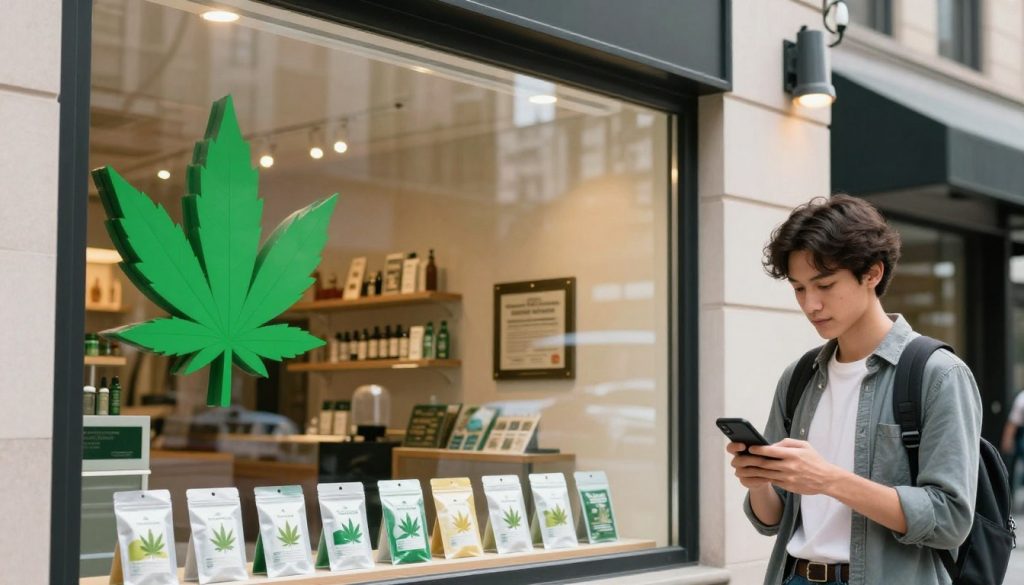
In New York City, when checking out New York dispensaries, a quick check can save you time, money, and a bad retail experience. If you’re 21+ and looking for a licensed dispensary NYC, it’s smart to confirm that status before you step inside, not after you buy.
That matters whether you’re a local or a visitor spending the day in Manhattan. Licensed stores follow New York State retail rules under the Marijuana Regulation and Taxation Act. Unlicensed shops may not. The good news is that you don’t need a long investigation. You just need a few simple checks that tell you whether the business looks, sounds, and acts like a legal cannabis retailer.
Start with the clearest signs of licensed New York dispensaries
Before you read menus or compare products, look at the store itself. A licensed dispensary should present itself as a cannabis retailer, not as a vague smoke shop or a corner store that happens to offer cannabis on the side.
Look for a posted license and legal business details
A real first check is the posted retail dispensary license issued by the Office of Cannabis Management. You should be able to find license information at the entrance or just inside the store. If you have to ask three people where it is, that’s not a great sign.
The business name on that license should also match the store name closely enough to make sense. Minor branding differences can happen. Still, if the name on the wall looks unrelated to the name on the storefront, pause and verify more before you go in.
If license details are missing, hidden, or hard to explain, treat that as a warning sign.
Check whether the storefront looks like a real regulated retailer
A licensed shop usually feels organized from the sidewalk, even in busy areas like Times Square where shoppers should be vigilant. You may see clear store hours, visible legal age 21 signage, and staff-controlled entry requiring a government-issued ID. In many cases, the space looks like a dedicated retail business run by licensed retailers, with a focused layout and a front door process that makes sense.
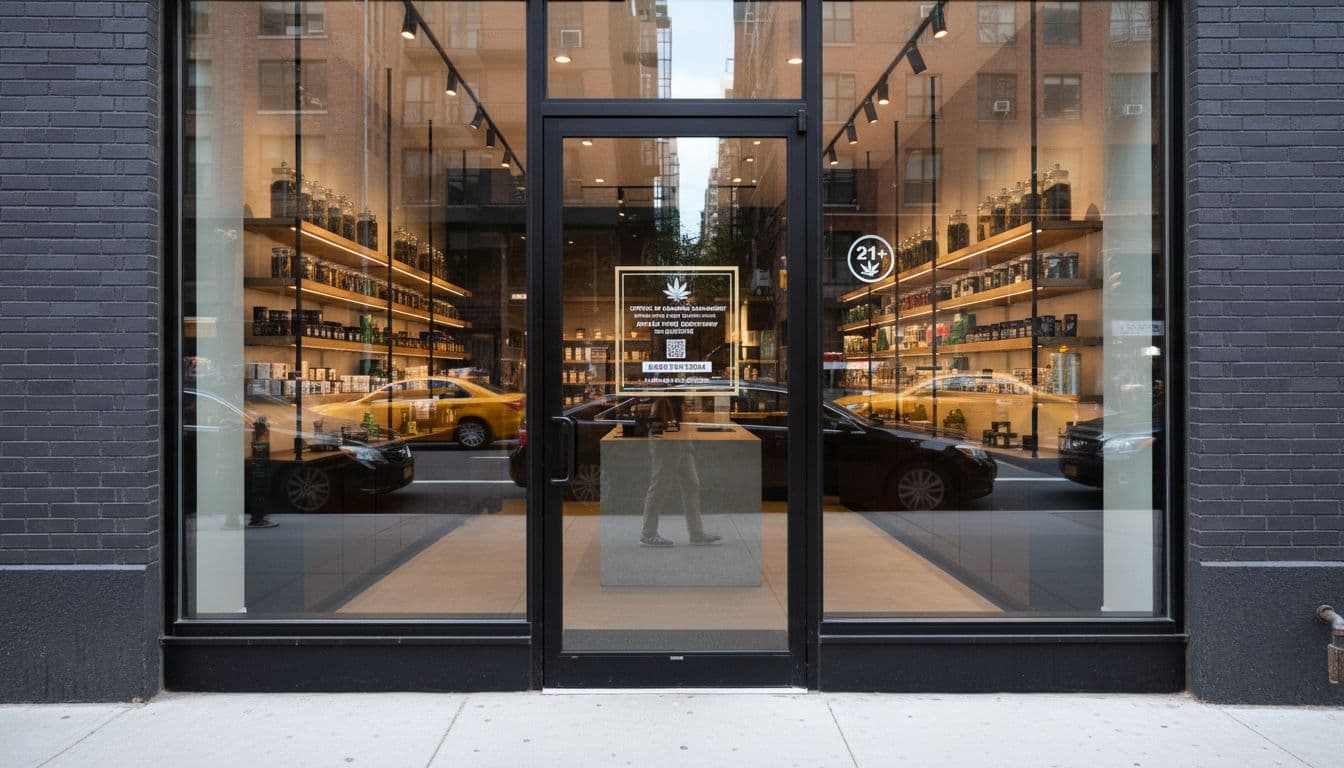 On the other hand, be careful if the storefront mainly looks like a smoke shop, bodega, or convenience store with a little cannabis added on. That’s not proof of anything by itself. However, it should make you slow down and check the details more closely.
Verify the license before you go, using the store’s own information
You can also confirm a lot before leaving home with New York dispensaries. Start with the business’s own public-facing details, such as its map listing, social profile, reservation message, or posted address, including any cannabis delivery services. Then compare them for consistency with state regulations.
Match the dispensary name, address, and borough across listings
Check the exact business name and street address anywhere the store appears. If you see one name on a map, another on social media, and a third in a text confirmation, that’s a problem worth noticing before you purchase recreational cannabis.
This matters across NYC, whether you’re checking an NYC dispensary in Manhattan, Brooklyn, or Queens. Small formatting differences are normal. For example, “W 14th St” and “West 14 Street” may point to the same place, and a medical cannabis dispensary might display its name slightly differently. But a different address, missing suite details, or several unrelated business names tied to one location deserves caution.
 ### Watch for wording that sounds evasive or unofficial
Licensed dispensaries usually describe themselves clearly. You should expect plain language that identifies the store as a legal adult-use cannabis retailer or licensed cannabis business.
Be cautious when the wording stays vague. If the business leans on slang, avoids clear retail terms, or never says what kind of cannabis store it is, that can be a sign of weak or incomplete business information. Style alone doesn’t prove anything. Still, clarity matters, especially when you’re trying to confirm license status before you show up.
Know the red flags that often point to an unlicensed shop
Some warning signs stand out before you even touch the door. Others show up the moment you approach the counter. Either way, these signals can help you decide whether to keep going or step back.
Be careful if the shop mixes cannabis with unrelated retail
Extra scrutiny makes sense when cannabis appears to be only one small part of the business. For example, if the store mainly looks like a smoke shop, gift shop, deli, or convenience store, and cannabis seems tucked into a side display, pause and look harder at the license details.
That doesn’t mean every mixed-use storefront is unlicensed. It does mean you shouldn’t assume it’s a licensed dispensary just because cannabis appears in the window or on a menu board. A regulated retailer should feel like a dedicated recreational cannabis business, with prominent displays of cannabis flower, THC vapes, cannabis edibles, pre-rolls, and cannabis concentrates, not a catch-all shop.
Treat missing age checks, cash-only pressure, and vague answers as warning signs
Behavior matters too. If there’s no visible 21+ policy, no staff-controlled entry, or no one asks about age at the door, take that seriously.
The same goes for vague answers. If budtenders can’t explain the store’s license status or details on a marijuana strain in plain language, or they rush you toward a fast sale with cash or debit card, that’s another reason to stop. Clear receipts tied to an inventory management system and basic store policies also matter. When a shop can’t explain who it is, that’s like a weed store with no credentials; it may still operate, but you shouldn’t assume it’s legitimate.
What to do if you still are not sure the dispensary is licensed
If the details don’t line up, the safest move is simple. Pause, double-check the business name and address, and choose a store that presents its license status clearly. Taking one extra minute now can save you a lot of confusion later.
Use a simple go, pause, or walk-away checklist
Use this quick framework before you enter:
| Decision | What you see |
|---|---|
| Go | License details are visible, the business name and address match, and the store has clear 21+ entry rules requiring government-issued ID checks and standard retail policies for recreational cannabis (no medical marijuana card required, unlike medical-only shops). |
| Pause | One detail is unclear, such as a name mismatch, missing suite number (often due to local zoning), or hard-to-find license info. |
| Walk away | Several details don’t match, staff can’t explain the license status, or the shop has no age-check process and pushes a quick sale. |
If you land in the pause or walk-away column, trust that instinct and keep looking for licensed New York dispensaries.
In the end, you don’t need a deep background check to spot a likely licensed New York dispensary in NYC. You just need a few smart checks: confirm the license, match the business details, and pay attention to red flags. In New York State, if a store feels unclear, especially for adult-use cannabis, skip it and choose one that presents itself clearly from the start.


