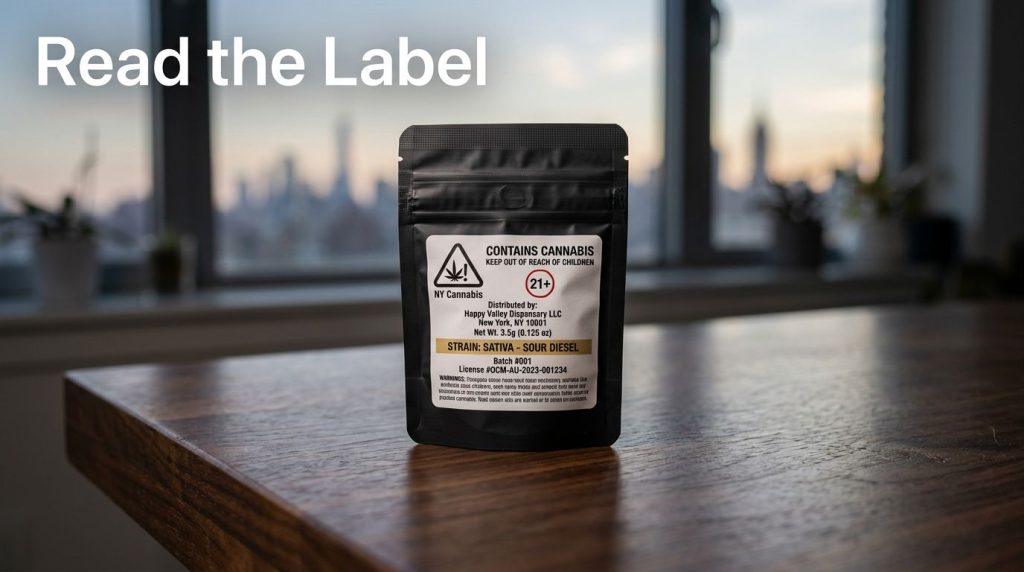
A cannabis package can look simple until you read the fine print. Then you see THC numbers, dates, symbols, and warnings all fighting for space on a New York State cannabis label.
If you’re shopping at a licensed dispensary in New York City, the New York cannabis label should tell you far more than the strain name. It should show what the product is, how strong it is, who made it, when it was packed, and how it can be tracked.
That matters because the label is the product’s passport. Once you know what to scan for on cannabis products, you can read it in seconds and spot missing details fast.
What a New York cannabis label should show right away
As of March 2026, the New York Office of Cannabis Management’s packaging and labeling requirements for adult-use cannabis products require them to come in child-resistant, tamper-evident, opaque packaging. If the package is meant for more than one use, it also needs to close securely after opening. The outside can’t mimic candy or use kid-focused graphics, and the pack is generally limited to a single uniform color.
When you first look at the package, check the front and side panels before you focus on marketing language. You should be able to find the product name, the brand, the net weight or volume, the THC warning symbol, and other universal symbols. You should also see the producer’s name, address, license number, lot number, and a manufacturing or packaged date.
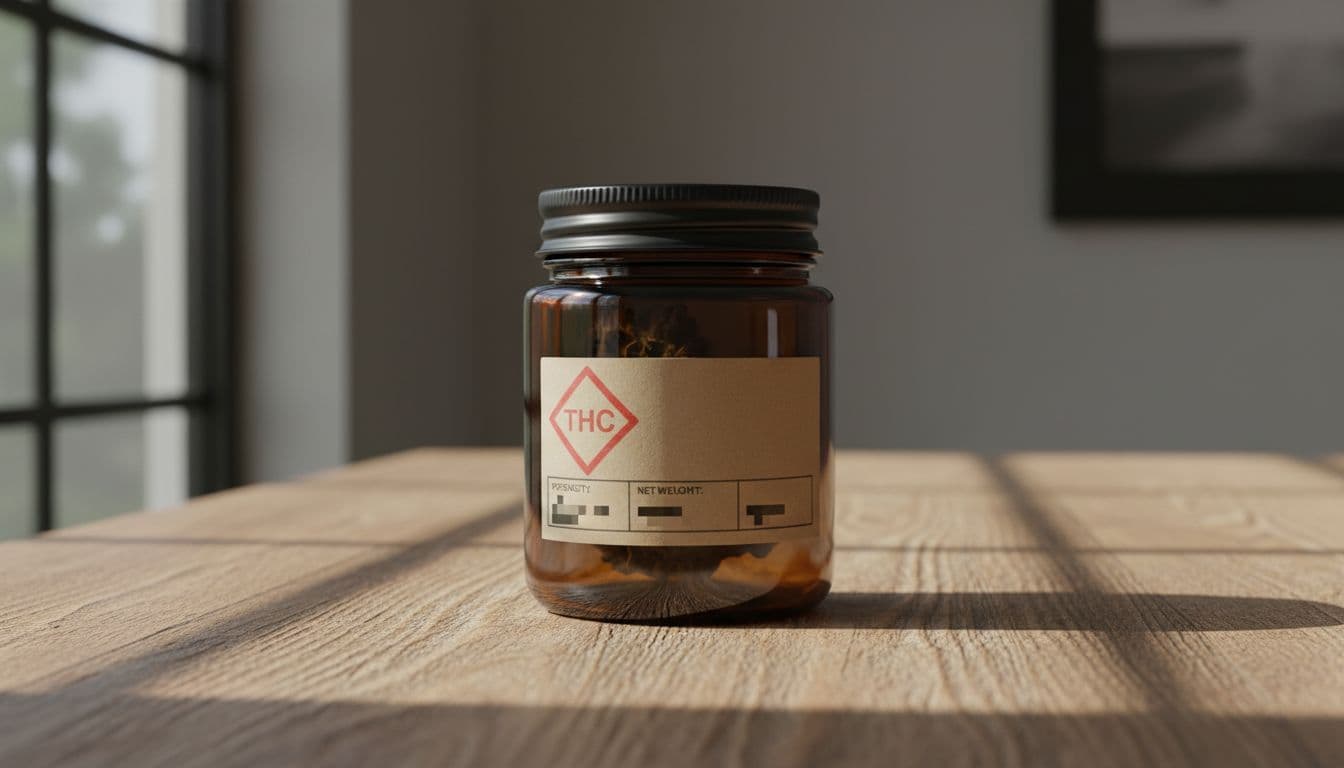
The next layer is about what’s inside. New York labels should list THC and CBD content, ingredients, and allergens when they apply. You’ll also see storage instructions, a health warning, and language telling you to keep the product away from children. Most products now include a QR code that connects to lab test results. Checking these details helps ensure legal compliance.
This quick reference helps you sort the key pieces fast:
| Label item | What it tells you | Why it matters |
|---|---|---|
| THC and CBD | Strength of the product | Helps you compare products clearly |
| Batch or lot number | Unique product ID | Supports recalls and traceability |
| Packaged and expiration dates | Freshness window | Helps you avoid stale or old stock |
| QR code to lab results | Tested potency and safety data | Lets you confirm what’s on the label |
If any of those basics are hard to find, missing, or impossible to read, slow down. A compliant label should meet New York cannabis labeling requirements for cannabis products, remaining clear, in English, and easy enough to scan without a magnifying glass.
How to read potency, serving size, and cannabinoids
Potency is where many people get tripped up. One number may show THC per serving, while another shows Total THC in the whole package. Those numbers answer two different questions.
If you’re looking at gummies or another edible, start with THC per serving size. That tells you the strength of one piece. Then look at the Total THC in the package. A tin with 10 gummies at 5 mg each contains 50 mg total. The package strength and the single-serving strength are not the same thing.
With flower, you may also see THC shown as THC percentages. Think of percentage as concentration, while milligrams show the total amount in the package. Two products can share similar THC percentages but still contain different total THC because the package weights differ.

CBD follows the same logic. A label that shows both THC and CBD gives you a better sense of balance. Some products also list other cannabinoids, such as CBG or CBN, and the terpene profile. Those details can add context, but they shouldn’t distract you from the core numbers.
Quick rule: Compare edibles by milligrams per serving, and compare full-package strength by total milligrams in the container.
You should also read the non-potency parts. On edibles and some topicals, the ingredients list matters as much as the cannabinoid panel. If you avoid certain allergens, this section deserves extra attention. These details are also vital for patients in the medical cannabis program when evaluating cannabis products. Storage instructions matter too. Heat, light, and moisture can change product quality long before the expiration date arrives.
Red flags that tell you to look closer
A good New York cannabis label should feel consistent. The product type, potency, ingredients, harvest date, and other dates should all line up. If a vape package lists ingredients that don’t match the item, or a jar lacks a batch number, that’s a reason to pause.
Watch for packaging problems too. A transparent container, an easy-open lid on a multi-use product, or a candy-like design doesn’t fit New York’s current approach. The same goes for labels that skip the universal THC symbol, omit storage directions, or leave out the warning statements to keep the product away from children.
The QR code is one of the most useful checks. When it works, you can compare the package to the Certificate of Analysis and see whether the potency and batch information match. That extra step, backed by lab testing, can save you from relying on a label that looks polished but says too little. Lab testing provides essential safety data. Some updates continue through June 2026, so the layout may shift even when the core information stays the same.
If you want a plain-language refresher after reading a package in store, this consumer label overview covers the same core elements in simple terms for recreational and medical marijuana cannabis products. Whether you’re in Manhattan, Brooklyn, Queens, the Bronx, or Staten Island, the statewide label rules follow the product, not the neighborhood.
A label shouldn’t feel like a puzzle. Consistent universal symbols, packaging and labeling, and cannabis labeling requirements help build consumer trust. When you know where to look, guided by the OCM’s packaging regulations in New York State for cannabis products, you can read a New York cannabis label with more confidence and less guesswork, even as packaging regulations evolve. Start with product type, potency, dates, batch number, warnings, and the QR code. After that, the fine print starts to work for you, not against you.