
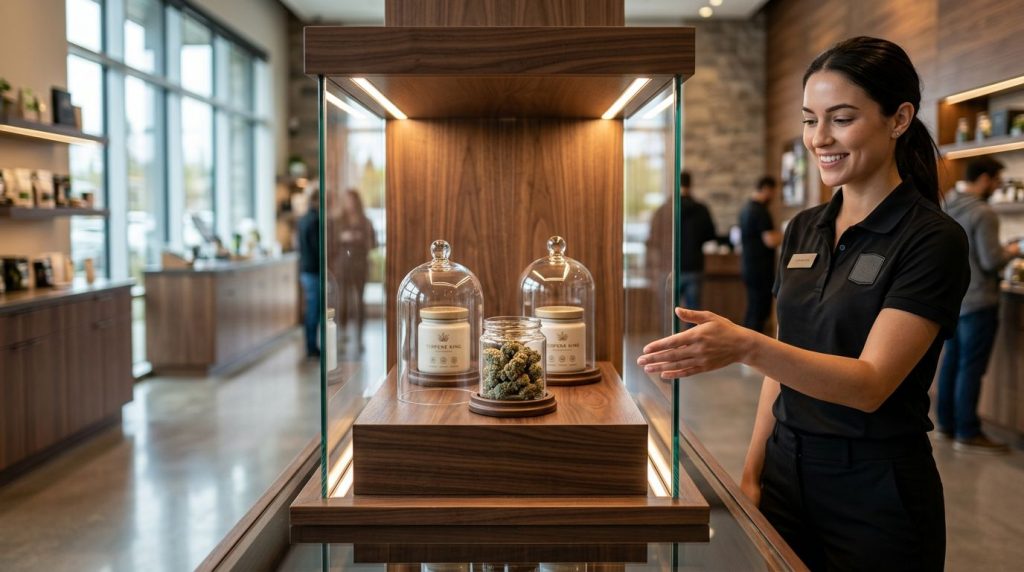
Scarcity changes how you shop. When you see limited-release cannabis products in a licensed dispensary, the item is only part of the experience.
The display, the staff explanation, and the product context all matter. If the store handles those details well, you can easily tell whether the item is truly premium cannabis flower, small-batch cannabis, or a special release tied to unique cannabis genetics from a one-time collaboration. That difference shapes the rest of your visit.
Key Takeaways
- Context Over Hype: Limited-release cannabis should be defined by clear information—such as harvest size, genetics, or brand collaborations—rather than vague marketing language.
- Transparent Retail Standards: Licensed dispensaries must maintain regulatory compliance by providing accurate, documented product data rather than relying on the informal market’s lack of oversight.
- Thoughtful Display Strategies: Effective retail design uses visual separation, such as pedestals or curated wall facings, to highlight rare items without creating artificial pressure or urgency.
- The Role of Knowledgeable Staff: Since packaging remains sealed, budtenders act as essential guides, providing the necessary context to explain why a specific product is considered limited or premium.
Scarcity only works when the context is clear
A licensed dispensary cannot treat a limited release like a random impulse item near the counter. The whole point is controlled access, clear information, and a sense that the product has a legitimate reason for being short-run.
Sometimes the limit comes from a small harvest. In other cases, it comes from a brand collaboration, a seasonal flavor profile, or a batch tied to a special event. If you do not get that context, limited starts to feel like a marketing sticker instead of a meaningful detail.
That is why presentation matters so much. In a legal store, staff and signage explain what makes the release different. You might see notes about batch size, drop date, cultivar origin, brand partnership, or packaging details. These cues help you understand the product without relying on hype. Unlike the unregulated market where products might be loosely labeled as dietary supplements or fall under the 2018 Farm Bill, legal stores operate under strict FDA regulation. This oversight is designed to address public health concerns, ensuring that hemp-derived CBD and other cannabis-derived compounds are handled with transparency.
Scarcity should be explained, not dramatized.
Licensed shops work inside rigorous compliance rules. Products are sealed, age-restricted, and sold with structured labeling requirements. Unlike the informal market, licensed stores avoid the ambiguity often found in products claiming therapeutic benefits without having undergone a formal drug approval process or extensive clinical research. Because these stores prioritize documented facts over marketing, they are better equipped to track adverse event reports, which helps build long-term trust with patients interested in the medical use of cannabis.
The presentation must do more than look attractive. It has to stay accurate, readable, and consistent with the information on the package and menu. When that balance is right, you feel guided rather than pushed. The product appears special, but the store still treats it like a regulated item, not a mystery box. That tone builds trust, especially in New York City, where many shoppers are still learning how legal retail differs from the old informal market.
A strong limited-release presentation also slows the experience down. Instead of piling every new item into one display, a thoughtful dispensary gives a rare product space. That space tells you the release deserves attention, but it also makes room for the essential facts.
How the in-store display usually looks
Most licensed dispensaries present limited drops with visual separation. You may see a pedestal, a locked case, a spotlight shelf, or a single facing on a well-lit wall featuring rare cannabis strains or craft cannabis strains. The goal is simple: your eye lands there first.

That visual treatment works best when it stays restrained. A clean display can signal rarity without turning the product into theater. In NYC, some stores borrow cues from galleries and fashion retail, where fewer objects and better spacing often carry more weight. You can see that approach in Gotham Chelsea’s dispensary design, where presentation and store layout reinforce the idea of a curated release.
Good stores support the display with useful copy. Short notes on dispensary menus, shelf cards, or staff talking points usually do more than oversized exclusive language. These materials often highlight key data such as terpene expression, unique cannabinoid profiles, and high THC potency to help customers understand the value of a specific release. You should be able to learn what the product is, why it is limited, when it arrived, and whether more inventory is expected.
Staff play a bigger role than many people realize. Because packaging often stays closed, the verbal presentation becomes part of the product display. A trained budtender may explain whether the release is tied to a single harvest lot, a specific run of hand-trimmed flower, or small-batch live resin products. That explanation turns a sealed package into something legible.
The smartest presentations also avoid fake urgency. If every featured item is framed as rare, the effect wears off fast. Licensed dispensaries tend to preserve the impact by narrowing the spotlight. One or two true standouts feel more credible than a whole wall of so-called exclusives.
What you should notice in a New York City dispensary
In New York City, limited releases often carry a cultural layer as well as a retail one. Some products arrive with design-forward packaging, artist tie-ins, or fashion-adjacent branding. This trend is particularly visible among brands offering cannabis-infused edibles and curated infused pre-rolls, which often feature artistic designs. That approach can work, but only if the cannabis facts stay easy to find.
You should expect a licensed shop to keep the basics visible. Brand name, product type, cannabinoid content, package size, and release context should not be buried under lifestyle language. Whether you are looking for specific hybrid strains to tailor your experience or seeking full-spectrum effects to optimize the entourage effect, this information must remain the priority. If the story around the product is louder than the product details, the presentation is off balance.
That matters even more with collaborative drops. NYC has already seen releases framed as collectible objects, including accessories and packaged pairings that borrow from fashion and design. High-end solventless concentrates are also becoming a staple in these limited drops. A good example is Flower by Edie Parker, where the limited element is presented as part product, part style object. Even then, the best retail presentation separates the novelty from the regulated product information.
You should also notice how the store handles availability. A responsible presentation does not promise endless restocks when the release is truly finite. It also does not turn low inventory into pressure. Clear timing, honest stock language, and accurate menu updates matter more than countdown-style hype. Additionally, while these retail stores serve the general adult population, individuals seeking the medical use of cannabis for specific health conditions should still consult a licensed healthcare provider to ensure their choices align with their needs.
For you as a shopper, that means reading the room as much as the shelf. Does the store explain the product clearly? Does the limited status have a real basis? Are staff able to answer simple questions without drifting into vague talk about exclusivity? Those details tell you whether the release is being presented with care.
When licensed dispensaries get this right, limited-release cannabis products feel less like a gimmick and more like a well-documented drop. That is the standard you should expect.
Frequently Asked Questions
Why is the context of a limited release so important?
Context separates a truly unique product from a simple marketing gimmick. Without information on harvest size, genetics, or brand partnerships, a limited-release label fails to provide the consumer with any real understanding of why the product deserves special attention.
How does a licensed dispensary handle limited-release displays?
Licensed stores use visual techniques like pedestal displays, spotlight shelving, or minimalist wall space to draw attention to specific items. This approach mimics high-end retail galleries, prioritizing clarity and spacing over cluttered, hype-driven displays.
Can I trust the claims made about limited cannabis products in NYC?
In a licensed dispensary, you can trust that product information is backed by rigorous compliance and labeling standards. Unlike the informal market, licensed retailers provide transparent data regarding cannabinoids, origin, and safety, ensuring you can verify the value of the product before purchasing.
Should I be concerned about high-pressure sales tactics for rare items?
No, a responsible licensed dispensary should not use false urgency or countdown-style hype to sell limited inventory. A professional presentation focuses on factual availability and honest stock updates, allowing you to make a purchasing decision based on product quality rather than external pressure.
Conclusion
The best presentation of limited-release cannabis products is built on clarity. A licensed dispensary ensures these items stand out, but it also clearly communicates why the product is scarce and what makes it unique. Whether you are searching for premium cannabis flower or seeking out specific hybrid strains, the value of the drop should be immediately apparent to the consumer.
In New York City, that often means a mix of careful display, strong staff knowledge, and transparent product information. When these elements align, the release feels special for the right reasons. Furthermore, the commitment to safety standards, which mirror the rigor of FDA regulation, helps ensure that every purchase in the NYC market meets the highest quality expectations.


