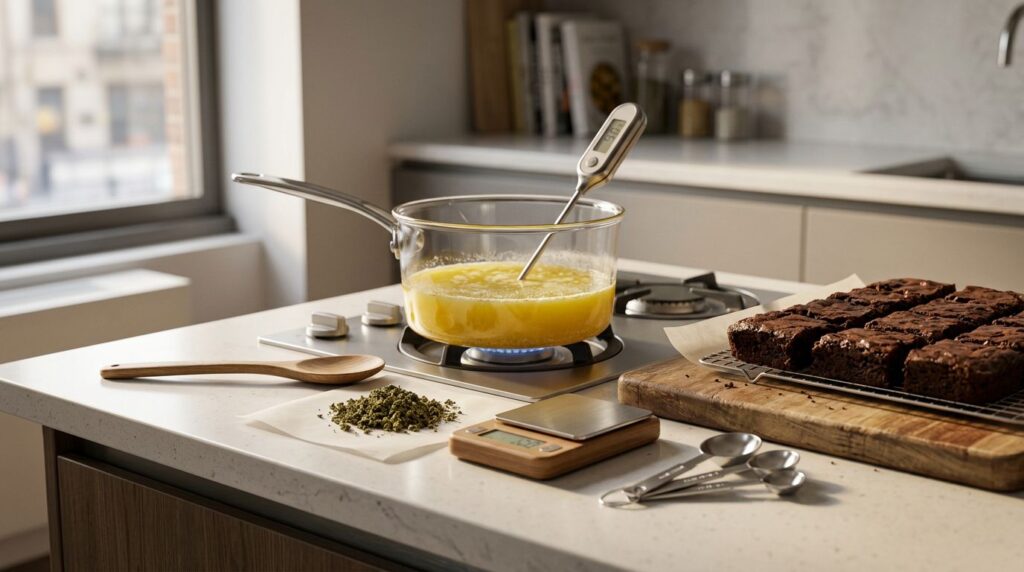
A homemade brownie can contain far more THC than you expect. Cannabis infusion requires patience, measured ingredients, and a clear plan for dosing before you turn on the oven.
When you cook with cannabis, heat activates compounds in the plant, while butter or oil carries them into food. The process is simple in principle, yet home infusions can be hard to dose accurately.
Start with a small batch, use products from licensed New York cannabis businesses, and treat every infused dish as an adult-only item.
Key Takeaways
- Decarboxylation activates cannabis before you infuse it into butter, oil, or another fat.
- A thermometer helps you keep heat low enough to protect flavor and cannabinoids.
- Homemade infusions have uncertain potency, so begin with a small serving and wait before taking more.
- Label every infused food item and store it securely away from children, pets, and guests.
- In New York City, use cannabis only in ways that follow current state and local rules.
Start With Legal Products and a Safe Kitchen
If you are 21 or older, purchase cannabis from a licensed dispensary. Regulated products carry labels that can help you identify the THC percentage, cannabinoid content, and package details. That information gives you a better starting point than cannabis with no known source or testing history.
New York rules can change, so check current guidance before you prepare or possess cannabis at home. If you plan to use material you grew yourself, review the state’s adult-use home cultivation FAQ first.
Keep your workspace clean and separate from ordinary meal prep. Wash your hands, sanitize counters, and use dedicated utensils if possible. Cannabis has a strong scent during decarboxylation, so good ventilation also helps in compact NYC apartments.
You should also plan for storage before making an infusion. A jar of infused oil can look identical to regular cooking oil once it is chilled or poured into a container.
Treat infused food like any other adult-only cannabis product. Store it where children, pets, and unsuspecting adults cannot reach it.
How Cannabis Infusion Works
Cannabis flower contains compounds in acidic forms, including THCA. Raw THCA does not produce the same intoxicating effects as THC when eaten. Heat changes THCA into THC through decarboxylation, often shortened to “decarbing.”
After decarboxylation, THC and other cannabinoids dissolve more readily in fat than water. That is why butter, ghee, coconut oil, olive oil, and MCT oil are common infusion bases. Plain water will not produce a useful cannabis infusion.
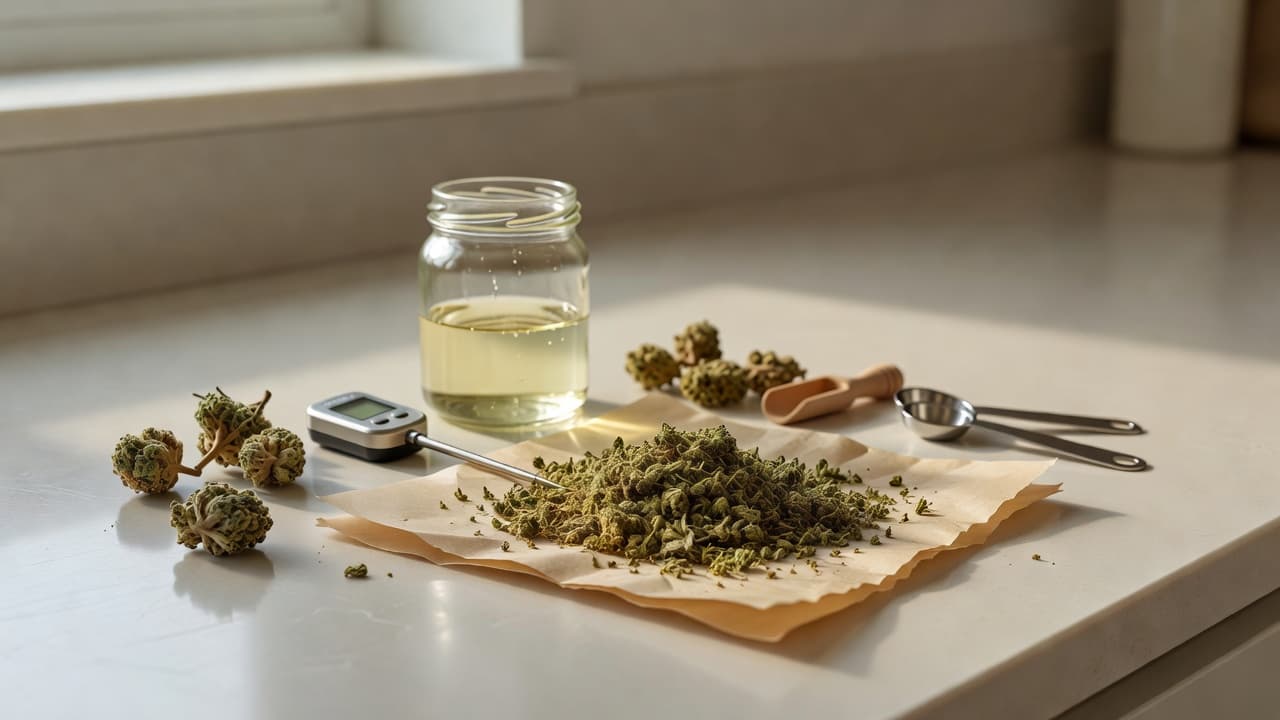
Before you begin, gather a baking sheet, parchment paper, an oven-safe dish, a saucepan or double boiler, a fine-mesh strainer, cheesecloth, heat-safe glass containers, and a digital kitchen thermometer. A thermometer is one of the most useful tools in this process because household stove settings vary widely.
Use a light touch with the flower. Break buds apart by hand into small, even pieces. Avoid grinding them into dust, since fine plant material can pass through a strainer and leave your finished butter or oil bitter and gritty.
Decarboxylate Cannabis Before You Infuse
For a beginner, oven decarboxylation is the most accessible method. Set your oven to about 240 degrees Fahrenheit. Oven thermostats are often inaccurate, so an oven thermometer can help if you use this method often.
Spread the loosely broken cannabis over parchment paper on a baking sheet. Place it in the oven for about 30 to 40 minutes. Gently move the material once or twice during heating if it appears to cook unevenly.
The flower should look dry and lightly toasted, not blackened. Burned cannabis tastes harsh and may lose useful compounds. Let it cool fully before adding it to fat.
Temperature matters more than speed. High heat can damage flavor and lower the quality of your infusion. Avoid boiling cannabis directly in butter or oil, and do not rely on a strong simmer as proof that the process is working.
A countertop decarboxylation device can offer more consistent heat, especially if you make infusions often. Still, a basic oven, thermometer, and careful timing can produce a workable beginner batch.
Choose Butter or Oil for the Food You Plan to Make
Your carrier fat should match the recipe you expect to use later. Infused butter works well in baked goods, mashed potatoes, pasta sauces, and dishes where dairy flavor belongs. Unsalted butter gives you more control over the salt level in your final recipe.
Coconut oil is popular because it stays stable during gentle heating and firms when refrigerated. It can work in cookies, chocolates, and savory recipes. Refined coconut oil has a milder taste than unrefined varieties.
Olive oil suits salad dressings, dips, and low-heat cooking. However, its flavor is more noticeable, and it is not ideal for high-heat frying. MCT oil remains liquid at room temperature, though its thin texture may not fit every recipe.
For your first cannabis infusion, choose one carrier and one intended use. A small batch of infused butter for brownies is easier to track than several jars of different oils in the same refrigerator.
Make a Small Batch of Infused Butter or Oil
Start with a modest amount of decarboxylated cannabis. Even 3.5 grams of flower can make a strong infusion, depending on its labeled THC percentage and how much you use in each serving.
Use this basic low-temperature method for either butter or oil:
- Add one cup of butter or cooking oil to a double boiler, or place a heat-safe bowl over a saucepan with gently simmering water. Add a small amount of water if you are using butter to reduce scorching.
- When the fat melts, stir in your cooled, decarboxylated cannabis. Keep the mixture between about 160 and 190 degrees Fahrenheit.
- Hold that low temperature for one to two hours. Stir occasionally, and add water to the lower pot if needed. Do not let the infusion boil.
- Set a fine-mesh strainer over a clean heat-safe jar. Line it with cheesecloth if you want a clearer finished product.
- Pour the warm mixture through the strainer. Let gravity do most of the work rather than squeezing hard, which can push bitter plant particles into the oil or butter.
- Cool the infusion before sealing it. Refrigerate butter until it firms. If you used water with butter, the butter will solidify on top, allowing you to remove and discard the water below.
A slow cooker can also hold low heat for an extended infusion. However, many slow cookers run hotter than expected, so use a thermometer rather than trusting the dial.
Estimate Potency, Then Start Lower Than You Think
A flower label can help you estimate the theoretical THC in your starting material. Multiply the grams of cannabis by 1,000, then multiply that number by the THC percentage as a decimal.
For example, 3.5 grams of flower labeled 15% THC contains about 525 milligrams of theoretical THC before decarboxylation and extraction losses. Your finished oil will contain less than that amount, but the exact amount is difficult to know at home.
This is why homemade edibles demand restraint. You cannot assume each teaspoon has the same potency unless you mix the infusion thoroughly and portion the finished recipe evenly.
Begin with a very small amount of infused food. Wait at least two hours before deciding whether to take more, since edible effects can take time to appear. Avoid combining infused food with alcohol, and do not drive or operate equipment after consuming THC.
For more practical storage guidance, this home infusion storage guide emphasizes the importance of keeping cannabis-infused ingredients clearly labeled and protected from heat, light, and air.
Label and Store Infused Ingredients Carefully
Write the date, carrier fat, and a clear warning on every container. “Cannabis-infused butter, adults only” is better than a vague mark that you may forget later. If you know the flower’s THC percentage, add it to the label for reference.
Store infused butter in an airtight container in the refrigerator or freezer. Keep oil in a sealed container away from direct light and heat. A dark glass jar can help protect oil, but a clearly labeled opaque container may be safer in a shared kitchen.
Do not leave infused cookies, chocolates, or sauces on a counter during a gathering. Guests may mistake them for ordinary food, especially if they look identical to non-infused versions.
A Better First Batch Comes From Patience
Your first cannabis infusion does not need to be strong or elaborate. Use low heat, start with a modest amount of flower, and keep careful notes on the strain, THC label, amount of fat, infusion time, and how much you used per serving.
The most reliable habit is slow dosing. When you measure carefully and store responsibly, you can approach cannabis cooking with more control and far fewer surprises.