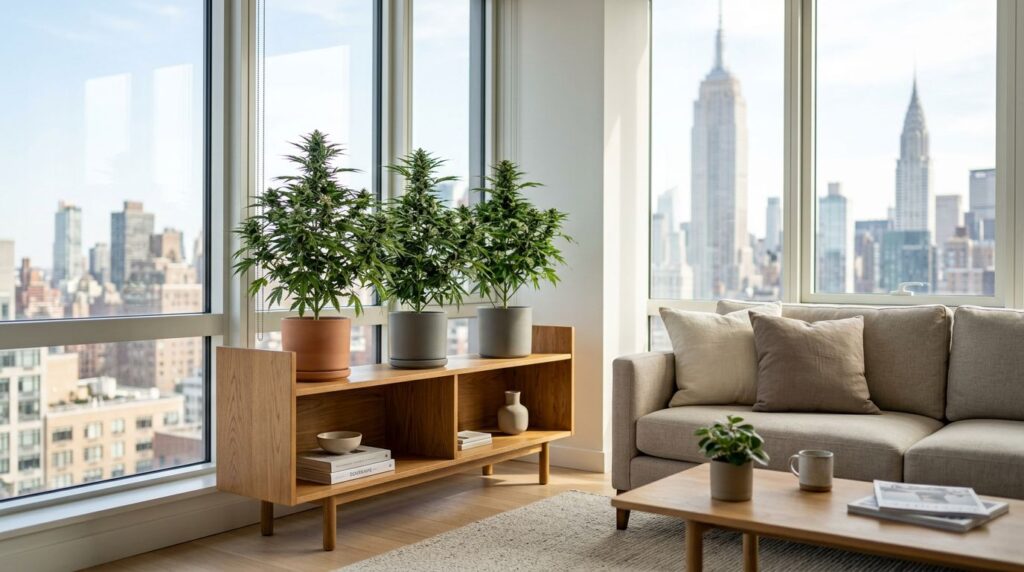
If you’re thinking about growing cannabis at home in New York, the law is finally clear enough to follow, and easy enough to break by accident. The big change is already in place: adults can legally cultivate at home, but the rules are narrow and the limits matter.
That matters even more in New York City, where apartments, co-ops, shared outdoor space, and building policies can turn a legal grow into a problem fast. If you want your New York home cultivation setup to stay compliant in 2026, the details below are the ones that count.
Key Takeaways
- Adults 21 and older can grow up to 3 mature and 3 immature plants each.
- No residence can go over 6 mature and 6 immature plants total, even with multiple adults.
- You must grow in or on the grounds of a private residence, in a secured area and out of public view.
- Homegrown cannabis is for personal use only. You can’t sell, trade, or barter it.
- You can keep up to 5 pounds at home, but public carry limits stay much lower.
What New York law allows at home
As of 2026, adult-use home growing is legal in New York for people age 21 and up. The current framework has been in effect since June 26, 2024, and the state’s home cultivation overview still sets the baseline rules you need to follow.
The core limit is simple once you split it into two categories. Each adult can grow 3 mature plants and 3 immature plants at one time. “Mature” means flowering or harvest-ready plants, while “immature” usually means seedlings or plants still in the vegetative stage.
This quick reference covers the numbers that matter most:
| Rule | 2026 limit |
|---|---|
| Minimum age | 21+ for adult-use cultivation |
| Per adult | 3 mature, 3 immature |
| Per residence | 6 mature, 6 immature maximum |
| At-home storage | Up to 5 pounds of trimmed cannabis |
| Public carry | Up to 3 ounces flower, 24 grams concentrate |
The household cap is where many people get tripped up. If two adults live together, the residence can reach the full 12-plant total, but only 6 can be mature at once. If three or four adults live there, the number still stops at the same household maximum.
The easiest way to stay compliant is to count your plants by stage, not only by total number.
That means a crowded tent can put you over the limit even if some plants look small. Seedlings, clones, and vegging plants still count if they qualify as immature plants under the rule.
Where your grow can be located, and what “secured” means
New York doesn’t give you a free pass to grow anywhere on your property. Your plants must be cultivated within or on the grounds of a private residence. That can include a single-family home, apartment, co-op, or mobile home, whether you own or rent.
In practice, “private” and “secured” do most of the work. A shared yard in a multi-unit building is a weak choice. So is a fire escape, roof deck with common access, building courtyard, or any spot visible from the street.
For many NYC residents, an indoor grow is the cleaner legal fit because you control access and visibility more easily. A lockable room, locked tent, or other restricted area makes far more sense than a space children, guests, roommates, or maintenance staff can casually enter.

Photo by Keloke Grow
The state also expects you to keep plants away from anyone under 21. “Reasonable steps” means more than pushing the tent zipper closed. You should think in terms of locked access, out-of-sight placement, and clear physical control over the area.
That matters in city housing because legal cultivation doesn’t cancel basic lease, nuisance, or safety issues. If your setup creates electrical hazards, mold, water damage, or strong odor that spills into common areas, you may have a building problem even if your plant count is legal.
Outdoor grows are possible if you have truly private space, but they need the same care. A fenced backyard behind a private home may work if the plants aren’t visible to the public and access is restricted. A shared Brooklyn brownstone garden or a side yard multiple tenants use is much harder to defend as a private, secured grow area.
Possession limits, transport rules, and the line you can’t cross
Growing legally at home doesn’t mean you can store or carry unlimited cannabis. New York lets you keep up to 5 pounds of trimmed cannabis at your private residence. That’s a generous at-home limit, but it applies to storage at home, not what you can carry around the city.
Once you leave your residence, the numbers drop fast. The public possession limit is 3 ounces of cannabis flower and 24 grams of concentrate within the state. If you move more than that, your home grow stops looking like personal use and starts looking like a compliance risk.
The sharpest line in New York home cultivation law is commercial activity. Homegrown cannabis is for your own personal use. You can’t sell it, trade it, or barter it, and you can’t turn a spare bedroom grow into a side business.
That distinction matters because New York treats licensed cultivation and home growing as separate categories. A licensing explainer on commercial cultivation makes the point plainly: once money or barter enters the picture, you’re outside the home-grow lane.
This is also where packaging and storage matter. If you harvest regularly, label your jars, keep your totals organized, and know what’s trimmed flower versus what’s still curing. A messy stash can make it harder to prove you’re within the legal home storage limit.
Special rules for renters and medical growers
If you rent, you don’t lose the right to grow by default. New York’s rules allow cultivation in rented homes too, but landlords still have limited room to restrict it. The main exception is tied to federal exposure, such as a situation where a landlord could lose a federal benefit or federal housing support.
That surprises many renters because lease language can sound broader than the law. Even so, a legal right to grow doesn’t shield you from other lawful lease terms tied to damage, unsafe wiring, moisture, or unauthorized alterations to the unit.
In New York City, that means you should read your lease with the same care you give your plant count. A landlord may not have a blanket right to ban all growing in every case, but you can still face lease trouble if your setup creates separate building or safety issues.
Medical home cultivation has its own track. If a patient is under 21, a parent or guardian can assign a designated caregiver to grow for that patient. The medical limit is 3 mature and 3 immature plants per patient, with a residence cap that can reach 6 mature and 6 immature if a caregiver is growing for two patients.
If you’re using seeds, clones, or immature plants, stay within the licensed system. New York allows certain registered nursery sellers to offer clones and similar starter plants for personal cultivation, which helps you avoid the risk of unlicensed sourcing.
Common compliance mistakes in NYC
The most common mistake is simple overcounting. People focus on mature plants because those look like the “real” grow, while immature plants quietly push the household over the legal cap. Count everything by stage, every time.
Another frequent problem is location. A legal plant in the wrong place can still create trouble. Shared roofs in Manhattan, open rear patios in Queens, and fire escapes anywhere in the city are poor choices because they raise public-visibility and access issues at once.
Storage is another weak spot after harvest. Five pounds at home sounds like a lot, but multiple harvests add up faster than many growers expect. Keep your dried cannabis secured, organized, and inside the residence.
You should also pay attention to the practical side of being a good neighbor. Strong odor, extension-cord setups, overloaded outlets, and water damage complaints can bring the wrong kind of attention to a grow that otherwise fits New York home cultivation rules.
A clean compliance habit helps. Track how many plants you have, note which are mature, store finished flower securely, and keep anything tied to cultivation away from minors. In a small NYC apartment, discipline matters more than square footage.
Conclusion
New York allows home cultivation in 2026, but the permission comes with tight boundaries. If you remember one number, make it the household cap of 12 plants, split between 6 mature and 6 immature.
The rest of the framework follows from that. Grow only at a private residence, keep the area secured, stay within possession limits, and keep homegrown cannabis out of commerce. If you treat your setup like a legal personal grow, not a casual side hustle, you’re far more likely to stay on the right side of New York law.