
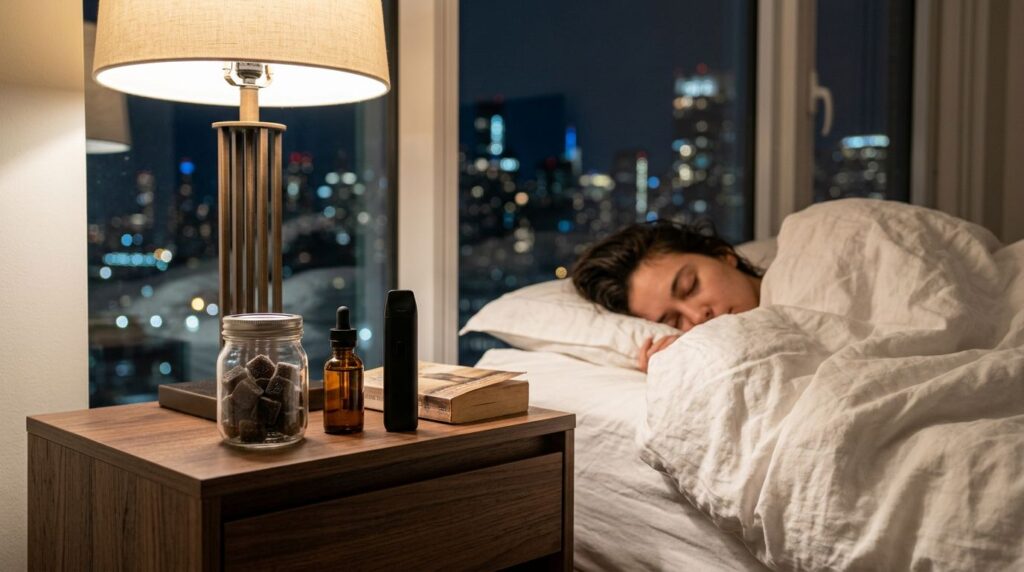
When sleep becomes elusive, cannabis can seem like a quick answer. In New York, that choice is easier to make than it was a few years ago, as licensed dispensaries now carry marijuana in the form of gummies, tinctures, vapes, and other products designed for cannabis sleep support. Many residents are turning to these options in hopes of improving their overall sleep quality.
Still, feeling drowsy and sleeping well are not the same thing. If you are thinking about using cannabis for sleep, you need a clear view of the research, the product formats, and the rules that apply in New York.
Key Takeaways
- Sedation is not restoration: While THC may help you fall asleep faster, frequent use can disrupt vital REM sleep and deep sleep cycles, preventing true, restorative rest.
- Tolerance and dependence risks: Consistent nightly use can lead to increased tolerance, requiring higher doses to achieve the same effect and potentially resulting in rebound insomnia or cannabis withdrawal when stopped.
- Product formats vary widely: Different consumption methods—such as edibles, vapes, and tinctures—have unique onset times and durations; failing to understand these can lead to next-day grogginess and unintended impairment.
- Shop the legal, regulated market: New York residents should only purchase products from licensed dispensaries, where mandatory testing and labeling ensure accurate dosage information and product safety.
How cannabis may affect your sleep
Cannabis interacts with your body’s endocannabinoid system to influence rest, but these changes do not always result in better sleep quality. For many people, a high THC concentration is the primary driver behind the immediate sedative effects that help reduce sleep onset latency, or the time it takes to drift off, at least in the short term.
CBD remains less predictable, as individual responses vary significantly. Factors like dose, product type, and personal tolerance all shape the outcome.
A 2020 review on cannabis use and sleep found a pattern that matters: short-term use may help some people fall asleep, but regular use is often linked to long-term sleep disturbances. A 2025 systematic review of sleep architecture also highlighted that cannabinoids can alter sleep stages. Specifically, frequent use may suppress REM sleep and change the duration of deep sleep, which are vital components of a restorative night. Furthermore, for younger users, frequent cannabis consumption may interfere with healthy brain development.
This matters because healthy rest is more than just feeling drowsy. You need a balanced cycle that supports your natural circadian rhythm to wake up feeling clear-headed. A product that helps you fall asleep can still leave you restless later in the night or groggy the next morning.
Tolerance is another issue. If you use THC often, your body may adjust, making the same dose feel less effective. This can lead some people to increase their intake, which raises the risk of anxiety or a difficult transition as the effects wear off. When frequent users stop, they often report vivid dreams or rebound insomnia. While your subjective sleep outcomes might feel positive initially, it is important to recognize that a sleepy feeling is not the same as improved rest.
If you are considering cannabis sleep products, keep your expectations narrow. You may notice a short-term change in how quickly you fall asleep, but you should not assume that a product marketed for nighttime use will improve your long-term rest or that it will affect your biology the same way it affects others.
Why product type and dose change the experience
The format you choose often matters as much as the cannabinoid content. Your specific method of administration impacts how you feel, as the same milligrams of THC can land very differently depending on whether you inhale it, consume cannabis edibles, or take it under the tongue.
This quick comparison can help you read a menu more carefully:
| Product format | Typical onset | Typical duration | Common issue |
|---|---|---|---|
| Inhaled flower or vape | Within minutes | 1 to 3 hours | Easier to add too much too fast |
| Edibles | 45 minutes to 2 hours | 6 to 8 hours, sometimes longer | People often take more before the first dose fully hits |
| Tinctures or oral sprays | About 15 to 90 minutes | 4 to 6 hours | Effects can vary with product and timing |
The takeaway is simple. A faster method of administration gives you feedback sooner, while slower products can linger well into the next morning. Furthermore, your choice often comes down to the subtle differences between Indica and Sativa profiles, which can influence whether a product feels more sedating or uplifting.
Cannabis edibles are where many sleep mistakes happen. If you are tired and impatient, it is easy to think a gummy is not working, then take more. Two hours later, the experience can feel heavier than you planned. For sleep, that can mean next-day grogginess instead of restful recovery.
In New York City, your living situation can also shape your choice. If you live in an apartment, inhaled products can create odor and may conflict with smoke-free building policies. Edibles and tinctures avoid that problem, but they demand more patience.
Labels matter here. A sleep name on the package is not a guarantee of a better night. Always check the THC concentration and the CBD concentration on the packaging. Some products combine these cannabinoids with melatonin or other botanicals. That mix can feel stronger or stranger than you expect, even at a modest dose.
If you choose a product, many consumers do better when they start low and give the first dose enough time to work. That approach does not make cannabis risk-free, but it does reduce a common problem: taking more before you know how the first amount feels.
What New York law means for sleep products
If you are 21 or older, adult-use cannabis is legal in New York. While some residents use marijuana to manage chronic pain that interferes with their nightly rest, it is important to remember that not every product you see online or in a local smoke shop is part of the regulated legal market.
For those seeking a cannabis sleep product, shopping at licensed dispensaries is essential. New York mandates strict testing, packaging, and labeling standards for these items. While these regulations do not guarantee that a specific product will function as a perfect sleep aid, they ensure you have an accurate understanding of exactly what is inside the package.
You can purchase items from licensed adult-use dispensaries by looking for the official New York State signage at the entrance. State rules also apply after you leave the store. Adults can possess up to 3 ounces of cannabis flower and up to 24 grams of concentrate outside the home. At home, you can store up to 5 pounds.
A few label checks can save you trouble:
- Look at THC per serving rather than just the total amount per package.
- Verify the CBD concentration to see how it balances the THC.
- Read the ingredient list for extras such as melatonin.
- Confirm the product type, as onset and duration for cannabis sleep options vary significantly.
You should also keep basic safety rules in view. Do not drive after using THC. Do not use cannabis in a car, even if it is parked. Federal law still bans cannabis, so you should not carry it across state lines, even if you bought it legally in New York.
If you are comparing products for your nighttime routine, staff at a licensed dispensary can help you understand menu terms and label language. This guidance is useful, but it is distinct from medical advice and should remain separate.
When cannabis sleep use can work against you
The biggest risk with cannabis and sleep is often the habit loop. If a sleep aid helps you doze off tonight, it can be tempting to use it tomorrow, then the next night, then every night. Over time, that routine may stop helping the way it did at first, potentially leading to the development of cannabis use disorder.
Frequent THC use can dull the effect you were chasing. As tolerance rises, you may use more of the sleep aid to get the same result, which can lead to heavier impairment, a fuzzier morning, and more trouble sleeping without it. Unlike conventional sleep aids, which are often studied for short-term use, long-term cannabis reliance can complicate your ability to achieve consistent sleep duration. Studies involving veterans with PTSD have highlighted how complex these patterns can be when addressing underlying sleep disturbances.
That is one reason the American Academy of Sleep Medicine’s viewpoint on cannabis and sleep disorders takes a cautious stance. Current evidence does not strongly support cannabis as a primary treatment for insomnia symptoms, and the downsides can become more obvious with repeated use. When you stop using a cannabis sleep aid, you might encounter cannabis withdrawal, which can trigger even more intense sleep disturbances than the ones you originally aimed to fix.
You should also pay attention to what your sleep problem looks like. Difficulty falling asleep is one pattern, but chronic insomnia symptoms may point to something else. Cannabis can also suppress REM sleep and mask the root cause of your fatigue without solving it. If you find yourself needing to use cannabis daily, you may experience cannabis withdrawal symptoms that make it harder to maintain a natural rhythm.
Mixing THC with alcohol or other sedating substances raises the stakes. While conventional sleep aids carry their own risks, mixing substances can make impairment last longer. Storage matters too, especially with gummies or chocolates. In homes with kids, pets, or roommates, secure storage is not optional.
A simple sleep log can tell you more than the marketing on a package. To track your progress, calculate your PSQI score to gain an objective view of your sleep quality. Note the product type, dose, timing, and how you feel the next morning. Your primary goal should be a consistent sleep duration, so if you see more grogginess, increased nighttime wakeups, or a growing reliance on cannabis, the pattern suggests it is time to reconsider your approach.
Frequently Asked Questions
Does using cannabis for sleep work in the long term?
While cannabis can act as a short-term sedative, research suggests that regular use often leads to long-term sleep disturbances. Frequent consumption may alter your natural sleep architecture and mask underlying issues, making it difficult to maintain healthy, consistent rest without assistance.
Why do I feel groggy the morning after using cannabis edibles?
Edibles take much longer to metabolize than inhaled cannabis, often remaining active in your system for six to eight hours or more. If the effects linger, you may wake up feeling sluggish or impaired, which is a common side effect of improper dosage or timing.
Is it safe to use cannabis with other sleep aids or alcohol?
Mixing cannabis with alcohol or other sedative substances significantly increases the risk of prolonged impairment and dangerous side effects. You should always consult with a healthcare professional before combining substances, as their interactions can be unpredictable and harmful.
How can I tell if a product is actually designed for sleep?
Labels marketed as “sleep aids” are not a guarantee of efficacy or quality. You should prioritize products from licensed New York dispensaries, where you can verify the exact THC and CBD concentrations, check for additional ingredients like melatonin, and confirm the product type to manage your expectations.
Final thoughts
Cannabis may offer sedation, but true restoration is far more complex. While many consumers turn to cannabis sleep products for quick relief, prioritizing your overall sleep quality remains the most important step for long-term health. If you are considering a cannabis sleep product as a regular sleep aid, it is important to ask if you are simply masking the symptoms of poor sleep duration or potentially disrupting your vital REM sleep cycles.
If you live in New York, the smart baseline is to stay within the licensed market, read labels closely, and treat nighttime claims with caution. Short-term relief can be real, but because subjective sleep outcomes vary significantly from person to person, your focus should always be on sustainable sleep quality.
If cannabis becomes your nightly fix, step back and look at the larger pattern. The product may not be the main issue; your underlying sleep hygiene might be. When in doubt, seek professional advice to find lasting improvements that go beyond temporary fixes.


