A licensed dispensary can feel relaxed the moment you walk in. That calm feeling usually comes from something less visible, dispensary compliance, built into the space from the start.
In New York City, the best shops don’t treat state laws like a box to check in the back office. They make the visit clear, orderly, and respectful in the cannabis industry, so you know what to expect from the door to the exit.
Key Takeaways
- Dispensary compliance builds a welcoming feel through clean entryways, clear ID verification, comfortable waiting areas, and privacy-respecting layouts.
- Well-trained staff deliver consistent, polite service, following procedures for ID checks, product discussions, and handling issues without attitude.
- Smooth operations ensure predictable hours, steady checkout lines, accurate inventory tracking, compliant packaging, and accessible education materials.
- Strong adherence to New York rules distinguishes licensed shops, creating clear, steady, trustworthy visits that protect the license and customer experience.
The welcome starts before you reach the counter
Your first impression forms fast. Clean entryways, clear wayfinding, and a calm check-in area tell you the store takes both hospitality and compliance seriously.
In a licensed NYC dispensary, that matters because ID verification is not optional. Adult-use cannabis customers must be 21 or older and show valid photo ID, so the front of house has to support that process without making it feel hostile. A good layout with access control and a security plan gives staff a direct view of the entrance, enough room for a short line, and a simple path into the sales floor.
A comfortable waiting area also helps. Soft lighting, neutral finishes, accessible seating, enough space between guests, and subtle video surveillance lower stress. When the room is easy to read, you don’t feel lost or rushed. That is part of a compliant environment, too, because confusion at the door often creates pressure on staff and mistakes at check-in.
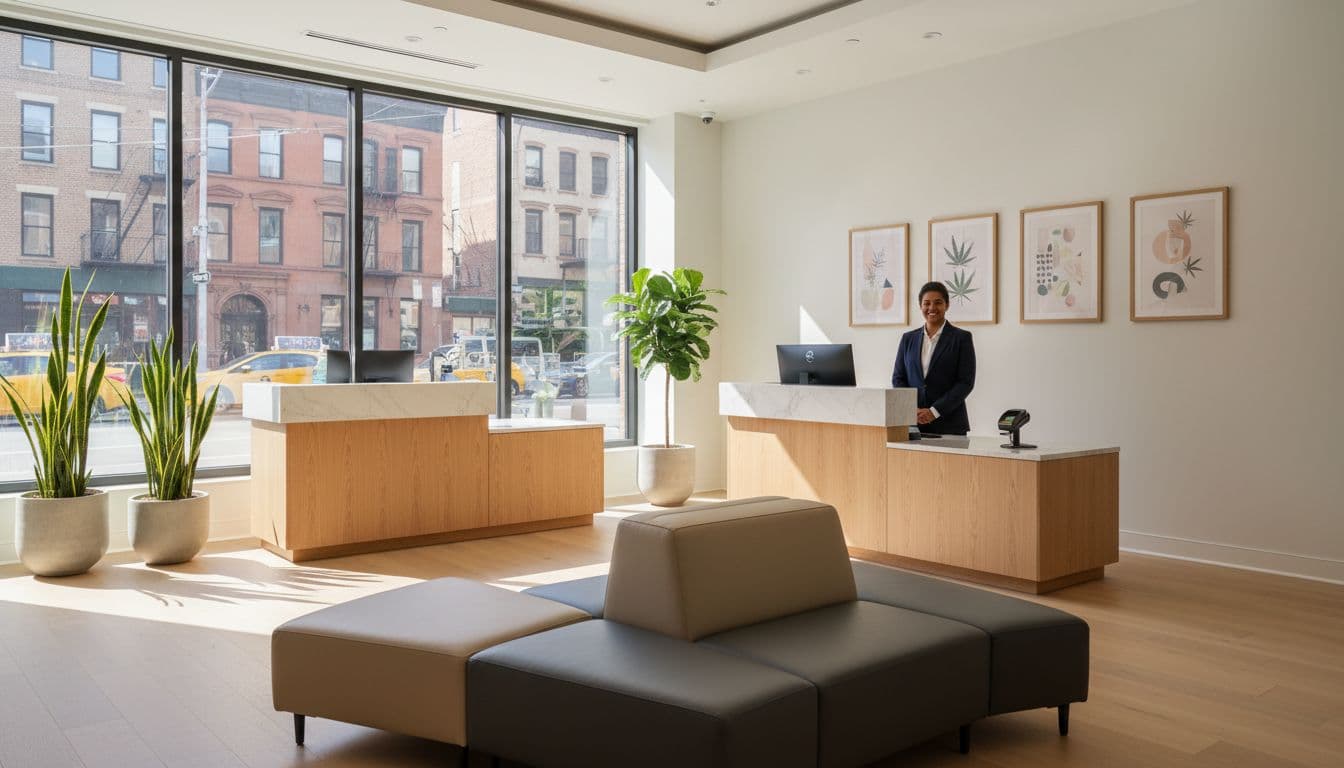
New York’s retail compliance welcome packet reflects regulatory oversight and social equity priorities, putting heavy weight on permits, inspections, and ongoing operational rules. You may never see that paperwork, yet you can feel the result when a store is laid out well. Doors open smoothly, lines don’t block the sidewalk, and staff can guide people without raising their voices.
Good design also protects privacy. Customers shouldn’t feel put on display while showing ID or asking basic questions. Even small choices, such as where the reception desk sits or how the queue bends, help a dispensary feel more respectful. In other words, the room itself can make compliance feel natural.
A welcoming dispensary feels calm because the rules are built into the visit, not added after the fact.
Staff set the tone, and training keeps it fair
Even a well-designed store can feel tense if the staff sounds stiff, unsure, or inconsistent. That’s why employee training shapes the customer experience as much as furniture or lighting.
When you visit a licensed dispensary, the strongest teams greet you warmly and follow standard operating procedures for every guest. They ask for ID without apology or attitude. They explain wait times in plain language. If a customer forgets an ID or asks for something outside the rules, the answer stays polite and firm.

That consistency protects the business license and the atmosphere at the same time. A visitor is less likely to feel singled out when the process is steady for everyone. Employee training also helps with common gray areas, such as how to talk about cannabinoids and products without making medical marijuana claims, how to handle an upset guest, and when to call a manager instead of improvising. Rigorous hiring practices, including background checks, further ensure a safe atmosphere from the start.
The state’s adult-use retail dispensary guidance makes one point clear: noncompliance can put a license at risk. Because of that, good teams rely on standard operating procedures, refreshers, and routine practice. That doesn’t make the experience robotic. It usually makes it smoother.
You can often spot this in the little moments. A trained employee doesn’t overload you with jargon. They speak clearly, pause for questions, and stay within the rules. They also know when to move the line forward. Courtesy matters, but control matters too. In a busy NYC shop, that balance keeps the room calm.
Operations are what make the visit feel easy
Most people notice service first. Daily operations, however, decide whether that service holds up at 5 p.m. on a crowded Friday.
As of May 2026, New York rules still put strong focus on basics such as approved location, pre-opening inspection, age checks, operating hours, and compliant exit packaging. These standards help licensed dispensaries stand apart from the illicit market and protect the legal industry’s integrity. Adult-use dispensaries generally cannot open before 9:30 a.m. or stay open past 9:30 p.m. Customers may not think much about those limits, yet consistent hours create predictability. Predictability makes a store feel trustworthy.
Checkout is another test. A good dispensary keeps menus current through effective inventory management and product testing verification, has products tracked accurately with seed-to-sale tracking, and relies on a point-of-sale system to handle labeling requirements and purchase limits without long stalls at the register. If stock is wrong or the line stops moving, the room changes fast. People get impatient, staff gets flustered, and mistakes become more likely.
You usually feel strong compliance in a few simple ways:
- The line moves at a steady pace.
- Staff check ID before any sales discussion.
- Purchases leave in sealed, opaque, child-proof packaging.
Education also belongs in the experience. Under New York Cannabis Law Section 85, adult-use retail dispensaries must make educational materials available at the point of sale. Done well, that doesn’t clutter the counter. It gives you clear, accessible information without slowing everything down.
This is where good operations and a welcoming environment meet. You don’t need flashy decor to feel comfortable. You need a store that runs cleanly, communicates clearly, and respects the rules every time.
Frequently Asked Questions
What happens at check-in in a licensed NYC dispensary?
ID verification is required for all adult-use customers 21 or older, using valid photo ID. Layouts support a smooth process with space for lines, direct staff views, and comfortable waiting areas featuring soft lighting and neutral finishes. This keeps things orderly without feeling hostile.
Why does staff training matter for the atmosphere?
Training ensures employees greet warmly, explain procedures clearly, and handle gray areas like product claims or upset guests consistently. This politeness and firmness protect the license while preventing tension. Customers feel respected when processes are steady for everyone.
How do daily operations make visits feel easy?
Operations follow rules like set hours (9:30 a.m. to 9:30 p.m.), seed-to-sale tracking, current menus, and sealed child-proof packaging. Point-of-sale systems handle limits and labeling efficiently, keeping lines moving. Educational materials at checkout provide clear info without delays.
Does compliance affect how welcoming a dispensary feels?
Yes, compliance shapes layout, training, and operations to make rules feel natural, not added on. Well-designed spaces and steady processes create calm, predictable visits. This balance sets licensed shops apart from illicit markets while prioritizing customer comfort.
Conclusion
The most welcoming dispensaries rarely feel loose or improvised. They feel clear, steady, and well run.
These shops navigate a complex legal landscape shaped by federal law, including the internal revenue code 280E, FDA regulation, and the 2018 Farm Bill. When dispensary compliance with federal law shapes the layout, staff training, and day-to-day flow, including measures like financial audits and alarm system protocols, your visit becomes easier to trust. In NYC, that balance is one of the clearest signs that a dispensary takes both the customer experience and its license seriously.