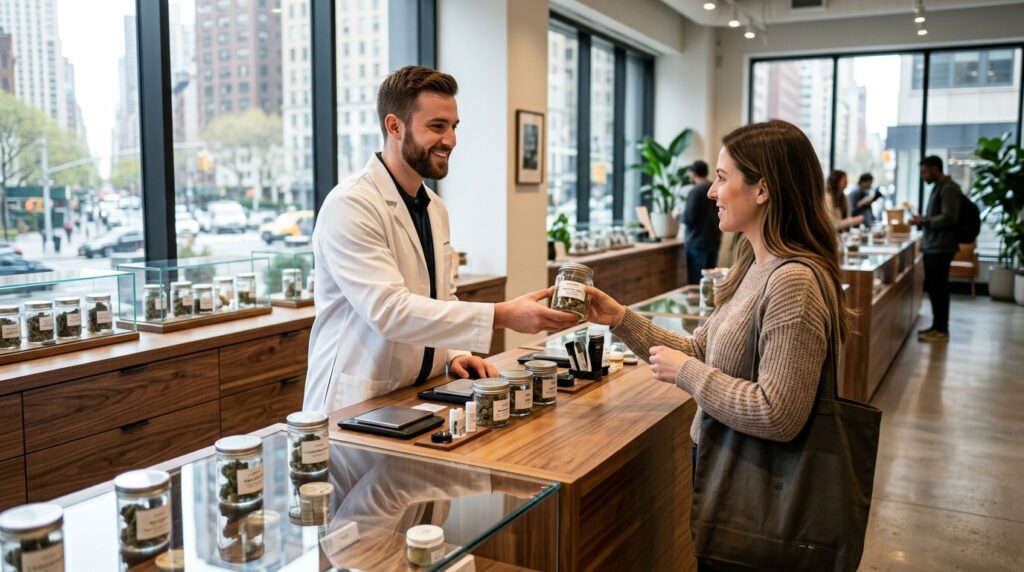
A legal NYC dispensary can offer more choice than you can assess from a menu alone. Product names, package colors, and THC percentages only tell part of the story.
The right conversation helps you choose a format, dose, and product profile that fits your plans. These questions to ask a budtender can also help you avoid paying for something that does not match your tolerance or preferences.
Key Takeaways
- Start by confirming that you are shopping at a licensed New York cannabis dispensary and bring valid government-issued ID.
- Describe the experience, timing, and format you want instead of asking only for the “strongest” option.
- Ask about cannabinoids, serving size, ingredients, lab testing, and package dates before choosing a product.
- Tell the budtender about your cannabis experience level, especially if you are new to edibles or concentrates.
- Compare the total price, package size, and number of servings before you decide.
Begin With the Basics at a Licensed NYC Dispensary
Before discussing products, make sure you are in a licensed adult-use cannabis dispensary. New York law limits adult-use cannabis purchases to people age 21 and older, and licensed stores verify your ID at entry or before purchase. A professional budtender should never suggest ways around that requirement.
Licensed retail matters because regulated products must meet New York’s packaging, labeling, and testing rules. You should see sealed packaging with cannabinoid information, a lot or batch number, warnings, and other required product details. If a product is loose, unlabeled, or lacks basic information, don’t treat it as a routine retail purchase.
Start the conversation with a clear baseline:
- “I’m new to legal cannabis. What format is easiest to understand?”
- “I have used cannabis before, but not recently. What should I consider?”
- “Is this product made and sold through New York’s licensed market?”
- “Can you show me the package information before I choose?”
A budtender can explain a product’s label and intended use, but they should not diagnose a health condition or promise a medical outcome. Keep the discussion focused on product facts, personal preferences, and responsible use.
A useful budtender conversation starts with what you want to avoid, not only what you hope to feel.
For example, if you don’t want a long-lasting experience, say so early. If you need to remain clear-headed for plans later, mention that too. Those details often matter more than a strain name.
Describe the Experience You Want, Not a Strain Stereotype
Many shoppers walk in asking for an indica, sativa, or hybrid. Those broad categories can be useful shorthand, but they don’t predict every person’s experience. Cultivation methods, cannabinoid levels, terpene content, dose, and your own tolerance all affect how a product may feel.
Instead, give the budtender practical context. Are you looking for something mild for a quiet evening at home? Do you prefer a product that is less likely to feel overwhelming? Have certain aromas, flavors, or formats worked poorly for you before?
Use direct questions such as:
- “What would you suggest for a lower-intensity experience?”
- “Which options have a more balanced THC and CBD profile?”
- “Do you have something for an experienced consumer who wants a modest dose?”
- “What products have citrus, pine, herbal, or fruit-forward aromas?”
- “Which option is less likely to be difficult to pace?”
Cannabis products may list terpenes such as myrcene, limonene, pinene, or linalool. These aromatic compounds contribute to scent and flavor, but they do not guarantee a particular effect. A budtender can describe the profile on the label and share general customer feedback without presenting it as a certainty.
Be honest about your experience level. Trying to sound more experienced than you are can lead to an uncomfortable purchase. If you have not used cannabis in years, say that. A lower-dose product may give you more control than a high-THC flower or a potent edible.
You can also ask, “What would be a sensible starting point for someone with my tolerance?” That question encourages a product-specific answer instead of a vague recommendation.
Ask What the Label Actually Tells You
A cannabis package has more useful information than the product name. Ask the budtender to walk you through the label if any part seems unclear. This is especially important with edibles, vapes, concentrates, and infused products, where the amount per serving can differ sharply from the total amount in the package.
For flower and pre-rolls, ask about the THC and CBD percentage, net weight, package date, and whether the product lists terpene information. Higher THC does not automatically mean better quality or a better fit. Freshness, aroma, cure, and your preferred intensity also affect your choice.
For edibles, the most important questions are often:
- “How many milligrams of THC are in one serving?”
- “How many servings are in the package?”
- “Does it also contain CBD or other cannabinoids?”
- “How long should I wait before considering another serving?”
- “Are there allergens or ingredients I should know about?”
New York’s legal market uses clear dose information to help adults make informed decisions. Still, edible effects can take longer to appear than inhaled products and may last longer. Read the serving guidance on the package, start conservatively if you are inexperienced, and avoid stacking doses because you feel impatient.
With vape cartridges and disposable vapes, ask what type of extract is inside. Distillate, live resin, rosin, and full-spectrum extracts can differ in flavor, processing method, and price. You can ask whether the device is rechargeable, whether it requires a compatible battery, and how the dispensary recommends storing it.
If you are considering a concentrate, ask about potency and handling requirements. These products are often less forgiving for people who have little experience with cannabis.
Match the Product Format to Your Schedule
The same cannabis content can feel very different depending on how you use it. Your budtender should help you compare formats without pushing you toward the most expensive item in the case.
Flower and pre-rolls are familiar options, but they require combustion or a compatible vaporization method. Pre-rolls may be convenient, although their size can make pacing difficult for one person. Ask whether a pre-roll is intended for multiple sessions and whether it contains only ground flower or includes added concentrate.
Edibles are discreet and do not require smoking or vaping. However, they require patience and careful attention to serving size. Gummies, chocolates, beverages, and mints may have different onset times, even when their listed THC content looks similar.
Tinctures, capsules, and tablets offer measured doses that some adults prefer for consistency. Ask how the product is intended to be used and whether the label lists a measured amount per dropper, capsule, or serving.
A simple question can narrow the menu quickly: “I need something easy to measure and easy to pause. Which format fits that?” Your answer may be different for a weekend at home than for a social event in Brooklyn or a quiet night after a long Manhattan commute.
Compare Price, Size, and Freshness Before You Commit
Price alone can hide major differences. A less expensive package may contain fewer servings, while a higher-priced product may offer better value per gram or per milligram. Ask for the total amount and the serving count before comparing two items.
For example, ask, “What is the cost per serving?” when comparing edibles. For flower, ask about the weight in grams and whether the price includes applicable taxes. New York cannabis receipts can show state and local taxes separately, so the final total may differ from the shelf price.
Packaging dates matter as well. Flower can dry out over time, while edibles and other manufactured products have expiration or best-by dates. Ask, “When was this packaged?” and “Is this close to its expiration date?” A licensed dispensary should be able to provide straightforward answers.
You can also ask about storage. Heat, light, and air can affect product quality. Keep cannabis in its original child-resistant packaging, store it away from children and pets, and avoid leaving it in a hot car.
Questions That Protect Your Comfort and Safety
A good budtender does not need your private medical history to help you shop responsibly. Still, you should mention relevant boundaries. If you don’t want to smoke, dislike sweet edibles, or prefer products without certain ingredients, say so.
Ask whether a product contains common allergens, added flavoring, botanical terpenes, or ingredients such as gelatin. If alcohol, medications, pregnancy, breastfeeding, or a health condition are part of your situation, speak with an appropriate healthcare professional rather than relying on retail guidance.
You should also ask about impairment. Cannabis can affect coordination, judgment, and reaction time. Do not drive, bike in traffic, or operate machinery after using it. Plan your transportation before you consume.
Finally, ask how to store and dispose of the product. Child-resistant packaging works only when you close it properly and keep it out of reach.
Final Thoughts
The best questions for a budtender are clear, personal, and practical. Tell them your experience level, preferred format, desired intensity, budget, and timing.
A licensed NYC dispensary should give you enough information to make your own decision without pressure. When you understand the label and the serving size, you can choose cannabis with more confidence and control.