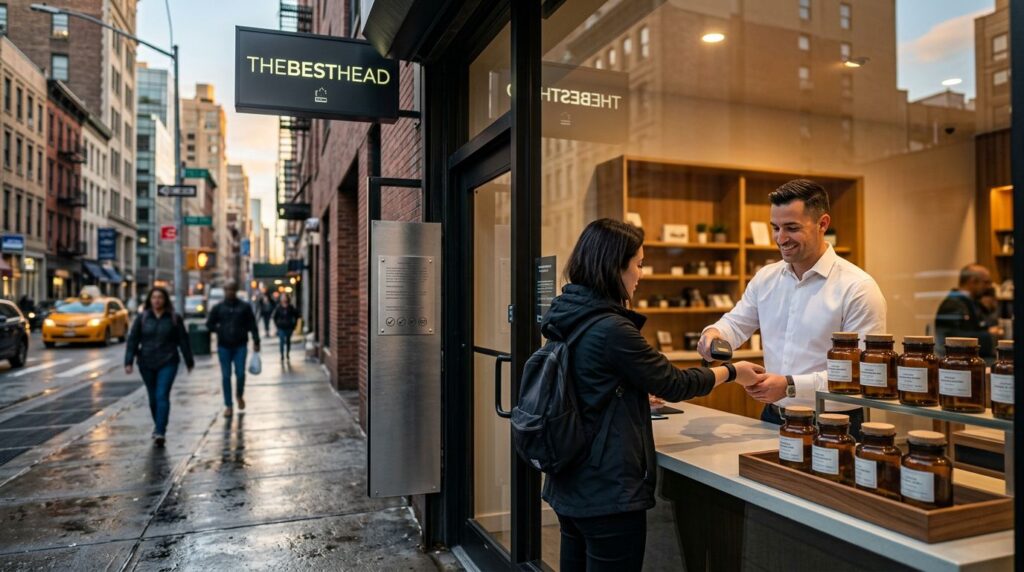
A corner smoke shop can look polished and still be the wrong place to buy cannabis in New York City. That matters because licensed dispensaries follow state rules on testing, labeling, and age checks, while unlicensed sellers do not.
As of 2026, city enforcement has closed many illegal stores, yet some remain easy to stumble into. If you want to avoid unlicensed cannabis shops nyc, watch for a few plain signals at the door, the counter, and the package in your hand. Those details tell you more than flashy signs ever will.
Key Takeaways
- Verify Official Status: Always look for the state-mandated dispensary verification sign at the entrance; if it is missing, the shop may be operating illegally.
- Prioritize Safety over Convenience: Just because a store is conveniently located or looks polished does not mean it is licensed; verify every location using the official Office of Cannabis Management database.
- Look for Regulatory Standards: Licensed dispensaries are required to perform strict age checks and sell products in labeled, tested packaging; avoid stores that skip ID verification or sell items in generic, unbranded containers.
- Trust the Process: If a transaction feels off-the-books or staff cannot provide clear information about the origin and testing of their products, treat the inventory as potentially dangerous and walk away.
Why unlicensed smoke shops still matter in 2026
You still need to remain vigilant, even though the city has significantly reduced the number of illegal sellers. Current reporting in 2026 shows that NYC has shuttered about 1,000 unlicensed smoke shops through the aggressive Operation Padlock to Protect initiative led by Mayor Eric Adams and Sheriff Anthony Miranda. While some critics argue that these enforcement methods are unconstitutional, the NYC Sheriff continues to seize inventory and issue an immediate order of closure to shops involved in illegal cannabis sales. These storefront closures are subject to the OATH hearing process to ensure due process as the city clears the streets of these businesses.
The legal market has grown, so you have more options for purchasing than you did a year or two ago. However, that progress does not remove the risk. Storefronts turn over quickly in New York City, and illegal weed shops may change signage or stock without looking different from the sidewalk. If you walk in based on convenience alone, you can still end up at an illicit seller.
The legal distinction is simple, even if the retail landscape remains complex. A general smoke shop may legally sell nicotine products, cigars, papers, or hemp items, but it cannot legally sell adult-use cannabis unless it holds a state-issued permit. The Office of Cannabis Management is the definitive public source for verifying which locations are authorized to operate.
Why should you prioritize licensed retailers? The primary concern is consumer safety. Licensed dispensaries must follow strict state rules for product testing, packaging, and age verification. In contrast, unregulated products sold at unlicensed shops often lack the transparency found in lab-tested products. Would you trust a pharmacy without a license? The same logic applies here. If a store cannot show clear proof that it is allowed to sell cannabis, you should treat the inventory as unverified and potentially dangerous.
The clearest red flags at the entrance and inside
The fastest way to spot trouble is to look up before you look around. Start at the front door, because licensed dispensaries in New York must display state verification information near the main entrance.
Check the state verification sign first
New York requires that all regulated dispensaries post the Dispensary Location Verification tool near the entrance, as mandated by the Office of Cannabis Management. If you do not see that state verification sign, stop and take notice. One missing sign does not prove everything by itself, but it is one of the strongest early warnings that you might be dealing with one of many unlicensed smoke shops currently operating in the city.
Next, watch what happens with ID. A licensed dispensary should take age checks seriously. If staff let people wander in without any attention to age, that is a bad sign. If the shop appears willing to sell to anyone who walks through the door, you should leave.
The outside of the store also tells you a lot. If the windows are covered with huge cannabis graphics, bargain claims, or vague language, yet there is no clear license display, the store may be leaning on image instead of proof. Legal businesses do not need to hide the basics, whereas illegal weed shops often use flashy aesthetics to distract from a lack of proper certification.
If a shop selling cannabis cannot show a state verification sign at the entrance, treat it as unverified until you confirm otherwise.
Read the room before you read the menu
Once you are inside, pay attention to how the products are handled. Licensed dispensaries sell cannabis in regulated packaging with clear labels. You should see brand names, cannabinoid information, warning language, and other standard details that show the product moved through the legal system.
By contrast, many shops often look improvised. THC products may sit in generic pouches, plain jars, or packaging that gives you almost no useful information regarding testing or origin. A clerk may point to a shelf of edibles or vapes without showing who made them, where they came from, or whether they were tested.
This quick comparison helps:
| What you notice | What it may suggest |
|---|---|
| State verification sign near the entrance | The store is presenting required proof |
| No verification sign at all | The shop may be an unlicensed dispensary |
| Firm ID check before browsing or purchase | The store is treating age rules seriously |
| No ID check, or a casual wave-through | The shop may be ignoring legal rules |
| Sealed packages with clear labels | Products look more consistent with legal retail |
| Generic bags, loose jars, or vague stickers | Products may be outside the legal market |
| Staff can explain brand and source | The store is acting like a regulated business |
| Staff avoid direct answers | The shop may not have a lawful chain of sale |
No single detail settles the question every time. Still, several red flags together usually tell a clear story. If the shop skips the sign, skips the ID check, and stocks loosely labeled products, you are not looking at a normal licensed dispensary.
What a licensed NYC dispensary usually looks like
A legal dispensary usually feels more straightforward than a questionable smoke shop. You should see a clear business name, a defined retail setup, and staff who answer basic questions without hesitation. The store should not feel secretive or improvised, as licensed dispensaries operate with a level of transparency that illegitimate retailers simply cannot match.
That does not mean every legal shop looks fancy. Some are small, some are spare, and some are busy or even a little chaotic because New York retail space is expensive and tight. What matters is that the cannabis side of the business looks organized and accountable.
Packaging is a strong clue. A licensed product should not leave you guessing about who produced it. If you ask where a vape, edible, or other THC products came from, staff should be able to give you a direct answer. If the answer is vague, dismissive, or changes halfway through the conversation, take that as a warning.
You should also expect a proper receipt from a real business. A legal shop does not need to act like the sale is informal. If the transaction feels off-the-books, you have a reason to pause.
Another good habit is to verify the address before you go. If you are planning a visit, you can check city information through Cannabis NYC or search the state registry maintained by the OCM to compare what you see in person with what the state requires. That extra minute can save you a wasted trip.
Most importantly, trust the boring details. A bright sign, crowded shelves, or confident staff do not make a store legal. Clear verification, serious ID checks, and traceable products do.
What to do when a shop feels off
When something feels wrong, you do not need to debate it at the counter. The safer move is to step back and verify what you are seeing.
Use a simple process:
- Leave the shop if you do not see state verification or a real ID check.
- Confirm the location through official New York resources before returning.
- Avoid buying products with missing labels, unclear origin, or loose packaging.
- If you already made a purchase and the packaging looks suspicious, do not rely on assumptions about what is inside.
That approach matters because unlicensed stores often count on speed and habit. You walk in, see products on a shelf, and assume the store is operating lawfully. In NYC, that assumption can still be wrong. Because the city continues to work to padlock illegal shops to curb unlicensed activity, you can also support these efforts by submitting community complaints if you spot a business that appears to be operating outside the law.
You should also remember that convenience is not a good filter. A shop may be on a busy avenue in Manhattan or next to a subway stop in Brooklyn and still lack a cannabis license. Foot traffic does not equal legitimacy. Neither does a polished interior, a trendy logo, or a social media style menu board.
If you use a directory or store finder, treat it as a starting point, not the last step. Verify the store again when you arrive to ensure you are not visiting an unlicensed dispensary. A licensed dispensary should make that easy. An unlicensed shop usually will not.
Frequently Asked Questions
How can I be 100% sure a shop is licensed?
The most reliable way is to use the official Dispensary Location Verification tool on the New York State Office of Cannabis Management website. By searching your location or the store name, you can confirm whether the business holds a valid state permit to sell cannabis.
Why does it matter if a shop is unlicensed?
Unlicensed shops do not adhere to state-mandated lab testing, which ensures that products are free from harmful contaminants like pesticides, heavy metals, or mold. Buying from a licensed retailer guarantees that you are receiving products that meet strict safety, labeling, and quality control standards.
What should I do if I suspect a store is selling illegal cannabis?
You should avoid making any purchases at that location and consider leaving the premises. If you wish to report the business, you can submit a complaint through official city channels, which helps support local enforcement efforts like Operation Padlock to Protect.
Does a professional-looking storefront guarantee it is legal?
No, a polished or trendy interior is not a substitute for legal authorization. Many unlicensed smoke shops use high-end aesthetics and flashy marketing to appear legitimate, so you must always rely on physical proof like the state verification sign and proper packaging instead of store decor.
Conclusion
A storefront can look normal and still raise every red flag that matters. In New York City, the safest habit is to prioritize consumer safety by trusting official verification rather than flashy marketing or appearances.
Always check for the state-issued sign, expect a mandatory ID check, and read the product packaging with a skeptical eye. If those basic standards are missing, you do not need to conduct a long investigation. You already have enough reason to walk away and protect your health.