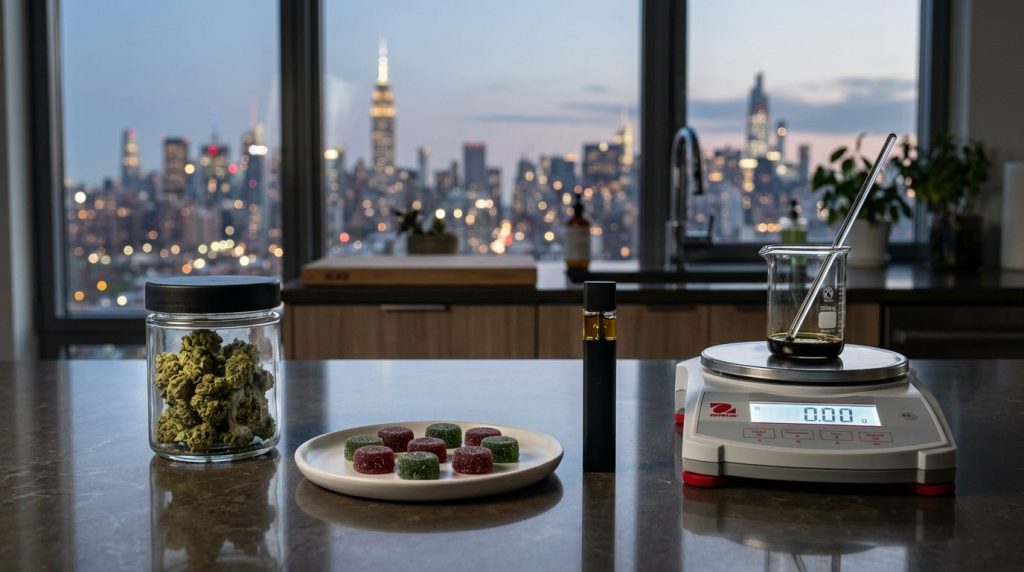
If you expect New York to put a hard THC ceiling on every cannabis product, the legal market can look confusing at first. The state’s cannabis potency limits are real, but they do not work the same way across flower, edibles, vapes, and concentrates.
That matters if you shop at licensed dispensaries in New York City or compare menus across state lines. Once you separate dose caps, rules regarding THC concentration, and testing requirements, the New York approach becomes much easier to read.
Key Takeaways
- New York imposes strict limits on edibles, restricting them to 10 mg of THC per serving and 100 mg per package, consistent with many other legal states.
- Unlike some restrictive markets, New York does not place a universal, statewide THC percentage cap on adult-use flower or concentrates.
- The state prioritizes consumer safety through mandatory independent lab testing, requiring THC levels on labels to remain within 85% to 115% of the actual tested amount.
- Shopping in New York requires looking at product-specific metrics, as the regulatory framework varies significantly between inhalable products and ingestible goods.
What New York actually limits, and what it doesn’t
New York places its clearest adult-use limits on edibles. In licensed retail, an edible can contain 10 milligrams of THC per serving and 100 milligrams of THC per package. If you have bought gummies in other legal states, that format probably looks familiar. Furthermore, all licensed products are sold in childproof packaging to meet state safety standards.
By contrast, New York does not use a simple statewide THC cap for standard adult-use cannabis flower or cannabis concentrates. You will not find a rule that says all legal flower must stay under one fixed THC percentage. Instead, the state leans on product testing, labeling, and purchase limits.
For adult-use transactions, adults 21 and older are subject to specific purchase limits and possession limits, allowing them to buy and possess up to 3 ounces of cannabis flower and 24 grams of cannabis concentrates from licensed retailers. Those are quantity limits, not potency caps. That is an important distinction, because people often mix the two together.
New York also requires independent lab testing. In adult-use cannabis, the tested THC amount must generally fall within 85% to 115% of the labeled amount. So while the state may not cap most inhalable products by one universal THC number, it does require the number on the package to track with the tested result.
A separate rule applies to many cannabinoid hemp products sold in New York. Those products often fall under a 0.3% Delta-9 THC threshold, which is a different system from adult-use cannabis sold at licensed dispensaries. If you compare products across categories, that split can make the market look more inconsistent than it is.
What you get, in practice, is a state that controls dose more tightly than percentage strength.

Why “potency limit” can mean three different things
A lot of confusion comes from the word potency. States use it in different ways, and shoppers do too. If you want a clean comparison, keep these three measurements separate:
- THC percentage matters most for flower, vapes, and concentrates.
- Milligrams per serving size matters most for edibles.
- Total milligrams per package matters when you compare one edible package to another.
Those numbers do not tell the same story. A flower jar labeled 27% THC is using a percentage-based measure. A gummy marked 10 mg THC is using a specific serving size measure. A vape cart labeled 800 mg total cannabinoids is providing a different type of metric entirely.
Because of that, two products can both sound strong while working on totally different scales. If you compare a 10 mg gummy to a 28% flower, you are not comparing like with like. You are comparing a controlled dose to a percentage estimate for inhaled cannabis. When analyzing these products, it is helpful to look at the total THC content, as these labels help users better understand the psychoactive properties of their purchase.
A high THC percentage does not tell you how much THC you consume in one serving.
New York makes that distinction more visible than some people expect. The state’s edible rules dictate exactly how much THC can exist in one serving size and one total package. Meanwhile, flower and concentrates live in a more open range, as long as they meet testing, labeling, and other retail rules.
So if you shop in NYC and wonder why one shelf looks tightly controlled while another looks broad, that is the reason. The rules change based on the product type.
How New York compares with states that cap edible dose
On adult-use edibles, New York looks far more mainstream than restrictive. Many established legal states use the same 10 mg per serving and 100 mg per package pattern for adult-use marijuana. California, Colorado, Nevada, Washington, and New Jersey all follow versions of that approach, reflecting a common feature of modern state cannabis laws.
That shared format is useful for shoppers. If you travel between legal markets, you can usually read an edible label in New York the same way you would read one in Colorado or California. A standard THC dose remains small enough to define easily, and a full package has a familiar ceiling.
Where New York differs is not on adult-use gummies or chocolates. The bigger difference appears when you move into inhalable products, because New York does not add a broad statewide THC cap on flower.
This quick comparison helps show where New York sits:
| State | Adult-use edible limit | Broad statewide THC cap on flower? | What you notice as a shopper |
|---|---|---|---|
| New York | 10 mg per serving, 100 mg per package | No simple statewide cap | Standard THC dose feels familiar |
| California | 10 mg per serving, 100 mg per package | No simple statewide cap | Similar edible framework |
| Colorado | 10 mg per serving, 100 mg per package | No simple statewide cap | Similar dose-based retail model |
| Massachusetts | 5 mg per serving, 100 mg per package | No simple statewide cap | Lower single-serving dose |
| Oregon | 5 mg per serving, 50 mg per package | No simple statewide cap | Stricter total edible dose |
The takeaway is clear. New York is not unusually strict on adult-use edible dose. In fact, it is more permissive than states such as Massachusetts and Oregon on the amount a single serving or full package can carry.
That means your first impression of New York depends on what you buy. If you focus on gummies, the state looks conventional. If you focus on flower, the market can look more open.

Some legal states use direct THC caps, and New York mostly doesn’t
A smaller group of legal states draws a sharper line. Instead of limiting the dose in edibles and leaving most inhalable products alone, they set direct THC ceilings for at least some adult-use categories. Connecticut and Vermont are common regional examples that utilize state statutory limits to control potency. These strict caps are sometimes intended to prevent diversion to the illicit market by curbing the availability of ultra-potent products.
That changes the retail shelf before you ever step into a store. In a direct-cap state, the highest-THC flower or certain stronger concentrate formats may never enter the legal adult-use channel at all. The law screens them out upstream.
New York has not adopted that broad model for standard adult-use flower and concentrates. So when people ask whether New York’s cannabis potency limits are strict, the honest answer is mixed. The state is stricter on edible dose than an unlimited market would be. Yet, it is looser than direct-cap states when you look at flower percentage and many concentrate products.
For you as a shopper, this matters more than it may sound. A legal menu in Connecticut or Vermont can feel curated by law in a more obvious way. A licensed menu in New York can show a wider spread of THC percentages, especially in flower, because the state relies less on a blanket THC ceiling. However, because New York lacks a hard flower cap, product equivalency between different categories like flower and wax becomes harder to calculate for the average consumer.
That does not mean New York ignores potency. It means the state manages potency through different tools, including testing, packaging, label accuracy, product category rules, and possession limits. In plain terms, New York uses a scalpel where some states use a hard line.
The result is a middle-ground system. You get more range than you would in a direct-cap market, but you also need to read labels more carefully because one number will not summarize the whole policy.
Why label accuracy matters more in New York’s system
When a state does not place a broad THC cap on most flower and concentrates, the label carries more weight. In New York, that makes testing and label accuracy central, not secondary.
The state’s consumer guidance from the Office of Cannabis Management makes the basic point clear. Licensed cannabis products must go through lab testing, and those labels are supposed to reflect what the product actually contains. It is worth noting that medical cannabis programs often operate under different rules. Patients enrolled in these programs typically need a physician recommendation for specific qualifying medical conditions, and they may encounter different medical cannabis limits compared to the broad retail market.
That sounds simple, but it changes how you compare products. A flower jar marked 18% THC and another marked 28% THC may both be legal in New York. Since the state isn’t filtering them through one blanket potency cap, the label becomes one of your main tools for comparison. If the testing is sloppy, the whole retail framework loses value.
A separate overview of New York potency testing highlights the rule many shoppers miss: adult-use THC results generally have to fall within 85% to 115% of the stated label amount. That gives licensed retail a measurable standard for accuracy.
Still, you should not treat THC alone as the whole product story. A higher number can change how a product feels, but product form matters too. A 10 mg edible has a different onset and duration than inhaled flower. A concentrate with a high THC percentage is also not equivalent to a single edible serving. Label accuracy gives you a cleaner baseline, not a full experience map.
That is one reason licensed status matters so much in New York City. If you compare products sold through licensed channels, you can rely on a shared testing structure. If you look outside that system, you lose the value of those rules, and state-to-state comparisons stop meaning much.
What this means if you shop in New York City
If you browse licensed dispensaries in Manhattan, Brooklyn, Queens, the Bronx, or Staten Island, the potency rules do not change by borough. The shopping experience can still feel different from one store to the next, but the core state framework remains the same across all of New York.
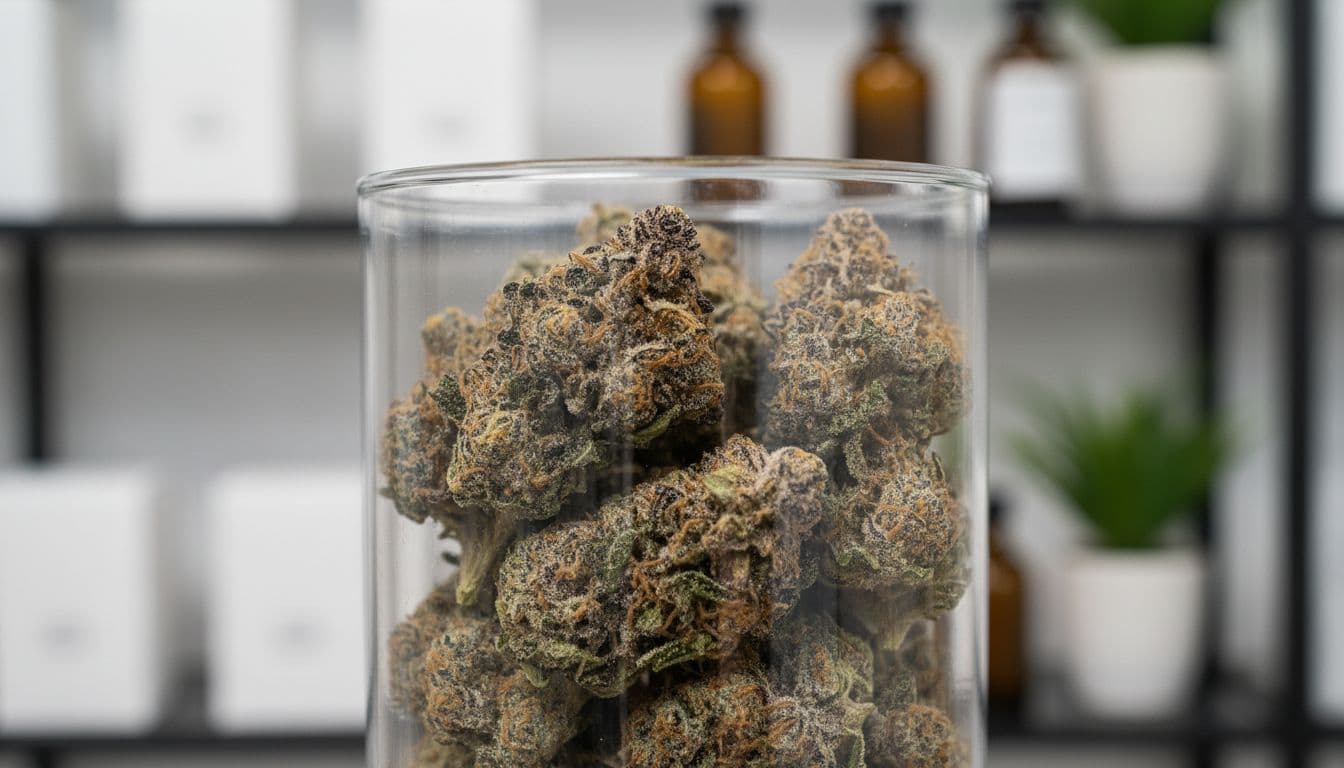
That framework gives you a few practical reference points. With edibles, the key number is milligrams per serving and per package. When shopping for dried cannabis, you will often compare THC percentages across products that are all legal, as New York does not impose a broad statewide flower cap. Whether you are looking for specific cannabis strains to achieve particular effects or simply browsing the latest arrivals, the variety available is significant. With concentrates and vapes, you need to read both the package total and the product category.
If you are used to California or Colorado, New York’s edible limits will feel familiar. If you are coming from Massachusetts or Oregon, New York can look looser on edible dose. If you know Connecticut or Vermont, the wider range of flower percentages in New York may stand out first.
The biggest mistake is to reduce every product to one stronger or weaker label. A 5 mg edible in Massachusetts, a 10 mg edible in New York, and a high-THC jar of dried cannabis in NYC are all working inside different rule sets. You get a more honest comparison when you match product to product.
In city shopping, that usually means slowing down and reading the package, not guessing from the display case. Look at the serving size, total THC, product form, and whether the retailer is licensed. Those details tell you more than the broad idea of potency ever will. Finally, remember that while you may find a wide range of potent products, the rules regarding public consumption remain strict and are entirely separate from the regulations governing your legal purchases.
Where New York fits in the national policy map
When you look at the broader landscape of cannabis policy, New York occupies a distinct but not extreme position. Regarding adult-use edibles, it follows a common legal market model. For flower and many concentrates, it allows more room than states that enforce direct caps. Furthermore, New York also allows home cultivation for medical cannabis users, which is a different way to manage access compared to states that rely solely on strict retail cannabis potency limits. On testing and label accuracy, the state requires licensed retailers to verify product claims with lab data.
That balance reflects a larger national split. Some states prefer fixed THC ceilings because they are simple to explain and enforce. Others prefer a model focused on controlled dosing, rigorous testing, and purchase limits, while leaving more choice available for inhalable products. New York falls much closer to this second camp.
A recent study of cannabis access by retailer type in New York also points to a wider policy issue: product mix can shape exposure to higher-potency items even without one universal THC cap. That helps explain why the debate over potency limits remains active in various legal states.
For you, the practical answer is simple. When you compare New York with other legal markets, ask two separate questions. Does the state cap edible doses, and does it cap THC percentages in inhalable products? New York mostly says yes to the first and no to the second.
Frequently Asked Questions
Does New York limit the THC percentage of flower sold in dispensaries?
No, New York does not apply a blanket THC percentage cap to flower. Instead, the state relies on testing and labeling requirements to ensure that the potency stated on the package accurately reflects the product’s actual composition.
How do New York’s edible limits compare to other states?
New York follows the mainstream industry standard of 10 mg per serving and 100 mg per package. This approach makes the state’s edible regulations very similar to those in legal markets like California and Colorado.
Why should I care about label accuracy in New York?
Because the state lacks a hard ceiling on flower potency, the label is the primary tool for evaluating what you are purchasing. The law requires that tested results fall within a specific range of the label’s claims, ensuring you have reliable data to compare different products.
Can I find the same product strength in New York as I do in states with THC caps?
Generally, you will find more variety in New York because it does not prohibit high-potency products from reaching the retail market. In states with direct THC caps, certain high-concentration items may be excluded from store shelves entirely by law.
Conclusion
New York’s cannabis potency limits are tighter than they first appear, but they are not blanket THC caps across the board. While the state enforces firm restrictions on edible dosing and maintains strict requirements for testing and label accuracy, it allows more flexibility for flower and many concentrates than some neighboring markets. Beyond these specific product rules, it is important to remember that the state manages overall consumption through possession laws that focus on plant weight limits and whole plant weight rather than purely percentage-based ceilings.
When you compare New York with other legal states, the clearest takeaway is this: New York aligns with the mainstream approach for edibles, offers more flexibility for inhalable potency, and remains rigorous regarding labeling within the licensed market. Because of these distinct regulations, the smartest way to understand your options is to evaluate the cannabis potency limits on a product-by-product basis while shopping within the legal retail system.