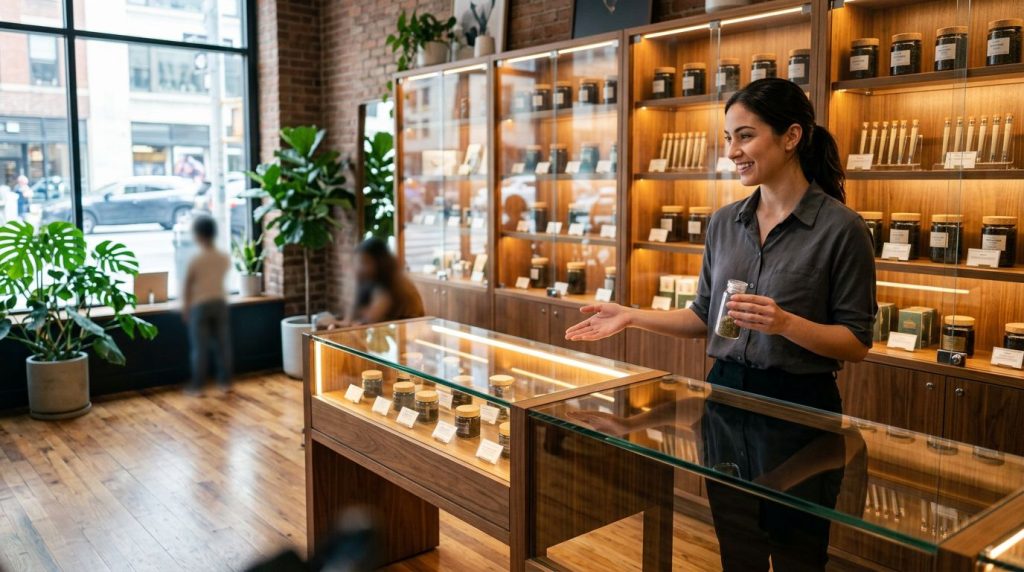
When you walk into a licensed cannabis store, what looks like sampling often isn’t. In New York, as a licensed retailer, dispensary sampling restrictions draw a clear line between inspection and use of usable cannabis.
That matters if you shop in New York City, where presentation has to balance customer education, security, and state rules. The result is a retail floor that looks polished, but runs with tight controls behind the scenes.
Key Takeaways
- Licensed dispensaries in New York allow trade samples for visual and smell-based inspection only—no consumption, removal, or self-serve access.
- Products stay in secure, locked displays or behind the counter, with staff maintaining full control and chain of custody.
- Presentation relies on clear menus, lighting, packaging visibility, and guided staff interactions to inform customers without risking compliance.
- Samples undergo regulatory testing, tracking in state systems, and quarterly rotation for freshness and safety.
- This deliberate approach builds trust, clarity, and a polished shopping experience in a highly regulated market.
What sampling restrictions mean inside a licensed dispensary
A licensed dispensary can show you a trade sample, but it can’t treat that sample like a free tryout. The sample works more like a showroom piece than a tester at a cosmetics counter.
Under New York’s state compliance reminders, staff may present a trade sample of cannabis flower, cannabis concentrates, or cannabis-infused products so you can see, smell, or inspect it before buying. However, you can’t consume it, take it with you, or treat it like a giveaway. Even these display items have undergone regulatory compliance testing and possess a certificate of analysis to ensure transparency. That difference shapes the whole presentation strategy.
In a compliant store, a “sample” supports inspection. It does not support use.
This quick comparison makes the rule easier to read on the sales floor:
| What a licensed store may allow | What stays off-limits |
|---|---|
| Staff show a sample for visual or smell-based inspection | Customers consume or remove the sample |
| A sample sits in a secure display setup | Open, self-serve product access |
| Samples stay tracked as inventory | Loose promotional stock or freebies |
If you’re used to other retail settings, that can feel strict at first. Still, it makes sense in a regulated market. Cannabis products are age-restricted, tightly tracked, and subject to packaging and labeling rules. Because of that, stores don’t build presentation around touch-and-try habits. They build it around controlled access.
You can also see why the word “sampling” causes confusion. In plain language, it sounds casual. In a licensed dispensary, it is anything but casual. The rule allows inspection, while the store still keeps custody of the product. That single point affects the case design, staff workflow, and even how long a sample stays out.
How product presentation changes on the sales floor
Once you know the rule, the compliant retail display makes more sense. Products sourced from a licensed producer or licensed processor often stay behind the counter, inside secure sample jars in locked cases, or in other staff-controlled areas. You still get a good look, but the store never loses control of the sample.
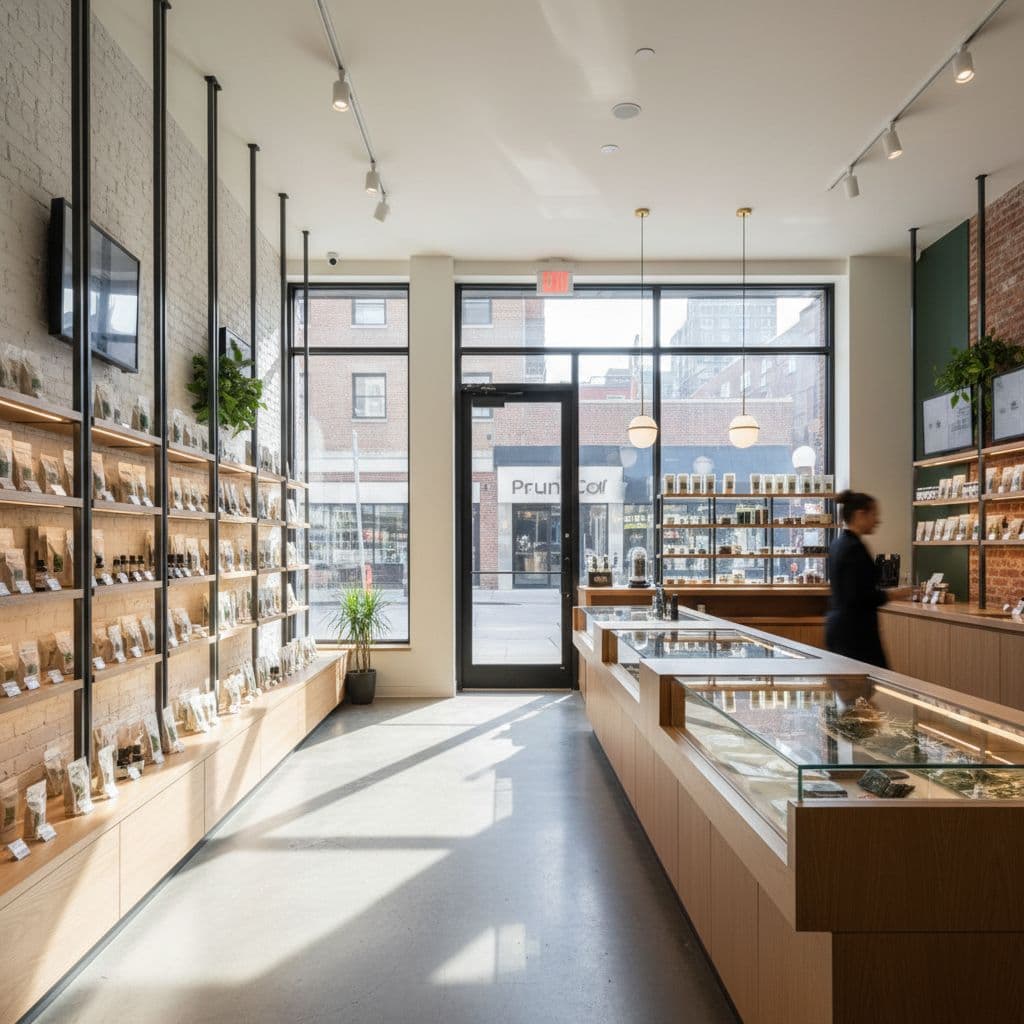
That is why licensed stores put so much effort into clear displays, lighting, shelf order, and packaging visibility. Since you usually won’t handle products on your own, the presentation has to do more work. You read the package. You compare categories. You rely on staff to bring an item forward for inspection.
New York’s retail dispensary operations rule allows display samples in secure, locked cases. It also requires pricing to be available where sales happen and on menus customers can access. As a result, compliant presentation often centers on a few simple tools: locked displays, readable menus, and staff-led inspection.
In practice, that changes the tone of the shopping experience. You aren’t browsing open jars or picking up packages at random. Instead, you move through a guided format. A staff member may remove a sample, hold it for inspection, then return it to a secure spot. Meanwhile, the rest of the assortment stays protected.
This approach also keeps presentation sanitary. Samples can’t drift from customer to customer without control. A well-run store treats the display area almost like a controlled stage. Everything on that stage has a place, a purpose, and a handling rule.
For you, the upside is clarity. A good store makes the process feel calm and understandable, not stiff. You can still compare product types, package sizes, and brand presentation. You verify THC limits and labeling requirements through the glass while negotiating a sale. You simply do it in a format built around compliance first.
Why staff control matters as much as the display
The most polished display in the city means little if the store mishandles the sample behind the counter. Because of that, presentation depends as much on staff routines shaped by budtender education programs for paid employees as on fixtures and lighting.
A compliant dispensary doesn’t treat display samples as loose props. The samples must stay secure, clean, and tracked. When they are not in active use, they belong in a locked place. In New York, retailers also log these items into the state’s traceability system (the track and trace software) as “retailer samples” before use, recording the specific batch number, and normal packaging and labeling rules still apply.
That backend discipline, including internal quality control measures like rotating samples each calendar quarter to ensure freshness, affects what you see out front. For example, a store is more likely to keep one controlled display unit rather than several open examples. Staff may limit inspection time, handle the container themselves, and reset the sample after each interaction. Those choices are not only about style. They reduce risk and keep the sample tied to a clear chain of custody.
This is where strong presentation earns trust. You can usually tell when a store has thought through the details. The counter stays orderly. The sample appears when needed, then disappears back into secure storage. The explanation is consistent from one staff member to the next.
In New York City, that level of control matters even more because licensed stores operate in a visible, highly regulated setting. Good presentation doesn’t mean bending the rules to feel friendlier. It means making the rules feel understandable while you shop.
Frequently Asked Questions
Can customers consume or take home dispensary samples?
No, dispensary sampling restrictions in New York strictly prohibit consumption or removal of trade samples. These samples support inspection only, remaining under staff control at all times to ensure compliance and security.
How are products presented on the sales floor?
Products appear in locked cases, secure jars, or behind the counter, with emphasis on readable packaging, menus, and lighting. Staff bring samples forward for guided inspection, preventing open access or handling by customers.
Why does staff control matter so much?
Staff routines—like logging samples in traceability systems, secure storage, and limited handling—maintain chain of custody, freshness through rotation, and sanitary conditions. This backend discipline shapes a trustworthy, compliant front-of-house experience.
Does this make shopping feel restrictive?
It might at first if you’re used to other retail, but good stores make it calm and clear. You still compare options, verify labels, and ask questions through staff-led presentation that prioritizes education and safety.
Are all samples safe and compliant?
Yes, display samples must have regulatory compliance testing and a certificate of analysis. They’re tracked as inventory, marked “not for resale,” and sourced from licensed producers or processors.
Conclusion
When you understand sampling restrictions, the display case stops looking restrictive and starts looking deliberate. Licensed dispensaries present products in a way that gives you information without giving up control of the sample. These display samples are clearly marked as “not for resale”.
The best presentations make compliance feel natural. You can inspect, compare, and ask questions, while the store keeps products secure, tracked from a licensed distributor through a strict chain of custody, and staff-managed. That balance is what separates a polished licensed dispensary from a store that only looks the part.