
When you walk into a licensed adult-use cannabis dispensary, the smoothest part of your visit may come from rules you never see. Good service starts with age checks, inventory controls, tax display rules, and labels that have to be right.
That tension sits at the center of dispensary compliance in the cannabis industry. A store has to protect its license, but it also has to make you feel informed, safe, and welcome. The best stores treat compliance as part of the experience, so your visit feels clear instead of rigid.
Key Takeaways
- Dispensary compliance builds trust through accurate menus, pricing, and labels, making visits feel clear and consistent rather than rigid.
- In New York, strict rules on inventory tracking, seed-to-sale systems, and on-site records ensure products match shelves and reduce surprises for customers.
- Top stores minimize friction by integrating rules into staff training, smart layouts, and tech like POS systems, separating tasks for smoother flow.
- Compliance distinguishes licensed NYC dispensaries from the illicit market, protecting licenses while delivering orderly, confident experiences.
- Effective compliance means rules enhance safety and efficiency, not hinder the customer journey.
Compliance shapes trust before you reach the counter
In a licensed dispensary, compliance is not back-office paperwork. It affects what you see, how long you wait, and how much confidence you have in the store.
If a menu matches the shelf, that comes from inventory management and seed-to-sale tracking. If the price at the register matches the tag, that comes from tax and pricing rules. If a package shows potency, ingredients, warnings, and a lab-linked QR code, that comes from label requirements. The system is strict because the product is regulated, but the customer benefit is real. You get fewer surprises.
In New York, cannabis regulations also require records to stay on-site and ready for inspection, while inventory data moves through approved tracking tools. When a dispensary handles record-keeping and safety standards well, you feel the result as consistency. Products are easier to locate. Staff don’t need to disappear into the back for ten minutes. Out-of-stock mistakes happen less often.
That matters in NYC, where many shoppers are still learning what licensed retail looks like. A compliant store helps you tell the difference between a legal operation and the illicit market that only looks polished from the sidewalk.
When compliance works, you notice clarity, not friction.
That is why good stores don’t hide from the rules. They build them into the flow of the visit. Security, labeling, and recordkeeping can feel dry on paper. On the sales floor, they become trust signals. If you want the state’s current baseline, the OCM compliance reminders show how closely New York ties daily operations to recordkeeping, surveillance, and inventory control.
Where rules create friction during a dispensary visit
Even well-run stores can feel slow if they treat compliance like a series of roadblocks. You notice it first at the door. Access control measures like age verification with an ID scanner, entry protocols, and security checks are required as part of the store’s broader security plan, yet they can make the first minute feel tense.
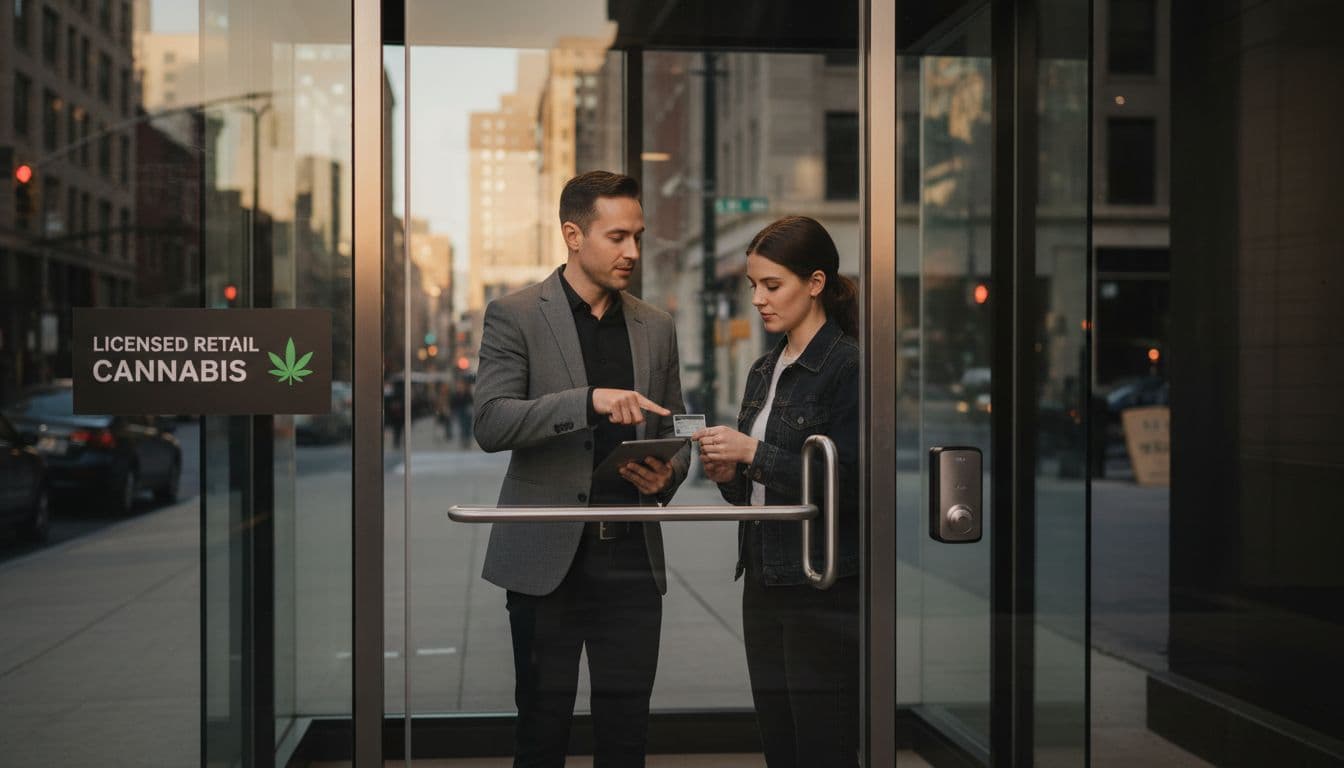
A harsh tone can make a legal store feel less professional, not more. By contrast, a brief greeting, a clear explanation, and a fast scan tell you the store takes the law seriously without treating you like a problem.
The same thing happens once you start browsing. Licensed dispensaries cannot rely on casual, anything-goes sales language. Staff have to stay within the rules. They also can’t offer product sampling on the premises under New York’s current compliance reminders. That means you often make decisions from packaging, posted facts, and staff education rather than sensory cues.
Labels can add another layer. As of April 2026, New York’s product labeling rules call for clear product details, warnings, and testing information, with some transition timing still applying to older stock through June 3, 2026. These local rules are so stringent compared to other industries due to federal law. That’s good for consumer protection. Still, if the package looks crowded and the staff doesn’t translate it into plain English, stores risk warning letters from regulators, and the process feels heavy.
Price display matters too. Full shelf pricing, including taxes where required and purchase limits, is part of a better visit because it removes guesswork. If you have ever felt sticker shock at checkout in another retail setting, you know how quickly trust can disappear. In cannabis retail, that trust is harder to rebuild because the industry already asks you to accept more rules up front.
How licensed dispensaries reduce friction without cutting corners
The best stores design around the rules instead of fighting them. You see this in staff training first. Teams follow standard operating procedures so they know the law, but they also explain products in clear, factual language. That keeps the conversation helpful without drifting into claims the store should not make.

Store layout helps as well. A calm entrance, a simple check-in process, visible category signs, and enough room near the counter all lower stress. Security still exists through video surveillance and theft reporting duties, but it doesn’t have to dominate the room. The same goes for technology. When inventory, menus, and checkout all pull from the same tracked data in a point-of-sale system, your visit feels faster because the system is doing its job behind the scenes.
Strong stores also separate compliance tasks so they don’t pile onto one moment, often guided by a compliance checklist. Door staff focus on entry. Floor staff focus on education. Register staff handle cash management, financial reporting, confirm limits, taxes, and payment steps. You move through the space with fewer stops because each part of the visit has one clear purpose.
In New York City, this balance matters even more under the social equity licensing framework overseen by the state regulatory commission. New stores have to meet location rules, including distance limits from schools and youth facilities, plus houses of worship on the same street. As of April 2026, retailers also have to stay current with Metrc tracking deadlines and labeling updates, or risk license revocation. If those systems are weak, the customer experience suffers right away, unlike the stricter medicinal cannabis standards. Menus go out of date. Staff lose time correcting counts. Lines grow because the register has to confirm details that should already be in place.
You can also spot strong dispensary compliance in small details. Staff ask for ID without turning the interaction cold. Product information is factual, not flashy. Packages are easy to compare because labels are organized and consistent. The state’s adult-use retail license overview gives you a sense of how broad those retail duties are, from location rules to community notice requirements.
For you, the result is simple. A licensed dispensary should feel orderly, accurate, and calm. The rules don’t disappear. They become part of a store that respects your time and keeps its license safe.
Frequently Asked Questions
What is dispensary compliance?
Dispensary compliance refers to the rules licensed cannabis stores follow to protect their license, including age verification, inventory tracking, accurate labeling, and security measures. In New York, this ties directly to daily operations like seed-to-sale systems and on-site records. When done right, it creates trust and consistency for customers.
How does compliance affect the customer experience?
Compliance shapes every step, from quick ID checks at entry to matching shelf prices at checkout and clear product labels. It can create brief friction, like no on-site sampling, but top stores make it feel seamless through training and layout. The result is fewer surprises and more confidence in a regulated product.
What are key New York compliance rules for dispensaries?
New York requires full shelf pricing with taxes, detailed labels with potency and warnings (updated by April 2026), Metrc tracking, and security like video surveillance. Stores must meet location limits near schools and maintain records for inspections. These protect consumers and ensure legal operations stand out from illicit ones.
How do the best dispensaries reduce compliance friction?
They design around rules with calm entrances, factual staff guidance, integrated POS tech for fast checkouts, and task separation like door checks versus floor education. This keeps visits orderly without cutting corners. In NYC’s competitive market, it supports license longevity under social equity frameworks.
Why does compliance matter more in New York City?
NYC’s developing legal market and active enforcement make compliance essential to avoid license risks and compete with polished illicit shops. Rules like distance from schools and labeling deadlines ensure safety amid new shoppers learning licensed retail. Compliant stores deliver calm, accurate experiences that build lasting trust.
Conclusion
When a licensed dispensary gets dispensary compliance right, you don’t feel buried in rules. You feel confidence. The menu is accurate, the staff is clear, and the checkout process makes sense.
That balance matters in New York City, where the legal framework is still developing and enforcement stays active. Stores that last will be the ones adhering to cannabis regulations, ensuring longevity in a competitive market by making compliance visible where it helps, and quiet where it doesn’t.